IFS officer Satyanjal Pandey likely to be India's next charge d'affaires in Islamabad
Source Entity
Latest News: Today's Latest News Headlines from India & World | Hindustan Times | Hindustan Times
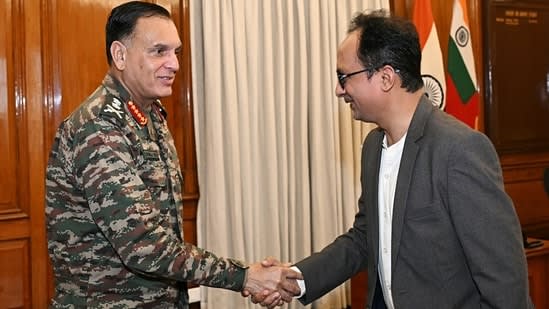
Satyanjal Pandey, IFS officer and current Deputy High Commissioner in Sri Lanka, is expected to be appointed as India's charge d'affaires in Islamabad
Diplomatic Transition: Satyanjal Pandey's Expected Appointment in Islamabad
The announcement that Satyanjal Pandey, a distinguished officer of the Indian Foreign Service (IFS), is likely to be appointed as India's next charge d'affaires in Islamabad marks a significant movement in the delicate machinery of South Asian diplomacy. Currently serving as the Deputy High Commissioner in Sri Lanka, Pandey's transition to the Pakistani capital comes at a time when formal diplomatic relations between New Delhi and Islamabad remain severely downgraded. This appointment is not merely a routine personnel shift but a strategic placement of a seasoned diplomat in one of the world's most volatile diplomatic postings.
Understanding the Role of the Charge d'Affaires
To grasp the significance of this appointment, it is essential to understand the distinction between a High Commissioner and a charge d'affaires. In the Commonwealth tradition, a High Commissioner is the equivalent of an Ambassador. However, India has not stationed a full High Commissioner in Islamabad for several years, following the precipitous decline in relations triggered by cross-border terrorism and disputes over Kashmir. By appointing a charge d'affaires, India maintains a functional diplomatic presence—allowing for essential communication, consular services, and monitoring—without granting the full symbolic weight and political recognition that comes with a High Commissioner. This "middle ground" allows India to keep a window open for dialogue while maintaining its firm stance on security prerequisites.
Strategic Pivot from Colombo to Islamabad
Satyanjal Pandey's current tenure as Deputy High Commissioner in Sri Lanka provides critical context for his move. Sri Lanka is a pivotal state in India's "Neighborhood First" policy and a key player in the broader geopolitical contest for influence in the Indian Ocean Region. Handling diplomatic affairs in Colombo requires a nuanced understanding of balancing bilateral interests against the influence of external powers, particularly China. This experience in navigating complex, high-stakes regional dynamics makes Pandey a suitable candidate for Islamabad, where the interplay of domestic Pakistani politics and external pressures (such as those from China and the US) creates a similarly intricate environment.
The Backdrop of India-Pakistan Relations
The historical context of this appointment is rooted in a decade of diplomatic frost. Since the 2016 Uri attack and the subsequent 2019 Pulwama crisis, the diplomatic bridge between the two nuclear-armed neighbors has been reduced to a skeleton crew. The absence of a full envoy serves as a constant signal of India's policy that "terror and talks cannot go together." Consequently, the charge d'affaires becomes the primary point of contact for the Indian government, tasked with the grueling job of managing a relationship characterized by deep mistrust and intermittent hostility. Pandey will be stepping into a role where the primary objective is often crisis management rather than proactive diplomacy.
Future Implications and Regional Stability
Looking forward, the appointment of a capable IFS officer like Pandey suggests that India intends to maintain a professional and stable channel of communication with Pakistan, regardless of the lack of formal normalization. While there are no immediate indications that this move will lead to the restoration of full diplomatic ties or the appointment of a High Commissioner, it ensures that the mechanism for preventing accidental escalation remains intact. Future trends suggest that India will continue this pattern of "functional diplomacy," utilizing experienced officers to manage the status quo while waiting for a fundamental shift in Pakistan's approach to cross-border terrorism.
Conclusion
In summary, the expected appointment of Satyanjal Pandey as charge d'affaires in Islamabad is a calculated diplomatic move. By shifting an officer with significant regional experience from Sri Lanka to Pakistan, India is ensuring that its interests in Islamabad are represented by a diplomat capable of handling extreme volatility. While the role remains a symbol of the current diplomatic impasse, it is a vital necessity for regional stability and the continued management of one of the most complex bilateral relationships in modern history.
Verification Required?