Delhi court sends AAP's Satyendar Jain to 14-day judicial custody in Jal Board corruption case
Source Entity
Latest News: Todays Latest News Headlines from India & World | Hindustan Times | Hindustan Times
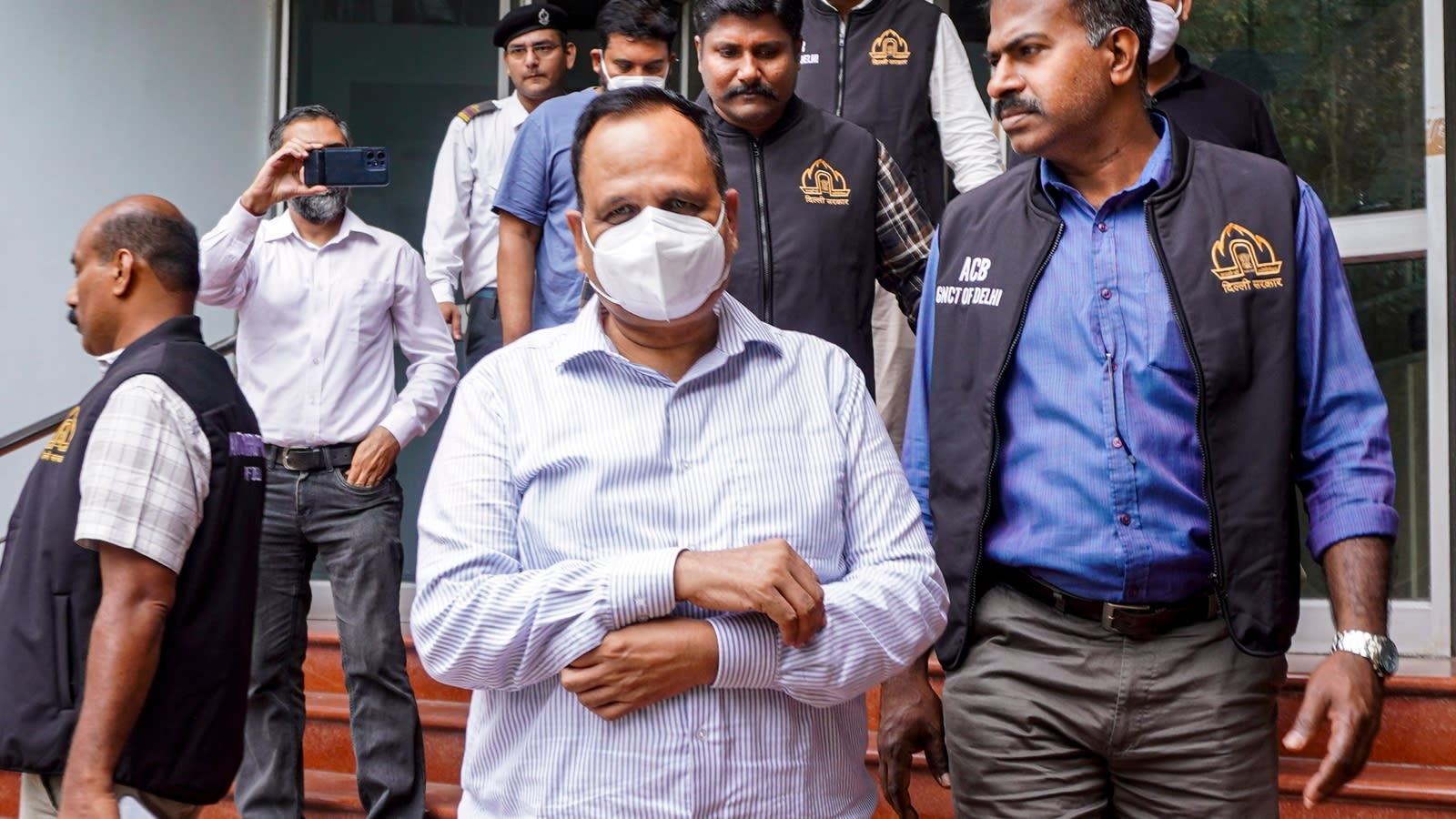
Former Delhi minister Satyendar Jain has been remanded to 14-day judicial custody regarding alleged irregularities in Delhi Jal Board sewage treatment plant tenders. Jain has dismissed the charges as political vendetta, citing the upcoming Punjab elections as a primary motivation for the legal action.
The Delhi Jal Board Legal Crisis: An Overview
The legal proceedings concerning former Delhi Water Minister Satyendar Jain have reached a critical juncture following a special court's decision to remand him and four others to 14-day judicial custody. This development stems from allegations of financial and procedural irregularities regarding the tendering process for the augmentation and upgradation of sewage treatment plants (STPs) managed by the Delhi Jal Board (DJB).
The Nexus of Alleged Irregularities
The core of the investigation focuses on a massive project estimated at Rs 1,546.32 crore. Investigative reports highlight that the foundation of this case lies in events from 2021, specifically involving an 'in-principle' approval and the IFAS (Integrated Financial Advice Scheme) proposal. These procedural steps, which occurred months prior to the initial arrest, are now under intense scrutiny by authorities to determine if the tendering process was manipulated to favor specific entities or inflate project costs.
Judicial Proceedings and Defense Arguments
During the recent hearing at the Rouse Avenue court, the special court not only ordered judicial custody but also dismissed an application filed by Satyendar Jain. The application had challenged the legality of his arrest by the Anti-Corruption Branch. The court's refusal to entertain this challenge suggests a significant hurdle for the defense, as the judicial process moves forward into a deeper investigation phase.
The Political Dimension
Satyendar Jain has consistently framed these proceedings as an act of political vendetta. By explicitly referencing the upcoming Punjab elections, Jain has positioned the case within the broader context of competitive politics in India. For the Aam Aadmi Party (AAP), this narrative serves as a rallying point, suggesting that the timing and nature of the investigation are engineered to undermine their political influence during critical election cycles.
Broader Implications for Infrastructure and Governance
The case underscores the complex intersection of public infrastructure management and administrative oversight. Sewage treatment plants are vital for urban sanitation in a city as densely populated as Delhi. When large-scale projects like the Rs 1,546.32-crore upgrade are mired in corruption allegations, it not only delays essential public works but also erodes public trust in the institutional integrity of the Delhi Jal Board.
Future Trends and Outlook
As the case proceeds, the focus will likely shift toward forensic financial analysis of the 2021 meetings and approvals. The ability of the investigative agencies to prove a direct link between the policy decisions and personal gain will be the deciding factor in the outcome. Meanwhile, the political discourse surrounding the case is expected to intensify, with the judiciary playing the role of arbiter amidst a highly charged atmosphere. The outcome of these proceedings will undoubtedly set a precedent for how future infrastructure tenders are scrutinized within the national capital's administrative framework.
Multiple Citing Sources
Verification Required?