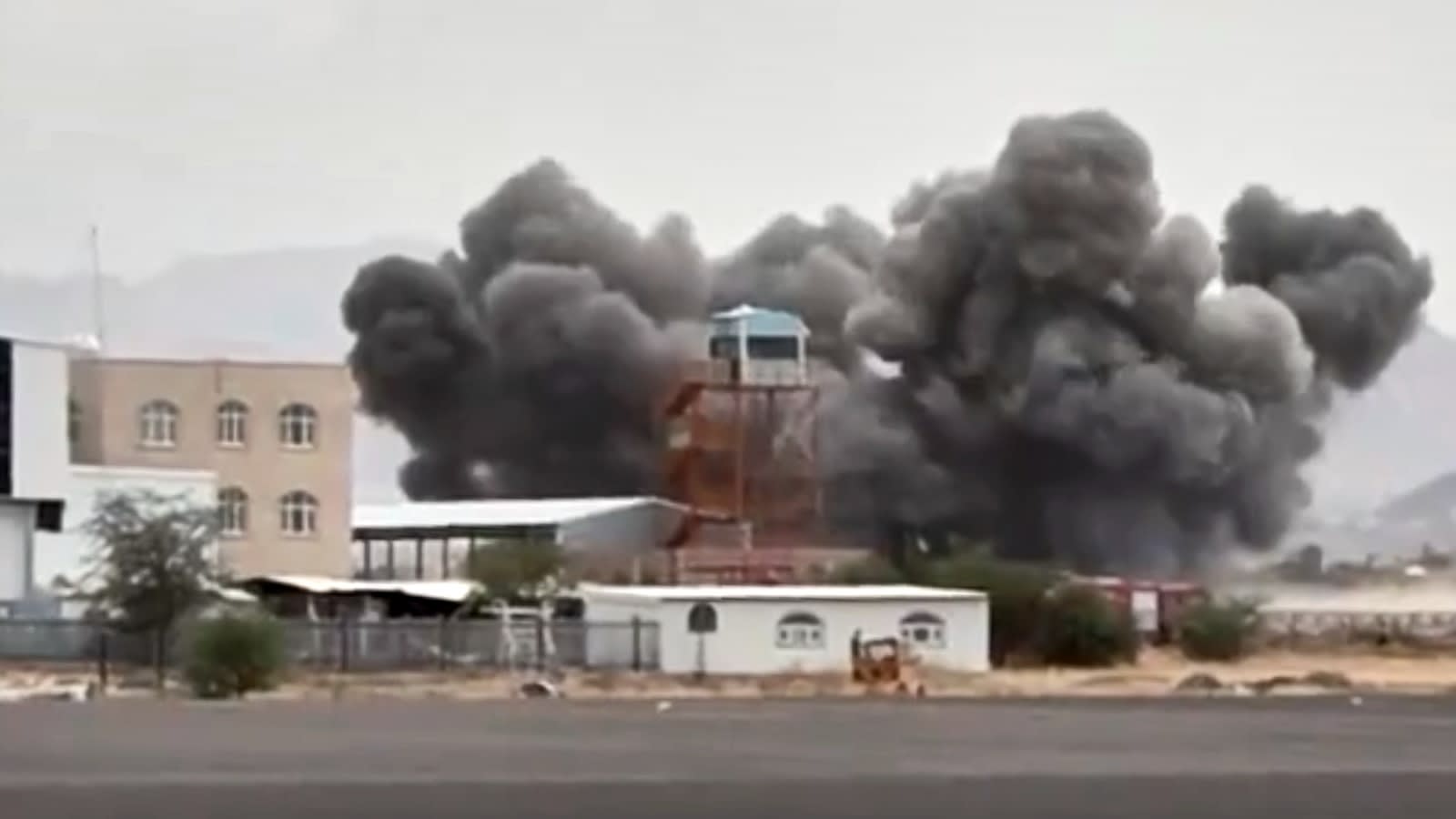
Video: Saudi Arabia strikes Yemen airport to block Iranian flight, Houthis vow revenge
Source Entity
The Indian Express
The Express Global Desk at indianexpress.com which delivers authoritative, verified, and context-driven coverage of key international developments shaping global politics, policy, and migration trends...
Analysis of Saudi Airstrike on Yemeni Airport
The recent airstrike conducted by Saudi Arabia on a Yemeni airport, specifically aimed at blocking an incoming Iranian flight, marks a significant escalation in the volatile landscape of the Arabian Peninsula. By targeting infrastructure to prevent direct logistical links between Tehran and the Houthi-controlled territories, Riyadh has signaled a zero-tolerance policy regarding Iran's direct support for the Houthi movement. This move underscores the persistent fragility of the region's security architecture and the deep-seated mistrust that continues to fuel one of the world's most complex proxy conflicts.
Strategic Interdiction and Logistics
The primary objective of this strike is the disruption of the "Iranian pipeline." For years, Saudi Arabia and its allies have accused Iran of utilizing civilian aviation and maritime routes to smuggle advanced weaponry, including drone components and missile technology, to the Houthi rebels. By striking the airport, Saudi forces are not merely attacking a physical structure but are attempting to sever a critical umbilical cord of military and political support. This tactical decision reflects a strategy of containment, aimed at degrading the Houthis' operational capabilities by limiting their access to external expertise and high-tech hardware.
The Shadow War: Saudi Arabia vs. Iran
This event cannot be viewed in isolation; it is a critical chapter in the broader geopolitical rivalry between the Kingdom of Saudi Arabia and the Islamic Republic of Iran. This sectarian and political struggle for regional hegemony often plays out in third-party nations, with Yemen serving as a primary battleground. While both nations have engaged in diplomatic overtures in recent years—most notably the China-brokered rapprochement—this strike suggests that tactical imperatives on the ground often override high-level diplomatic agreements. The friction over Iranian influence in Yemen remains a "red line" for Riyadh, which views Houthi empowerment as an existential threat to its southern border.
Houthi Retaliation and Asymmetric Threats
The Houthis' vow of revenge is a standard but potent response in their playbook of asymmetric warfare. Given their history of utilizing long-range drones and ballistic missiles to target Saudi oil installations and urban centers, such a vow carries genuine risk. The Houthi movement has evolved from a localized insurgency into a sophisticated military force capable of projecting power far beyond Yemen's borders. Any retaliatory strike would likely target Saudi economic infrastructure, aiming to pressure the Kingdom into easing its blockade or halting its aerial campaigns, thereby maintaining a cycle of tit-for-tat aggression.
Impact on Peace Processes and Stability
This escalation threatens to derail fragile peace negotiations and ceasefire agreements brokered by the United Nations and other international mediators. The goal of stabilizing Yemen requires a comprehensive political settlement that includes all stakeholders, but such a settlement is nearly impossible as long as external powers continue to use the territory as a proxy arena. The strike on the airport indicates that the "security dilemma"—where one side's defensive measures are seen as offensive threats by the other—continues to dominate the strategic calculus of the combatants, making a permanent peace elusive.
Conclusion: A Cycle of Escalation
In summary, the Saudi strike on the Yemeni airport to block Iranian influence is a stark reminder that the conflict in Yemen is inextricably linked to the wider Middle Eastern power struggle. While the immediate goal was the prevention of a single flight, the long-term consequence may be a renewed cycle of violence and retaliation. Until a sustainable diplomatic framework is established that addresses the security concerns of both Riyadh and Tehran, the civilian infrastructure of Yemen will likely remain a target in this high-stakes geopolitical game.