Extremely speedy action by probe agency can create doubt: SC
Source Entity
AMIT ANAND CHOUDHARY
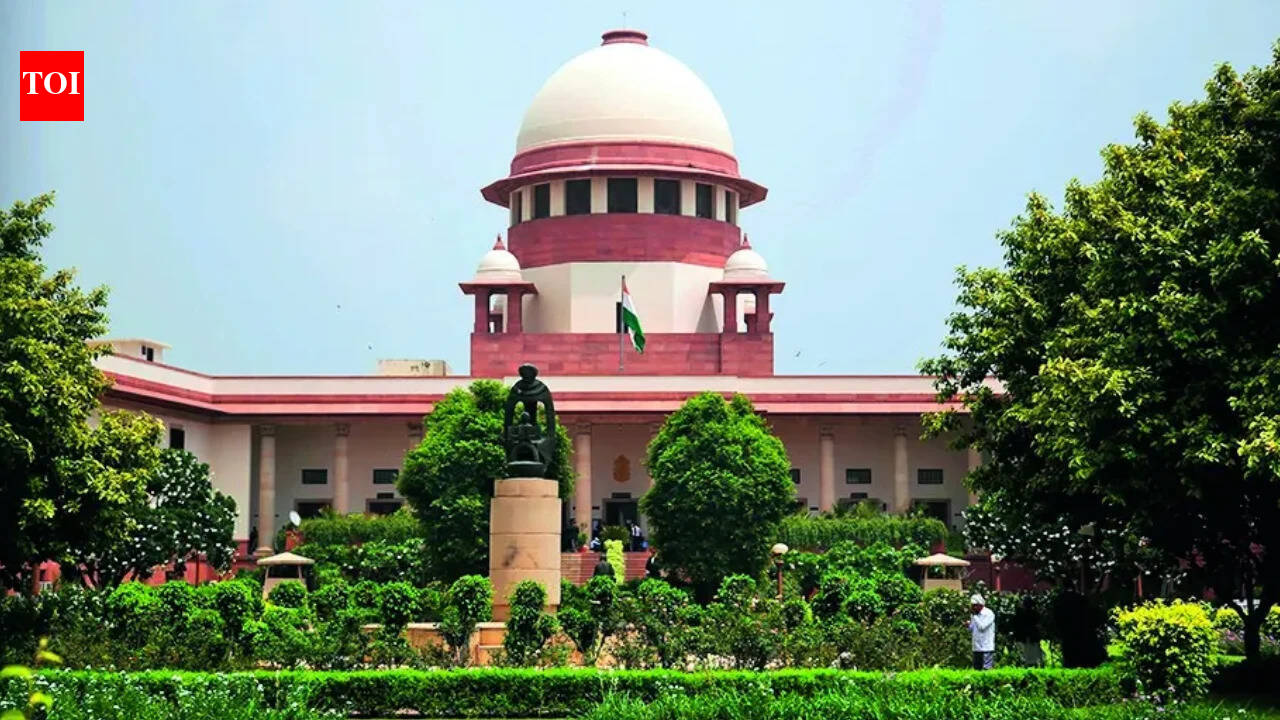
The Supreme Court has acquitted a former RPF official in a two-decade-old corruption case, citing investigative flaws by the CBI. The court criticized the agency's 'impatience' and failure to prove the intermediary's role in the alleged bribery.
Supreme Court Overturns Corruption Conviction Due to Investigative Lapses
In a significant ruling that underscores the high threshold for criminal conviction in India, the Supreme Court of India recently acquitted a former Divisional Security Commissioner of the Railway Protection Force (RPF) in a corruption case spanning over two decades. The verdict, delivered by a bench comprising Justices Prashant Kumar Mishra and NV Anjaria, overturned the May 2024 order of the Kerala High Court, which had previously affirmed the conviction and sentencing imposed by a special trial court.
The Failure of the 'Trap' Mechanism
The case centered on an alleged bribery demand that prompted the Central Bureau of Investigation (CBI) to lay a trap. However, the Supreme Court noted that the investigation suffered from a "serious lacuna." Crucially, the court observed that the trap was not permitted to run its full course, and the prosecution failed to establish a definitive link between the recovered funds and the accused official. The court emphasized that the CBI could not successfully prove that the intermediary involved in the transaction accepted the bribe on behalf of the appellant.
Judicial Scrutiny of Investigative 'Impatience'
The Supreme Court offered a stinging critique of the investigative agency's methodology, explicitly stating that "extremely speedy action by a probe agency can create doubt." By characterizing the CBI’s approach as one of "impatience," the bench highlighted the dangers of rushing toward a conviction without allowing the procedural facts to coalesce into a coherent narrative. This serves as a cautionary tale for investigative agencies that the pursuit of a quick result should not come at the expense of establishing the chain of evidence.
Presumption of Guilt vs. Legal Burden
Central to the judgment was the court’s assertion that a presumption of guilt—often inherent in high-profile corruption cases—does not render the prosecution’s narrative "gospel truth." The judiciary reiterated that while corruption remains a serious societal ailment, the burden of proof rests entirely on the prosecution. When the link between an alleged intermediary and a public servant is tenuous, the court is duty-bound to protect the individual from the consequences of a flawed investigation.
Broader Implications for Anti-Corruption Probes
This ruling carries significant weight for future anti-corruption litigation in India. By setting aside a conviction in a case that had already passed through the trial court and the High Court, the Supreme Court has signaled that judicial oversight will remain rigorous regarding the quality of evidence. It suggests that investigators must ensure every step of a sting operation is documented and logically connected to the accused to withstand appellate scrutiny.
Conclusion
Ultimately, the acquittal serves as a reminder that the integrity of the judicial process relies as much on the quality of the investigation as it does on the verdict itself. By flagging the procedural failures in this two-decade-old matter, the Supreme Court has reaffirmed the principle that the rule of law must prevail over administrative haste, ensuring that public servants are held accountable only when the evidence is beyond reasonable doubt.
Multiple Citing Sources