How accurately did science fiction stories predict AI?
Source Entity
Hacker News
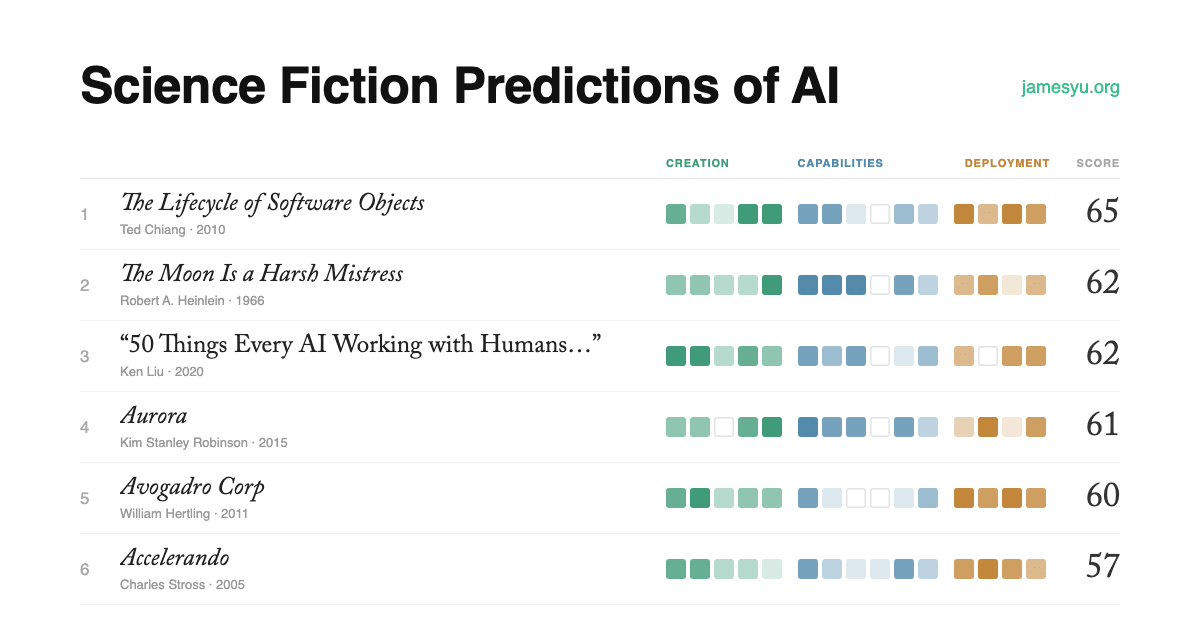
The evolution of artificial intelligence has diverged significantly from science fiction tropes. Rather than predictive accuracy, experts argue that fiction serves as a descriptive tool for exploring human responses to future scenarios.
The Divergence of Fiction and Reality in AI Development
The rapid evolution of artificial intelligence over the past decade has prompted a re-evaluation of how speculative literature envisioned our technological future. While science fiction has long been a cultural touchstone for conceptualizing machine intelligence, the reality of modern AI—specifically the rise of Large Language Models (LLMs)—has followed a path that few authors anticipated. The reliance on the transformer model, introduced in 2017, catalyzed a shift that moved AI from theoretical abstraction to a ubiquitous, daily utility for billions of people.
The Failure of Predictive Modeling
It is now evident that much of the science fiction canon failed to accurately predict the architectural trajectory of artificial general intelligence (AGI). Many narratives focused on sentient, humanoid robots or singular, monolithic supercomputers, often missing the 'messy' but efficient development of data-driven probabilistic models. The current state of AI is defined by iterative, large-scale training rather than the sudden, dramatic awakening of a digital consciousness, highlighting a fundamental disconnect between literary tropes and engineering reality.
Science Fiction as a Descriptive Tool
As noted by the perspective of Ursula Le Guin, the true value of science fiction lies in its descriptive capacity rather than its predictive accuracy. Instead of viewing these stories as blueprints for the future, they should be analyzed as thought experiments. They provide a framework to ask, 'Given a specific future circumstance, how might we react?' This shift in perspective transforms literature from a failed prophecy into a vital tool for social and ethical discourse.
The Impact of the 2017 Transformer Model
The introduction of the transformer architecture serves as a historical inflection point. Prior to this, the rollout of AI was arguably slower and more siloed. The accessibility and general-purpose nature of modern models allowed for a swift integration into global infrastructure. This specific technological breakthrough was largely absent from the collective imagination of science fiction writers, who favored dramatic narratives over the quiet, background revolution of neural networks.
Future Trends and Human Interaction
Looking forward, the interaction between humans and AI will likely continue to be shaped by the 'messy' nature of these models. As AI becomes more integrated into daily life, the focus of society will likely shift from fearing the 'sentient' tropes of old fiction to managing the practical, ethical, and societal implications of current-generation systems. The future of AI is less about whether machines will think like humans, and more about how humans will adapt to a world where AI influences every layer of information exchange.
Conclusion
Ultimately, while science fiction provides a rich landscape for exploring the human condition, it is not a roadmap for technological development. The unpredictability of AI's rise underscores the complexity of innovation. By viewing fiction as a descriptive mirror rather than a predictive tool, we can better understand our own reactions to the rapid technological changes that define the modern era.