40 years ago September 15, 1986: Seoul airport explosion
Source Entity
The Indian Express
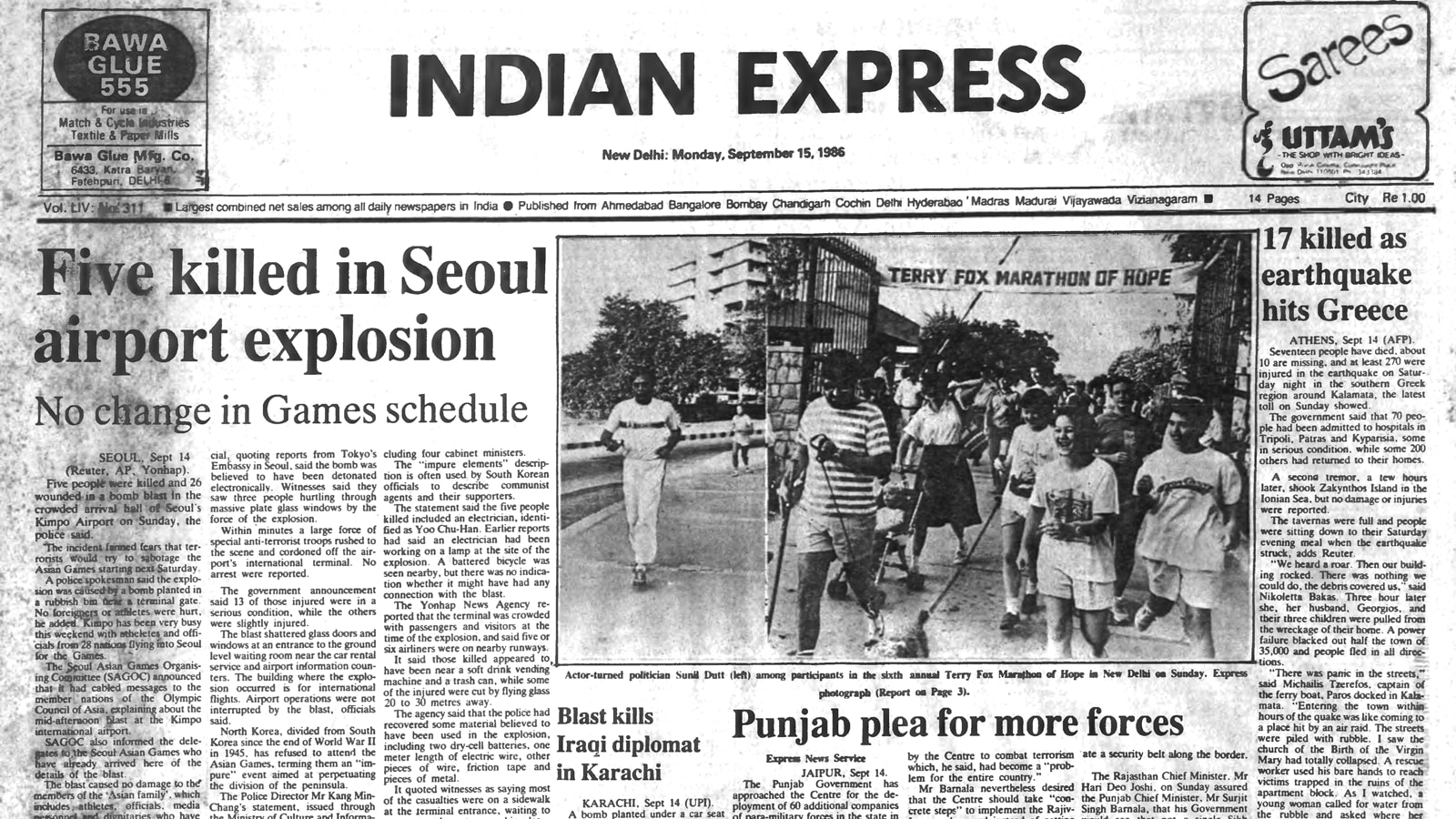
On September 15, 1986, a deadly bombing at Seoul’s Gimpo Airport killed five people, raising security concerns ahead of the Asian Games. Simultaneously, India faced internal security challenges in Punjab and made progress in domestic naval defense manufacturing.
The 1986 Gimpo Airport Bombing: A Security Crisis
On September 15, 1986, a significant act of terrorism struck the heart of South Korea when a bomb detonated in the arrival hall of Seoul’s Gimpo Airport. The explosion, which authorities identified as being planted in a bin near a terminal gate, resulted in five fatalities and left 26 individuals wounded. This violent act sent shockwaves through the nation, occurring during a period of heightened international scrutiny as the country prepared to host the 1986 Asian Games.
Implications for the Asian Games
The timing of the Gimpo Airport blast was clearly intended to cause maximum disruption and psychological impact. By targeting a major transit hub just days before the commencement of the Asian Games, the perpetrators sought to undermine South Korea's ability to host international events safely. The incident fanned widespread fears that terrorists were actively attempting to sabotage the regional sporting spectacle, forcing local security forces to drastically overhaul their protective measures to ensure the safety of athletes and visitors from across the continent.
Domestic Turmoil in Punjab
Simultaneously, in India, the government was grappling with its own internal security challenges. Following the tragic Muktsar killings, the Punjab state government, under Chief Minister Surjit Singh Barnala, formally requested that the Union government deploy 60 additional companies of paramilitary forces to the state. This request reflected the severe instability of the era and the struggle of the provincial administration to maintain law and order against escalating violence, necessitating a significant federal intervention to stabilize the region.
Advancements in Indian Naval Defense
Amidst these domestic security concerns, India was simultaneously looking toward long-term strategic sovereignty in its defense capabilities. It was announced that the nation was undertaking its first indigenous submarine construction project. According to the timeline, the first Indian-built submarine was expected to be ready for sea trials by 1990, with a second vessel following in 1991. This development marked a pivotal shift in India’s maritime policy, aiming to reduce reliance on foreign military hardware and bolster the Navy’s operational capacity.
Historical Context and Future Trends
The events of September 1986 serve as a stark reminder of the volatile geopolitical landscape of the late 20th century. While South Korea successfully navigated the security threats to host a peaceful Asian Games—which served as a precursor to their successful hosting of the 1988 Summer Olympics—India’s internal challenges in Punjab would continue to evolve for years to come. Furthermore, the push for indigenous submarine production in 1986 laid the foundational groundwork for India's current status as a nation capable of building sophisticated underwater platforms, reflecting a long-term trend toward self-reliance in defense.