When 250 is no longer enough, T20 cricket must ask what it wants to be
Source Entity
Latest News: Todays Latest News Headlines from India & World | Hindustan Times | Hindustan Times
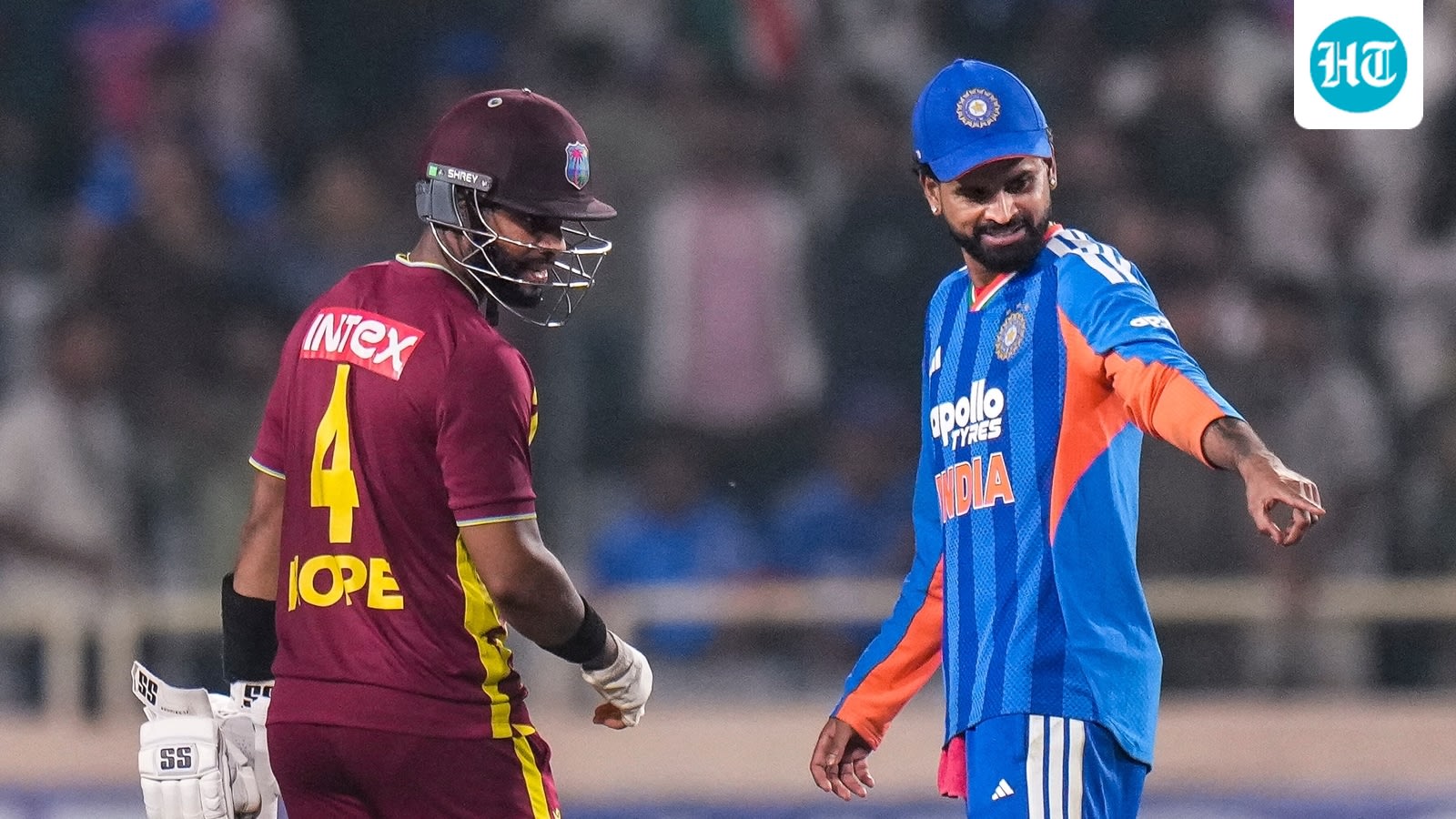
West Indies captain Shai Hope made history by becoming the second player to score centuries in all three formats against India during a record-breaking T20I chase in Ranchi. The match has sparked intense debate over the fairness of flat pitches, with bowlers like Yuzvendra Chahal criticizing the lack of assistance for them.
A Historic Performance in Ranchi
The second T20I between India and the West Indies at Ranchi will be remembered as a watershed moment for Caribbean cricket. West Indies captain Shai Hope delivered a masterclass in power-hitting, scoring an unbeaten 102 off just 45 deliveries. This performance cemented his legacy, making him only the second player in history—following Australian legend Shane Watson—to record centuries in all three formats against India. His partnership with Sherfane Rutherford, who contributed a blistering 88, was instrumental in chasing down India’s formidable total of 249/5.
Breaking Records and Leveling the Series
This victory was not merely a personal milestone for Hope; it was a collective triumph that leveled the five-match series at 1-1. The West Indies successfully chased 250 runs with 9 balls to spare, marking the highest successful run chase ever recorded against India in T20I history. For the Indian team, who had previously dominated the series opener in Lucknow with an 8-wicket win, the result served as a sobering reminder of the volatility inherent in the modern T20 game, particularly when faced with aggressive batting lineups.
The Pitch Debate: A Bowler's Nightmare
The high-scoring nature of the match has reignited a contentious debate regarding surface preparation in international cricket. Indian spinner Yuzvendra Chahal openly criticized the conditions, suggesting that the flat pitches and smaller boundaries provide virtually no assistance to bowlers. Chahal noted that when the ball gets old and dew sets in, the conditions become heavily skewed in favor of the batters, making it nearly impossible for bowlers to contain the run flow.
Parallels to Global T20 Trends
Chahal’s frustration echoes a broader sentiment currently circulating in the cricketing world, often seen during the Indian Premier League (IPL) where totals exceeding 250 are becoming increasingly common. The reliance on flat, batting-friendly tracks is seen by many professionals as a detriment to the tactical diversity of the sport. The ease with which 250 was chased in Ranchi underscores the concern that bowling—as a craft—is being marginalized by modern ground dimensions and pitch curation.
Looking Ahead to Indore
As the series moves to the Holkar Stadium in Indore for the third T20I, the narrative shifts toward how both teams will adapt. Known for its flat deck and small boundaries, the Holkar Stadium threatens to produce yet another run-fest. The management teams for both India and the West Indies face a strategic dilemma: should they stick to the current aggressive batting blueprints, or will there be an attempt to find a balance that allows bowlers a chance to influence the outcome? Regardless of the result, the series has already succeeded in putting the spotlight on the evolving landscape of modern T20 cricket.
Multiple Citing Sources
Verification Required?