Villagers oppose setting up of sewage treatment plant near Sholinghur town in Ranipet
Source Entity
India Latest News: Top National Headlines Today & Breaking News | The Hindu
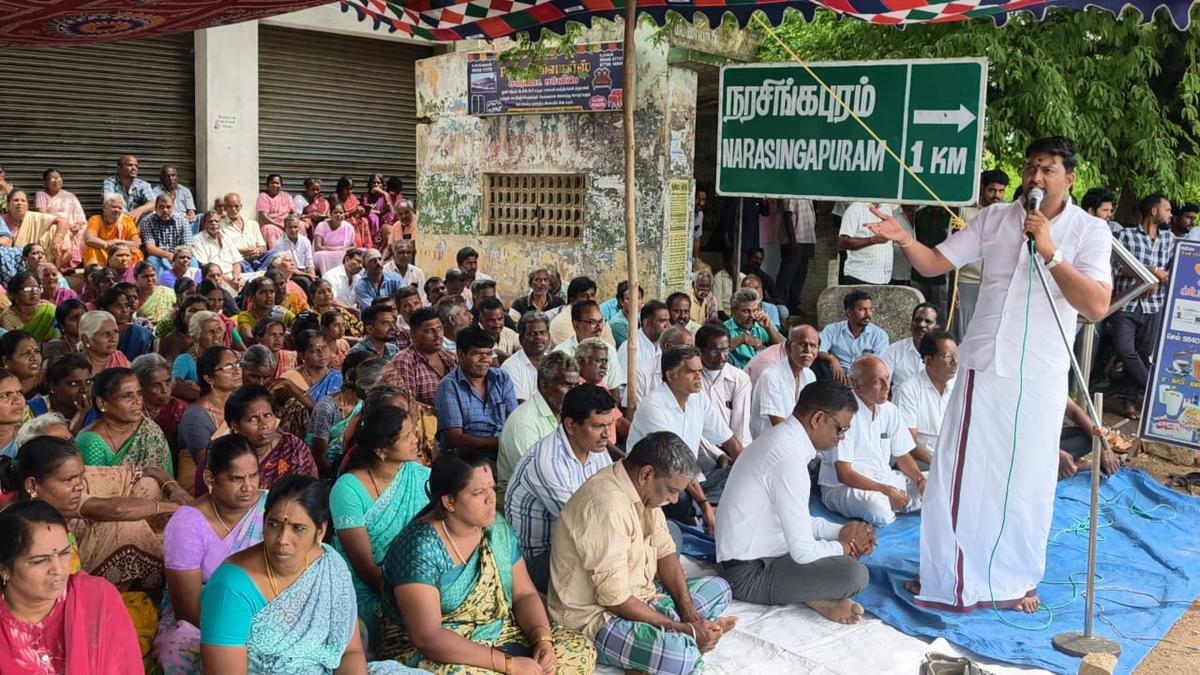
Residents of Udayarpalayam, Ranipet, have staged a protest against the proposed construction of a sewage treatment plant near their hamlet. They fear the facility will contaminate local groundwater and irrigation sources essential for their livelihoods.
Community Uprising Against Proposed Sewage Treatment Plant
Recent demonstrations in Udayarpalayam, a hamlet within the Pandiyanallur village panchayat, highlight a growing tension between municipal infrastructure expansion and rural environmental preservation. Villagers, primarily composed of farmers and local traders, recently staged a protest on the Arakkonam–Sholinghur Main Road to express their fierce opposition to the Sholinghur municipality’s plans to construct a new Sewage Treatment Plant (STP) in their vicinity. This conflict underscores the critical challenges urban planning bodies face when balancing the necessity of waste management infrastructure with the legitimate environmental anxieties of rural populations.
The Environmental and Economic Stakes
The core of the villagers' protest lies in the fear of long-term ecological degradation. Residents, including local farmer K. Raman, have explicitly cited concerns regarding the potential contamination of groundwater and the proximity of the proposed site to vital water bodies, including the Palar River. For a community that relies heavily on agriculture, any risk to water purity is perceived as an existential threat to their primary livelihood. The reliance on local water sources for irrigation means that even a minor failure in the treatment plant’s containment could have catastrophic effects on crop yields and soil health.
Municipal Jurisdiction and Spatial Planning
A significant point of contention in this dispute is the choice of location. The residents argue that the Sholinghur municipality is attempting to offload its urban waste management burden onto a rural panchayat. By proposing the facility in Udayarpalayam—a hamlet of approximately 1,500 people—rather than within the municipality's own administrative boundaries, the local government has triggered accusations of administrative overreach. The community’s demand is clear: the municipality should identify a plot within its own limits, ensuring that the burden of waste processing remains under the jurisdiction of those it serves.
The Broader Implications of Infrastructure Conflicts
This situation serves as a microcosm of the broader struggle for 'environmental justice' in India’s rapidly urbanizing landscapes. As towns like Sholinghur expand, the demand for sophisticated sanitation infrastructure grows, yet the spatial footprint of such facilities often conflicts with established agricultural patterns. The protest is not merely a 'Not In My Backyard' (NIMBY) movement but a reflection of the systemic struggle between urban development and the protection of rural resources, which are often undervalued in the planning phase of major infrastructure projects.
Future Trends and Conflict Resolution
Looking ahead, this incident suggests that future infrastructure projects in the Ranipet district and beyond will require more robust community consultation processes. If municipal bodies continue to ignore the concerns of rural stakeholders, they risk persistent legal and social obstacles that could stall essential public health projects indefinitely. Effective resolution will likely require a shift toward decentralized waste management systems that allow urban centers to manage their own waste effectively without encroaching on sensitive rural ecosystems. The outcome of this specific protest will likely set a local precedent for how similar projects are handled in the future, emphasizing the need for transparency and site-selection sensitivity.
Verification Required?