Shrimp farmers stage protest seeking fair prices in Nellore district
Source Entity
India Latest News: Top National Headlines Today & Breaking News | The Hindu
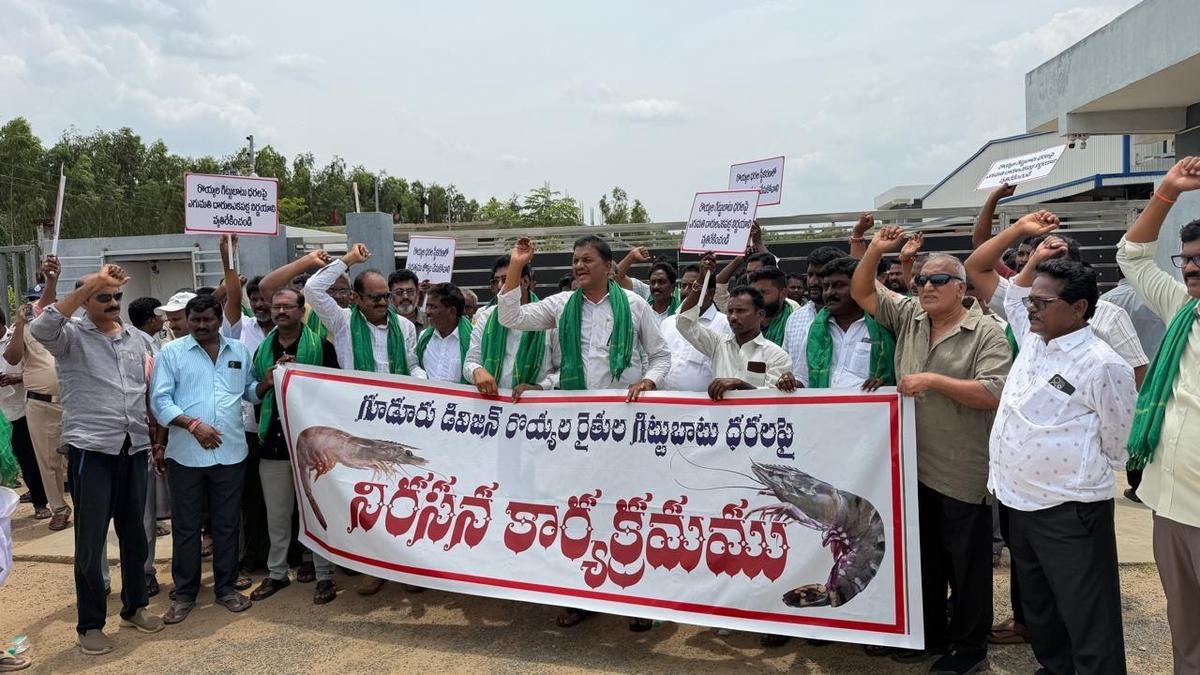
Shrimp farmers in Nellore, Andhra Pradesh, have launched protests against processing plants, citing a coordinated price drop by exporters. The farmers are demanding fair market rates to offset significant losses and have secured a promise for a future meeting to negotiate pricing.
Crisis in the Aquaculture Sector: The Nellore Shrimp Protests
Shrimp farming is a cornerstone of the coastal economy in Andhra Pradesh, particularly within the SPSR Nellore district. However, recent developments have brought the industry to a standstill, as farmers from the Gudur and Kota regions staged coordinated protests at major processing plants, including GMT, GVR, and Penver Products. This unrest highlights a deepening rift between primary producers and the downstream processing sector, driven by a sudden and sharp decline in the market value of tiger shrimp.
Allegations of Market Manipulation
The core grievance voiced by the Andhra Pradesh Shrimp Farmers’ Federation is the perceived formation of a syndicate among exporters and processing plants. According to convener Duggineni Gopinath, these entities have allegedly colluded to artificially suppress purchase prices, leaving farmers without a fair return on their investment. This accusation of market manipulation comes at a time when the aquaculture sector is already grappling with the volatility of global trade and supply chain fluctuations, making local price stability essential for the survival of small-scale farmers.
Quantifying the Economic Impact
The severity of the situation is reflected in the stark price depreciation noted over the last month. For instance, the market rate for 30-count tiger shrimp has plummeted from ₹580 to ₹430, representing a significant percentage loss in revenue. Similarly, the 20-count shrimp category has seen a sharp decline from ₹730 to ₹570. For farmers who operate on thin margins and high input costs, these price adjustments do not merely represent a market fluctuation; they threaten the economic viability of their operations and their ability to sustain future crop cycles.
Broader Implications for Aquaculture
The aquaculture industry in India is heavily export-oriented, making it highly susceptible to international demand shifts. When processing plants lower their procurement prices, it often signals a lack of confidence in global export markets or a strategy to manage inventory costs. However, when this burden is shifted entirely onto the farmers without transparent communication, it creates an environment of profound uncertainty. This instability can lead to long-term consequences, including a reduction in aquaculture acreage and a loss of livelihoods for thousands of laborers dependent on this ecosystem.
Path Toward Resolution and Future Trends
In response to the mounting pressure from the protests, management representatives from the processing plants have agreed to hold a joint meeting with the farmers within the next 2-3 days. This dialogue is a critical first step in de-escalating the crisis. Moving forward, the industry may need to establish more robust pricing mechanisms or state-level interventions to ensure that farmers are protected from predatory market practices. Without a structured dialogue and transparent pricing models, the cycle of protests and economic uncertainty is likely to recur, undermining the sustainability of the region's vital shrimp industry.
Verification Required?