Sinn Féin ministers facing no-confidence vote after Drumcree dispute
Source Entity
BBC News
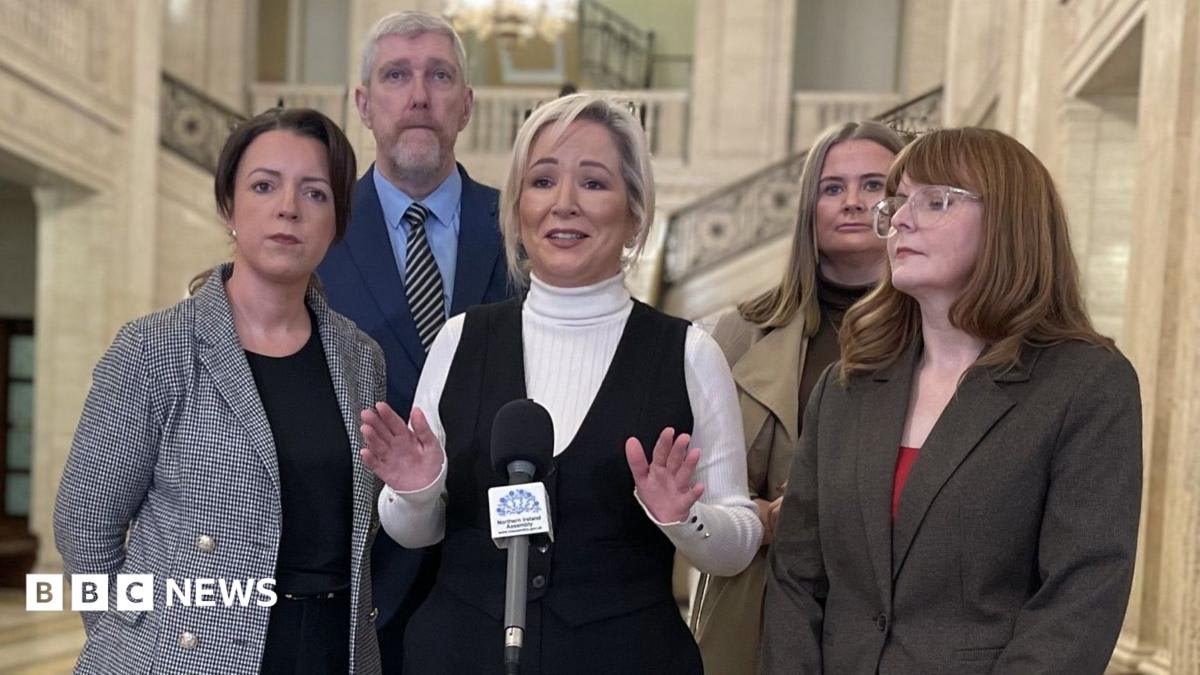
Sinn Féin ministers face a no-confidence vote sparked by the Drumcree dispute, though the DUP acknowledges the motion is procedurally unlikely to succeed. The political tension highlights the ongoing fragility of Northern Ireland's power-sharing government.
Political Instability in Northern Ireland: The Drumcree Fallout
The current political landscape in Northern Ireland is facing renewed volatility as Sinn Féin ministers, including First Minister Michelle O'Neill, face a motion of no confidence. This parliamentary challenge, spurred by the long-standing and highly sensitive Drumcree dispute, underscores the deep-seated divisions that continue to characterize the region's devolved government. The motion, backed by unionist parties, serves as a flashpoint for broader disagreements regarding law, order, and the symbolic politics of the province.
The Mechanics of Power-Sharing
Northern Ireland operates under a delicate four-party devolved government comprising the DUP, the Ulster Unionists, the Alliance Party, and Sinn Féin. This structure, born out of the Good Friday Agreement, is designed to ensure cross-community representation. However, the system also creates inherent friction when one party attempts to leverage institutional mechanisms to challenge the legitimacy of another. The current move to oust Sinn Féin ministers highlights how the power-sharing executive can be paralyzed by ideological impasses.
Unionist Internal Tensions
Within the unionist camp, there is a clear strategic divide. While hardline voices like Jim Allister have pressured the DUP to withdraw Deputy First Minister Emma Little-Pengelly to trigger a collapse of the current executive, DUP leader Gavin Robinson has resisted this path. Robinson’s refusal to pull the plug on the government reflects an awareness of the 'all-or-nothing' nature of Northern Ireland’s political architecture, where removing one deputy effectively dismantles the entire administration, a risk the DUP is currently hesitant to take.
The 'Absurdity' of Symbolic Motions
Despite the gravity of the accusations—with Robinson stating that those who break the law must be held accountable—the DUP has openly acknowledged the practical futility of the no-confidence motion. Because of the specific voting thresholds and the cross-community consent requirements built into the devolved system, the motion is effectively performative. It acts as a political signal to their respective electoral bases rather than a realistic path toward changing the current government composition.
Broader Implications and Future Trends
This dispute marks a concerning trend where historic grievances like Drumcree continue to dictate contemporary legislative agendas. As long as parties use these motions as tools for rhetorical signaling, the efficiency of the devolved government remains in jeopardy. Moving forward, the executive will likely continue to struggle with gridlock, as the reliance on 'punishment' politics threatens to overshadow the delivery of public services and economic governance in Northern Ireland.
Conclusion
The motion of no confidence serves as a stark reminder of the fragility of the power-sharing executive. While the DUP and other unionist parties navigate the internal pressure to adopt a more aggressive stance against Sinn Féin, the structural reality of the Northern Irish government ensures that such motions remain symbolic. Without a shift toward collaborative problem-solving, the region risks remaining trapped in a cycle of legislative stalemate fueled by historical discord.