As Vikram-1 reaches orbit, Skyroot faces a steep climb to business success
Source Entity
India Latest News: Top National Headlines Today & Breaking News | The Hindu
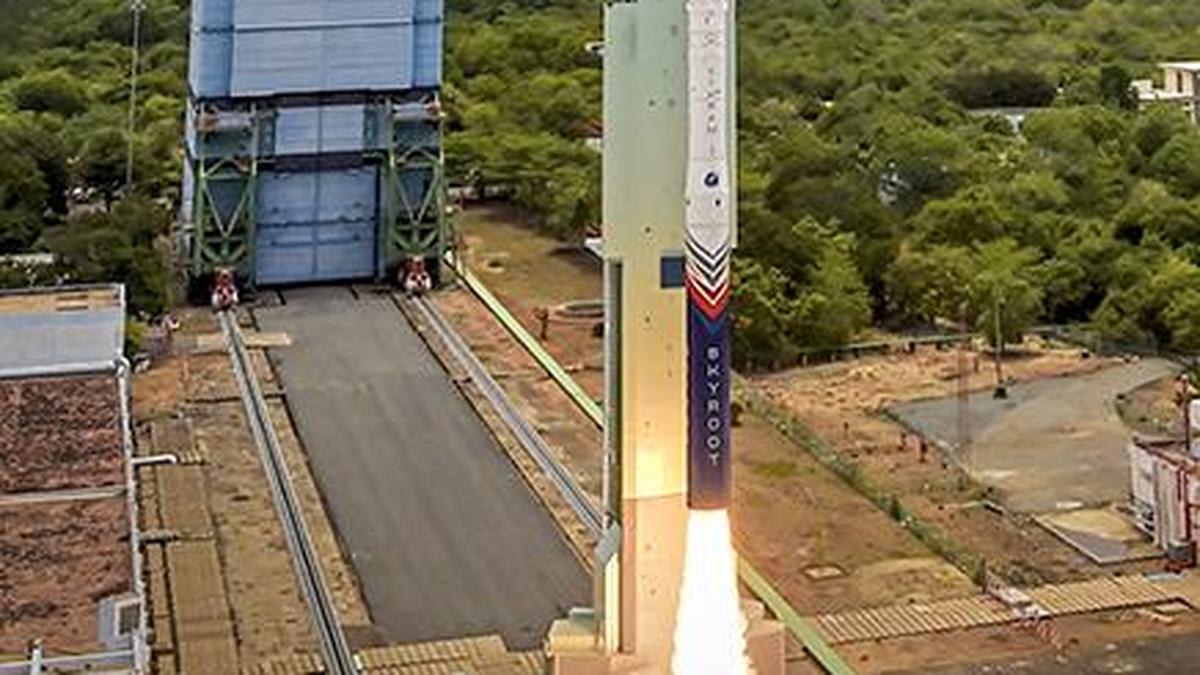
Skyroot Aerospace has successfully launched Vikram-1, India's first privately developed orbital rocket, during 'Mission Aagaman'. This milestone makes India only the third country globally to achieve private orbital launch capability.
A New Era for Indian Space Exploration: The Success of Mission Aagaman
India has officially entered a new epoch of aerospace achievement with the successful maiden orbital flight of the Vikram-1 rocket. Developed by Skyroot Aerospace, this mission, aptly named 'Mission Aagaman' (meaning arrival), represents a pivotal shift in the nation's space strategy. By successfully placing technology demonstration payloads and postcards into low earth orbit, Skyroot has transitioned India from a state-led space program to a diversified ecosystem where private enterprise can lead orbital endeavors.
Technical Prowess and Operational Resilience
The Vikram-1 is not merely a symbolic achievement but a sophisticated piece of engineering. As a four-stage rocket, it is specifically designed for rapid launch services, aiming to provide a more agile and responsive alternative to traditional, larger launch vehicles. The mission's execution at the Satish Dhawan Space Centre in Sriharikota demonstrated significant operational maturity. Despite a 'planned hold' minutes before the initial takeoff—a common but tense occurrence in rocket science—the team successfully rescheduled and executed the launch at 12:05 p.m. on July 18, 2026, proving the vehicle's reliability and the ground crew's precision.
The Synergy of Youth Talent and Government Support
A defining characteristic of this mission was the explicit endorsement from Prime Minister Narendra Modi, who hailed the 'talent of youth' involved in the project. This alignment between government vision and private innovation is highlighted by the inclusion of postcards from the Prime Minister himself among the payloads. This gesture underscores a strategic national pivot toward empowering young entrepreneurs and engineers to drive the 'historic new frontier' of space technology, moving beyond the legacy of the Indian Space Research Organisation (ISRO) to foster a competitive private sector.
Global Standing and Competitive Advantage
The success of Vikram-1 places India in an elite and extremely small group of nations. According to the reports, India is now only the third country in the world to achieve orbital launch capability through a privately developed launch vehicle. This puts India on a similar trajectory as the United States and China, where private entities have disrupted the traditional aerospace monopoly. By establishing this capability, India significantly enhances its sovereign access to space and reduces its reliance on government-funded schedules for smaller satellite deployments.
Future Implications for the Private Space Sector
Looking forward, the success of Mission Aagaman is likely to trigger a surge in private investment within the Indian space-tech corridor. The focus on 'rapid launch services' suggests that Skyroot and future competitors will target the growing market for small-satellite constellations, which require frequent and flexible launch windows. This democratization of space access will likely accelerate advancements in telecommunications, earth observation, and climate monitoring, as smaller companies and research institutions can now envision a more affordable path to orbit.
Conclusion
Mission Aagaman is more than a successful rocket launch; it is a validation of India's private sector capabilities. By successfully deploying tech payloads into orbit via the Vikram-1, Skyroot Aerospace has fundamentally altered the landscape of Indian aerospace. The combination of technical innovation, youth-driven talent, and strategic governmental support ensures that India will remain a dominant force in the global space economy for decades to come.
Multiple Citing Sources
Verification Required?