‘Government cruel for ignoring Wangchuk's fast,’ says Dipke, as activist completes day 18 of hunger strike
Source Entity
India Latest News: Top National Headlines Today & Breaking News | The Hindu
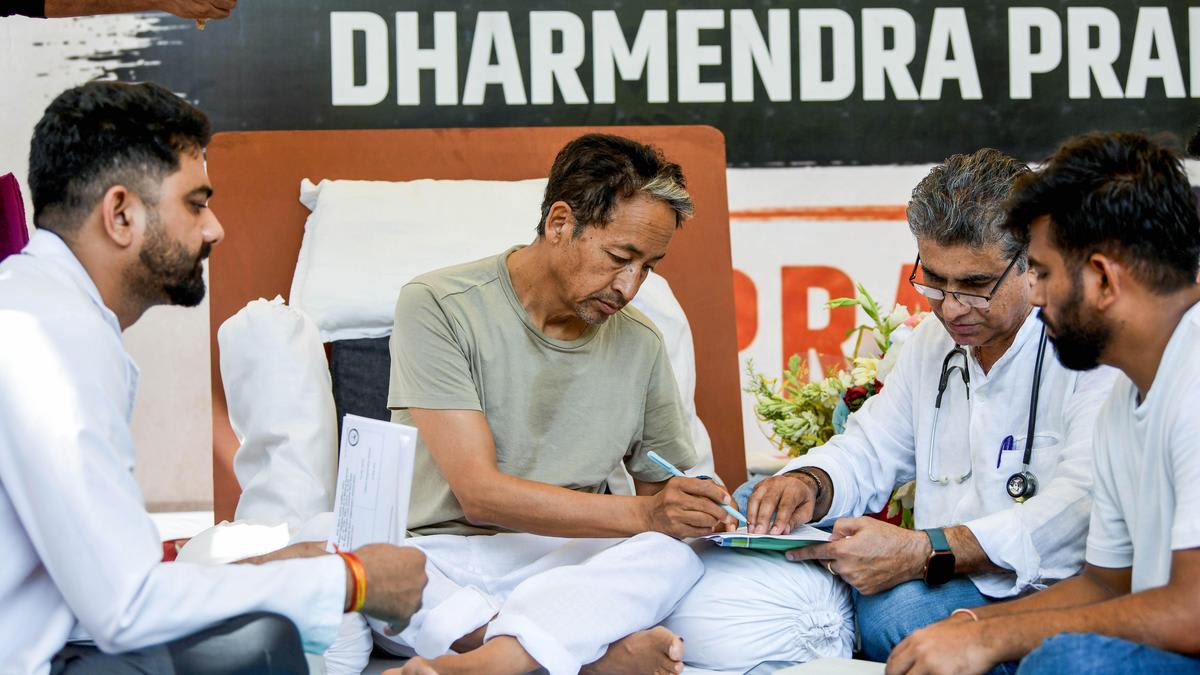
Sonam Wangchuk has reached day 18 of his hunger strike and is reported to be in a 'very weak' condition under constant medical vigilance. Activist Dipke has condemned the government's lack of response as 'cruel'.
Critical Health Crisis: Sonam Wangchuk's Day 18 Hunger Strike
The situation surrounding renowned activist and educator Sonam Wangchuk has reached a critical juncture as he completes the 18th day of his hunger strike. According to the latest medical bulletins issued by the CJP, Wangchuk's physical condition has deteriorated significantly, with medical professionals describing him as "very weak." The necessity for 24-hour medical vigilance underscores the severity of the physiological toll that prolonged fasting takes on the human body, raising urgent concerns about his survival if the impasse continues.
The Ethics of State Indifference
Central to the current discourse is the scathing critique provided by Dipke, who has characterized the government's refusal to engage with Wangchuk as "cruel." This sentiment reflects a growing frustration among supporters and observers who view the government's silence not merely as a political strategy, but as a humanitarian failure. When a high-profile figure known for peaceful advocacy reaches a state of medical fragility, the lack of a diplomatic or administrative response is often interpreted as a calculated gesture of indifference toward the grievances of the region he represents.
Contextualizing the Struggle for Ladakh
To understand the gravity of this fast, one must look at the broader socio-political landscape of Ladakh. Wangchuk's protest is not an isolated act of defiance but is rooted in the deep-seated anxieties of the Ladakhi people regarding their environmental and political autonomy. The demands typically center around the inclusion of Ladakh in the Sixth Schedule of the Indian Constitution, which would provide safeguards for tribal lands and cultural identity. The transition of Ladakh into a Union Territory has left a vacuum in local representation, leading to the current state of unrest and the desperate measure of a hunger strike.
The Environmental Stakes
Beyond the political demands, Wangchuk's fast serves as a alarm bell for the fragile Himalayan ecosystem. Ladakh is one of the most climate-vulnerable regions in the world, facing threats from industrial exploitation and melting glaciers. By putting his own life on the line, Wangchuk is attempting to draw international and national attention to the need for sustainable development and the protection of the high-altitude desert from unregulated corporate interests. The government's perceived ignoring of these pleas is seen by activists as a signal that economic interests may be taking precedence over ecological preservation.
Potential Trajectories and Future Implications
Looking forward, the government faces a precarious situation. Should Wangchuk's health collapse, the resulting public outcry could transform a regional demand into a national crisis, potentially sparking widespread protests across Ladakh and beyond. Conversely, if the government chooses to engage now, it may set a precedent for negotiating with grassroots activists. The tension between maintaining a firm administrative stance and addressing humanitarian concerns will likely define the next few days of this standoff.
Conclusion: A Call for Dialogue
In summary, the 18th day of Sonam Wangchuk's fast marks a dangerous tipping point. With medical bulletins confirming his weakness and critics labeling the government's inaction as cruelty, the situation has moved beyond a simple political disagreement into a medical emergency. The resolution of this crisis depends entirely on whether the government prioritizes a diplomatic dialogue over continued silence, ensuring that the democratic right to protest does not end in a preventable tragedy.
Verification Required?