'Will we just watch him succumb?' : Sonam Wangchuk's health worsens after 16 days of fast
Source Entity
TOI NEWS DESK
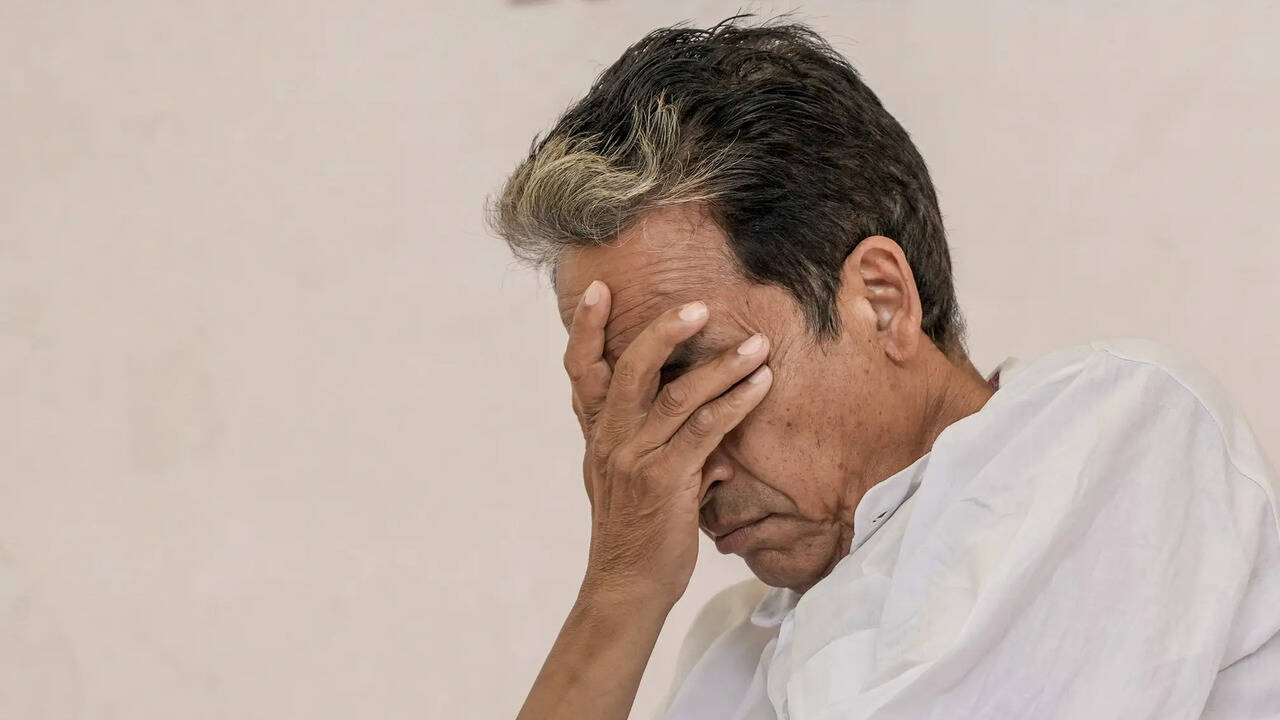
Sonam Wangchuk's health visibly worsens as he completes 16 days of hunger strike NEW DELHI: Educator and climate activist Sonam Wangchuk's health has worsened significantly on the 16th day of his ind...
The Crisis of Conviction: Analyzing Sonam Wangchuk's Hunger Strike
The deteriorating health of Sonam Wangchuk, a renowned educator and climate activist, after 16 days of a hunger strike in New Delhi, marks a critical juncture in the ongoing struggle for the rights of the people of Ladakh. As Wangchuk's physical condition worsens, the protest has evolved from a localized demand into a national conversation regarding the balance between central governance and regional autonomy. The urgency expressed by supporters—questioning if the world will simply watch him succumb—underscores the high stakes of this non-violent confrontation with the state.
The Core Demands: Statehood and the Sixth Schedule
To understand the gravity of this fast, one must analyze the specific political demands driving it. Wangchuk is advocating for Ladakh to be granted full statehood and, crucially, inclusion under the Sixth Schedule of the Indian Constitution. The Sixth Schedule is designed to protect the tribal populations of Northeast India by allowing for the creation of Autonomous District Councils (ADCs) that have legislative, judicial, and administrative powers over land, forests, and water. For Ladakh, these protections are seen as the only viable shield against unregulated industrialization and land acquisitions that could threaten the region's unique cultural identity and ancestral lands.
Ecological Imperatives in a Fragile Landscape
Beyond the political framework, Wangchuk's protest is deeply rooted in environmental activism. As a pioneer of sustainable innovation—best known for his 'Ice Stupas' to combat water scarcity—Wangchuk argues that without local governance, the fragile Himalayan ecosystem is at risk. The high-altitude desert of Ladakh is extremely susceptible to climate change and ecological degradation. By demanding local control, Wangchuk is asserting that the people who live on the land are the best stewards of its preservation, arguing that centralized decision-making from New Delhi often overlooks the nuanced ecological needs of the trans-Himalayan region.
Historical Context: From UT Status to Discontent
The current unrest is a complex reaction to the events of 2019, when the Indian government revoked Article 370 and bifurcated the state of Jammu and Kashmir, turning Ladakh into a separate Union Territory (UT). Initially, many in Ladakh welcomed this move, believing it would bring more direct funding and development. However, the lack of a legislature and the perceived erosion of local decision-making power have led to widespread disillusionment. The transition to a UT meant that Ladakh moved from having a representative voice in a state assembly to being governed primarily by appointed officials, sparking the current wave of protests led by figures like Wangchuk.
The Tradition of the Hunger Strike in Indian Democracy
Wangchuk's choice of a hunger strike is a deliberate invocation of Gandhian philosophy, which has a profound historical resonance in Indian political culture. By utilizing Satyagraha (truth-force), Wangchuk aims to create a moral crisis for the government, shifting the conflict from a legalistic debate over administrative boundaries to a humanitarian concern. The physical toll of a 16-day fast serves as a visceral symbol of the desperation felt by the Ladakhi people, attempting to leverage public empathy to force a diplomatic breakthrough where bureaucratic channels have failed.
Future Trends and Potential Outcomes
Looking forward, the trajectory of this event will likely depend on the central government's willingness to negotiate. If the government continues its current stance of silence or minimal engagement, there is a significant risk of wider civil unrest across Ladakh, potentially disrupting strategic border regions. Conversely, a compromise—such as granting partial autonomy or forming a high-level committee with binding powers—could stabilize the region. The international community is also likely to take note, as Ladakh's stability is intertwined with broader geopolitical tensions in the Asian highlands.
Conclusion: A Crossroads for Regional Governance
In summary, Sonam Wangchuk's failing health is a stark reminder of the tension between national security interests and regional democratic aspirations. The fast is not merely an individual's struggle but a manifestation of Ladakh's collective anxiety over its future. Whether the government responds to this humanitarian crisis will determine not only the fate of an activist but also the precedent for how India manages its most ecologically sensitive and strategically vital frontier territories.