'Not in good shape but ...': Sonam Wangchuk refuses to end fast despite health concerns
Source Entity
TOI NEWS DESK
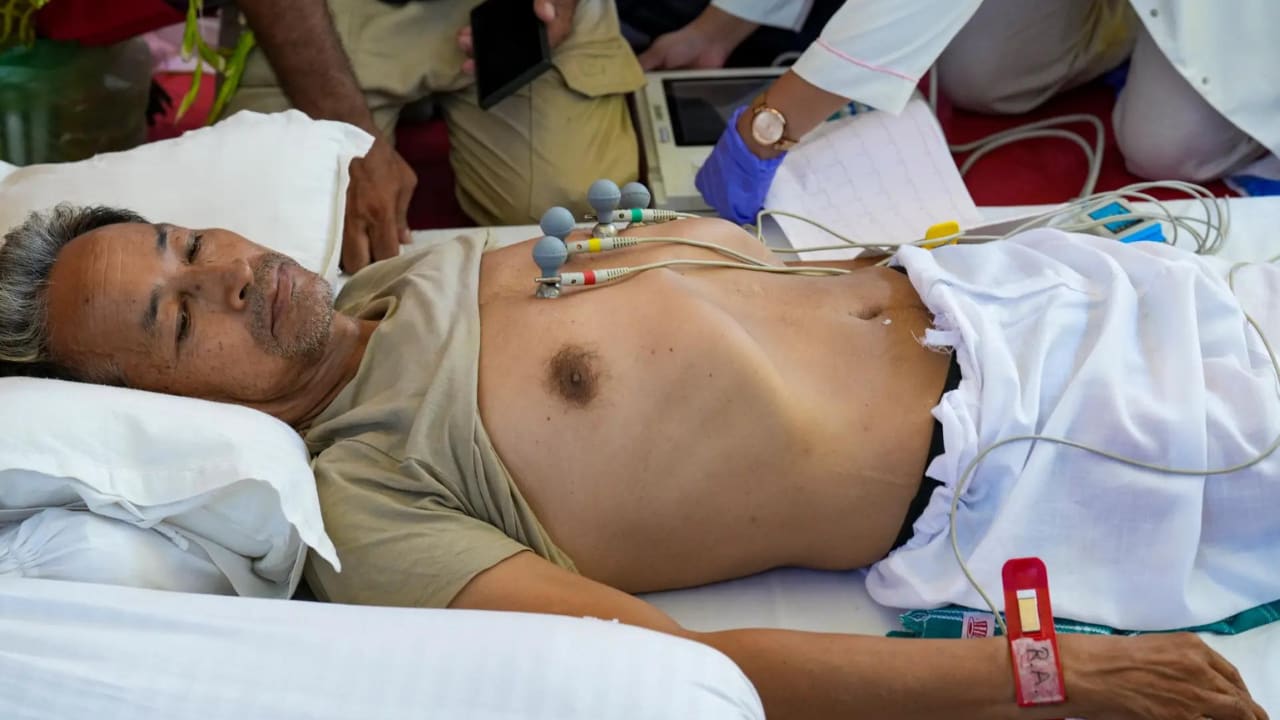
Activist Sonam Wangchuk continues his hunger strike into its nineteenth day, refusing to break his fast despite health concerns. He has urged his supporters to pivot their focus toward a planned march to Parliament on July 20 to demand government accountability.
The Persistence of Protest: Analyzing Sonam Wangchuk's Hunger Strike
Sonam Wangchuk, a renowned educator and innovator from Ladakh, has entered the nineteenth day of a grueling hunger strike, signaling a deepening crisis between regional aspirations and central governance. Despite admitting that he is "not in good shape," Wangchuk has steadfastly refused to terminate his fast, choosing instead to leverage his deteriorating physical state as a symbol of the urgency facing the people of Ladakh. This act of civil disobedience is not merely a personal sacrifice but a strategic political tool designed to draw national and international attention to the perceived neglect of the Ladakh region by the central government.
The Socio-Political Context of Ladakh
To understand the gravity of Wangchuk's fast, one must look at the broader historical and political landscape of Ladakh. Since its reorganization as a Union Territory in 2019, there has been a growing demand among the local population for constitutional safeguards, specifically the inclusion of Ladakh under the Sixth Schedule of the Indian Constitution. The Sixth Schedule would provide the region with autonomous district councils, granting them greater control over land, forests, and water—resources that are critical for the fragile Himalayan ecosystem. Wangchuk's protest is the culmination of these long-standing anxieties regarding the loss of indigenous autonomy and the threat of industrial exploitation in a sensitive border zone.
The Strategy of Physical Vulnerability
Wangchuk's refusal to break his fast, even as medical tests show a stable but declining condition, highlights a classic tactic of non-violent resistance. By maintaining the strike for nearly three weeks, he transforms his body into a site of political contestation. The phrase "not in good shape" serves as a poignant reminder of the human cost of political stalemate. This psychological pressure is intended to force the government into a position where it can no longer ignore the protest without appearing indifferent to human suffering, thereby increasing the political cost of government inaction.
Transition from Passive Resistance to Active Mobilization
A critical turning point in this narrative is Wangchuk's call for a Parliament march on July 20. By urging supporters to join a physical march rather than simply asking him to break his fast, Wangchuk is successfully transitioning the movement from a passive, individual-centric protest to a collective, active mobilization. This shift is strategically vital; it moves the epicenter of the struggle from the remote heights of Ladakh to the corridors of power in New Delhi. The march represents an escalation in strategy, aiming to convert symbolic support into a visible, tangible political force that cannot be easily dismissed as a localized grievance.
Implications for Government Accountability
At the core of this protest is the demand for government accountability. Wangchuk's insistence that the fast sends a message about the need for action underscores a perceived gap between government promises and actual implementation. The stability of his medical reports, while reassuring, provides him with the window of time needed to build momentum for the July 20 event. This situation puts the administration in a precarious position: continuing to ignore the protest may embolden the movement, while conceding too quickly may set a precedent for other Union Territories demanding similar autonomous status.
Future Trends and Potential Outcomes
Looking ahead, the success of the July 20 Parliament march will likely determine the trajectory of the movement. If the mobilization is massive and peaceful, it may compel the central government to enter into formal negotiations or offer a compromise regarding the Sixth Schedule. However, if the government remains unresponsive, we may see an intensification of protests across Ladakh, potentially leading to civil unrest in a region that is strategically critical due to its proximity to China and Pakistan. The intersection of environmental protection and political autonomy will continue to be the primary driver of this conflict.
Conclusion
Sonam Wangchuk's ongoing hunger strike is a powerful testament to the role of individual agency in challenging state narratives. By intertwining his personal health with the political health of Ladakh, he has created a high-stakes scenario that demands a resolution. The upcoming march to Parliament serves as the ultimate test of whether the government will prioritize administrative control over the democratic aspirations of the Ladakhi people.