Why Sonam Wangchuk won’t be joining CJP’s Delhi protest today
Source Entity
Naveed Iqbal
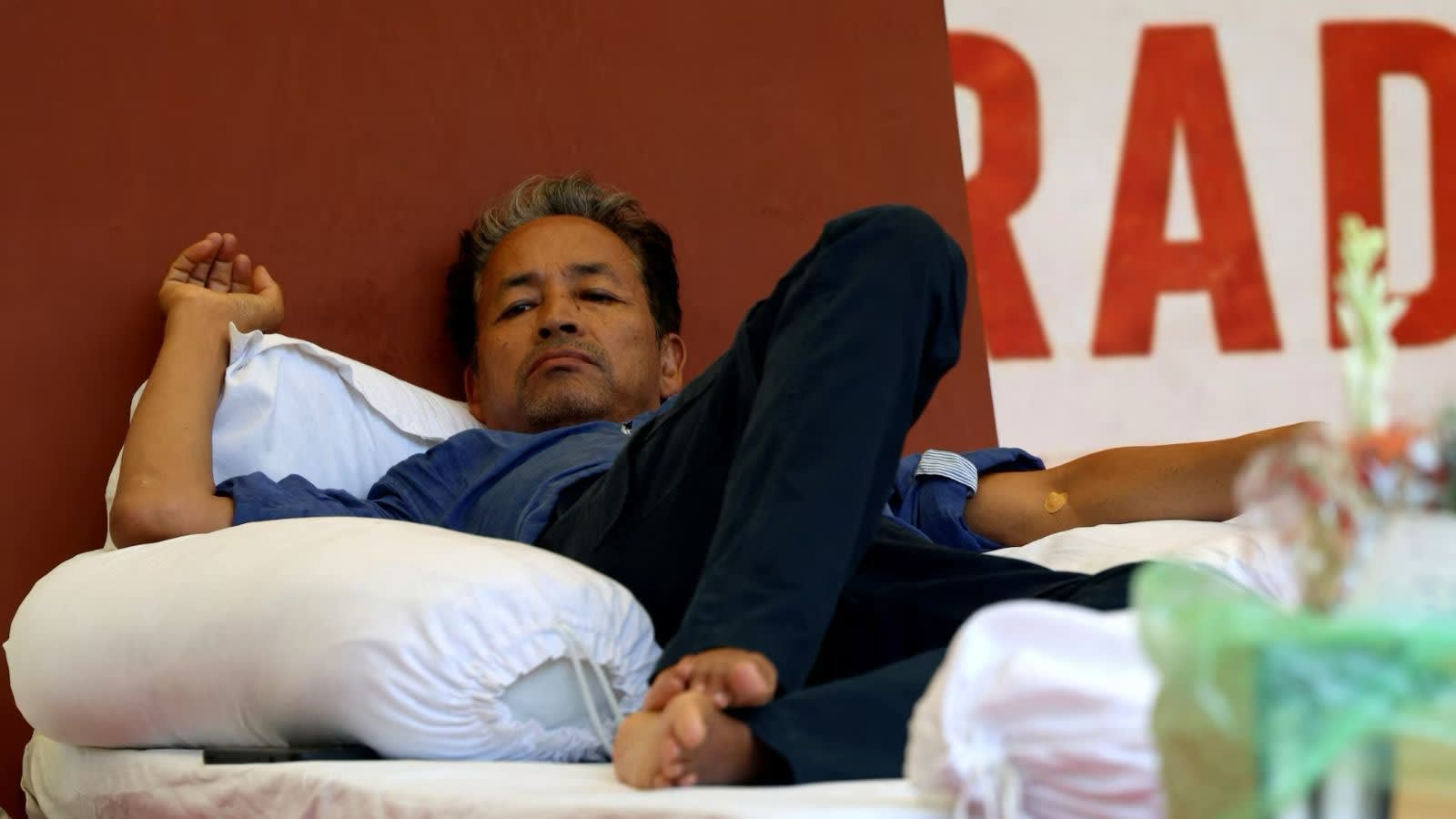
Climate activist Sonam Wangchuk has confirmed he will not attend the Cockroach Janata Party's Delhi protest. He cited urgent work in Ladakh regarding national security and climate resilience preparations as his primary reasons for remaining in the region.
Sonam Wangchuk Prioritizes Ladakh Climate Resilience Over Delhi Protest
The Shift in Activist Focus
Climate activist Sonam Wangchuk has officially announced that he will not be participating in the Cockroach Janata Party’s (CJP) scheduled protest in New Delhi on October 10. While Wangchuk has previously been a prominent voice in nationwide demonstrations, his recent communication via X (formerly Twitter) marks a strategic pivot. By choosing to remain in Ladakh, Wangchuk is emphasizing that his primary obligation lies in the immediate, tangible needs of his home region rather than the political optics of a capital-based demonstration.
National Security and Environmental Preparedness
At the core of Wangchuk's decision is a dual-focus on national security and environmental sustainability. He noted that despite what he describes as government efforts to hinder his work, his team continues to operate in the high-altitude region. This commitment is framed through the lens of 'national security,' suggesting that for Wangchuk, the stability of Ladakh—both ecologically and infrastructure-wise—is a matter of critical state importance. His absence from Delhi is not a withdrawal from his advocacy, but rather a redirection toward the front lines of climate adaptation.
The Urgency of Winter Preparations
Ladakh’s harsh winters necessitate rigorous preparation, a reality that drives Wangchuk’s current agenda. As the region braces for the upcoming winter, the infrastructure must be fortified to ensure survival and resource continuity. Wangchuk’s mention of 'making preparations' highlights the logistical intensity required to sustain life and security in one of the most challenging terrains in India, effectively rendering his presence in Ladakh indispensable during this transition period.
Technical Solutions for Glacial Risks
Wangchuk’s work is deeply rooted in practical engineering designed to mitigate natural disasters. He highlighted ongoing projects involving the creation of artificial glaciers for water security and essential experiments aimed at GLOF (Glacial Lake Outburst Flood) prevention. These initiatives are not merely local environmental projects; they are proactive safety measures designed to 'defuse' the potential for catastrophic flooding that threatens communities living in the shadow of shifting Himalayan glaciers.
Broader Implications for Activism
This development raises questions regarding the balance between high-profile political protest and grassroots, community-based development. By highlighting his scientific and protective work in Ladakh, Wangchuk illustrates the 'boots-on-the-ground' approach to activism. His choice underscores the reality that for remote, ecologically fragile regions, the most effective form of resistance is often the creation of self-sustaining systems that provide security against both environmental threats and external administrative pressures.
Conclusion: A Strategic Stance
Ultimately, Sonam Wangchuk’s decision to skip the Delhi protest serves as a reminder of the complex priorities faced by regional leaders. By focusing on the tangible challenges of glacial management and water security, he is positioning his work as a foundational element of regional stability. His absence from the national capital should be viewed not as a loss of momentum, but as a calculated prioritization of the immediate, life-sustaining work required to protect Ladakh’s future.