Sotheby's big T. rex auction raises concerns hype and wealth are upending science
Source Entity
Kate Wong, WIRED.com
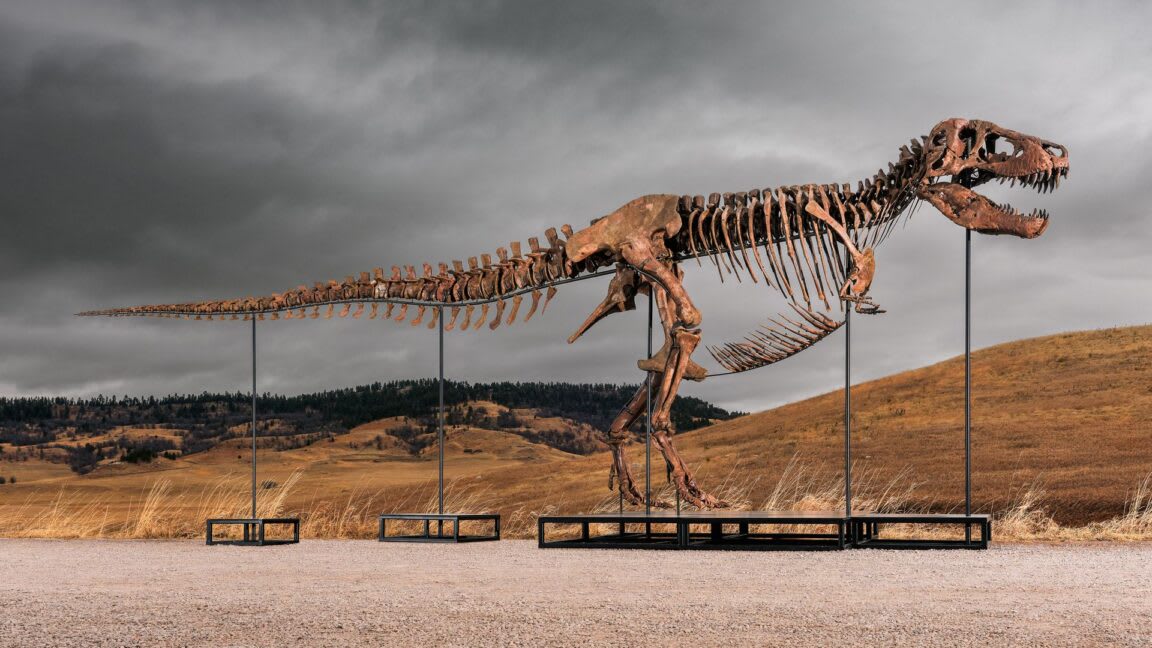
A high-profile T. rex auction at Sotheby's has sparked a critical debate regarding the commercialization of paleontology, as wealthy private collectors increasingly outbid museums, potentially removing priceless scientific specimens from public and academic access.
The Commercialization of Prehistory: Wealth vs. Science
Recent reports regarding a high-profile Tyrannosaurus rex auction at Sotheby's have ignited a fierce debate within the scientific community. While the auction serves as a spectacle of luxury and high-finance, it underscores a systemic crisis in paleontology: the increasing inability of public institutions to compete with the liquid wealth of private collectors. This trend is not merely about the ownership of a rare object, but about who controls the access to the biological history of our planet. When a specimen of this magnitude is sold to the highest bidder, the primary motivation often shifts from scientific inquiry to prestige and investment, potentially sequestering critical data away from the researchers who could use it to unlock the mysteries of evolution.
The Financial Divide in Fossil Acquisition
For decades, museums have been the primary stewards of paleontological finds, operating on budgets funded by government grants and philanthropic donations. However, the rise of "trophy collecting" among the global elite has fundamentally altered the market dynamics. Private buyers, viewing fossils as high-yield alternative assets similar to fine art or rare gemstones, can offer sums that are simply unattainable for most museums. This financial disparity creates a 'market failure' for science; while a museum values a T. rex for its morphological data and educational potential, a private collector may value it for its rarity and status symbol. Consequently, the most complete and well-preserved specimens—which are the most scientifically valuable—are the ones most likely to be priced out of the reach of academic institutions.
The "Black Hole" of Private Collections
The most pressing concern for paleontologists is the potential for fossils to enter a scientific "black hole." When a specimen resides in a museum, it is subject to peer review, available for study by global experts, and displayed for public education. In contrast, a private collection is often closed to the public and restricted to the owner's whim. Even if a collector claims to be 'science-friendly,' the lack of institutional oversight means that specimens may not be curated according to professional standards, leading to degradation or loss of provenance. Furthermore, the pressure to increase the market value of a fossil can lead to over-restoration—where gaps in the skeleton are filled with synthetic materials to make the piece more aesthetically pleasing—which can mislead researchers and corrupt the data derived from the specimen.
Historical Context and the Shift in Stewardship
Historically, paleontology began as the pursuit of "gentleman scientists" in the 19th century, where wealthy individuals funded expeditions and built private cabinets of curiosities. However, the 20th century saw a professionalization of the field, establishing the gold standard that fossils are part of the global heritage of humanity and should be housed in public trusts. The current trend seen in the Sotheby's auction represents a regression toward that earlier era of private ownership, but on a vastly more commercial scale. The transition of fossils from scientific specimens to 'luxury goods' reflects a broader societal trend where the privatization of knowledge and heritage is accelerated by extreme wealth inequality.
Global Implications and Regulatory Challenges
This issue extends beyond the auction house and into the realm of international law and ethics. Many fossils sold in high-end auctions originate from countries with strict laws against the export of cultural and natural heritage. The high prices fetched at houses like Sotheby's can inadvertently incentivize the illegal poaching of fossils from protected sites in regions like Mongolia or North Africa. When the market value of a T. rex reaches millions of dollars, the incentive for illicit excavation grows, often resulting in the destruction of the surrounding geological context—the 'stratigraphy'—which is often more important to scientists than the bone itself for dating and environmental reconstruction.
Future Trends: Toward a New Model of Ownership
Looking forward, the scientific community may be forced to develop new frameworks for dealing with private ownership. We may see a rise in 'hybrid stewardship' models, where private owners are legally bound to allow academic access to their collections in exchange for tax incentives or prestige. Additionally, there will likely be increased pressure on auction houses to implement stricter provenance checks and to encourage 'right of first refusal' for museums. Without a fundamental shift in how we value natural history, we risk a future where the record of life on Earth is fragmented across the private vaults of the ultra-wealthy, leaving the public and the scientific community with only the remnants that the market deemed less valuable.
Summary
The Sotheby's T. rex auction is a symptom of a larger conflict between the free market and the preservation of scientific knowledge. As private wealth continues to drive the price of fossils upward, the risk of losing critical prehistoric data to private collections grows. Protecting the integrity of paleontology requires a concerted effort to prioritize scientific access over commercial gain, ensuring that the history of life remains a public good rather than a private luxury.