SpaceX is gearing up for Starship's 13th test flight later this week
Source Entity
Stephen Clark
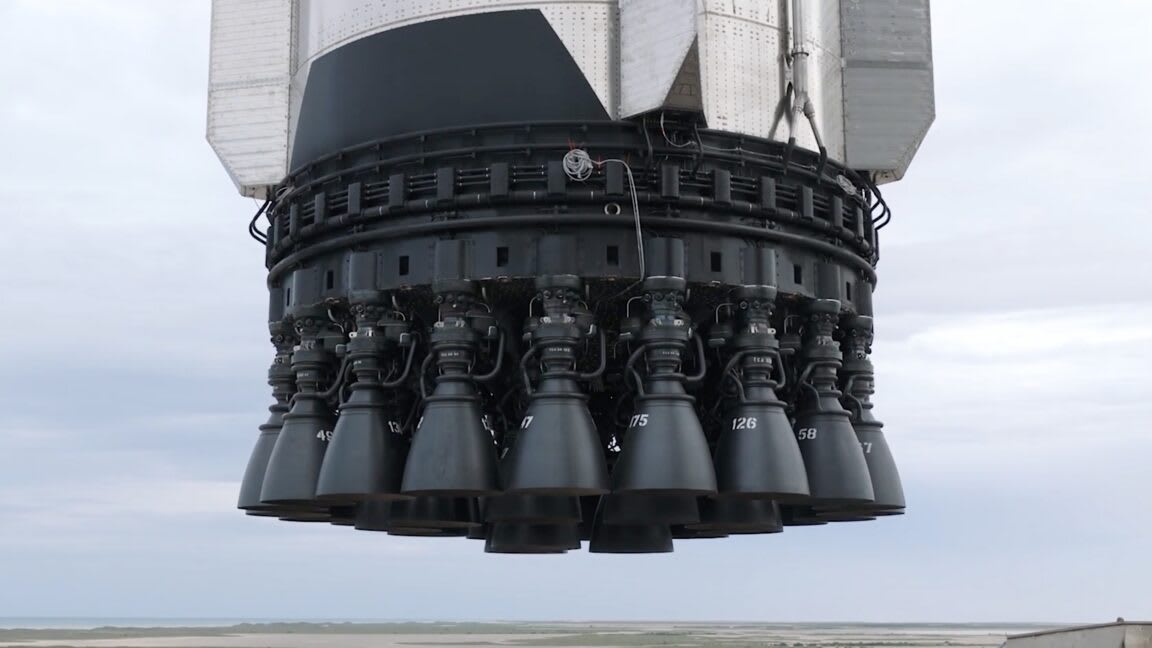
This flight will put Starship under higher pressure and test out new Starlink satellites in orbit.
SpaceX Advances Iterative Testing with Starship's 13th Flight
SpaceX is once again pushing the boundaries of aerospace engineering as it prepares for the 13th test flight of Starship, the most powerful launch vehicle ever constructed. This upcoming mission represents a critical juncture in the company's iterative development process, moving beyond basic flight stability and toward operational utility. By focusing on increasing the pressure thresholds of the vehicle and integrating payload deployment, SpaceX is transitioning Starship from a developmental prototype into a functional orbital delivery system.
Engineering Under Pressure: Stress Testing the Airframe
A primary objective of this flight is to place the Starship vehicle under "higher pressure." In the context of rocket science, this likely refers to increasing the propellant tank pressures or testing the structural integrity of the hull during the extreme thermal and mechanical loads of ascent and reentry. By deliberately pushing the vehicle to its limits, SpaceX engineers can identify the exact point of structural failure, allowing them to optimize the weight-to-strength ratio of the stainless-steel alloy used in the ship's construction. This "test-to-failure" philosophy is a hallmark of SpaceX's approach, ensuring that the final operational version of Starship possesses a known and reliable safety margin.
The Starlink Synergy: Expanding Orbital Infrastructure
The inclusion of new Starlink satellites in this flight highlights the symbiotic relationship between SpaceX's launch capabilities and its satellite internet constellation. Starship is specifically designed to deploy massive quantities of Starlink v2 satellites, which are significantly larger and more capable than previous versions. These satellites require the immense payload capacity that only Starship can provide. Successfully deploying these satellites during a test flight not only validates Starship's role as a commercial freighter but also accelerates the global rollout of high-speed, low-latency internet, creating a self-sustaining revenue stream that funds further deep-space exploration.
Historical Context: The Path to Flight 13
To understand the significance of the 13th flight, one must look at the trajectory of the Starship program. From the early prototypes that ended in spectacular explosions (SN series) to the first integrated flight tests that struggled with stage separation, the program has been defined by rapid prototyping. Each single-digit flight provided data on Raptor engine reliability and heat shield effectiveness. Reaching the 13th flight suggests that SpaceX has largely solved the primary propulsion and separation challenges and is now refining the nuanced aspects of orbital maneuvers and payload integration, moving closer to the goal of full and rapid reusability.
Broader Implications for Interplanetary Travel
Beyond the immediate goals of Starlink deployment, this flight is a stepping stone toward the Artemis program and the eventual colonization of Mars. The ability to handle higher pressures is essential for the complex propellant transfer operations required for lunar and Martian missions. If Starship can reliably sustain these pressures while carrying heavy payloads, it proves the feasibility of the "orbital refueling" concept. This capability is the lynchpin for any mission beyond Low Earth Orbit (LEO), as it allows the ship to leave Earth's gravity well with a full tank of fuel for the long journey to the Moon or Mars.
Future Trends: Towards a Fully Reusable Economy
Looking forward, the success of Flight 13 will likely pave the way for more ambitious tests, including the precision landing and "catching" of the Super Heavy booster using the launch tower's mechanical arms. As SpaceX masters the art of high-pressure orbital flights and payload deployment, we can expect a drastic reduction in the cost per kilogram to orbit. This shift will likely trigger a new era of space industrialization, where large-scale orbital manufacturing and permanent lunar bases become economically viable due to the sheer volume and frequency of Starship launches.
Conclusion
Starship's 13th test flight is more than just another launch; it is a rigorous stress test of both hardware and operational logic. By combining high-pressure structural testing with the practical application of Starlink deployment, SpaceX is bridging the gap between experimental rocketry and a scalable transportation infrastructure. The outcome of this mission will provide vital data that will influence the next decade of human presence in space.