Spain's rail authorities face European fraud probe after Urda rail disaster
Source Entity
BBC News
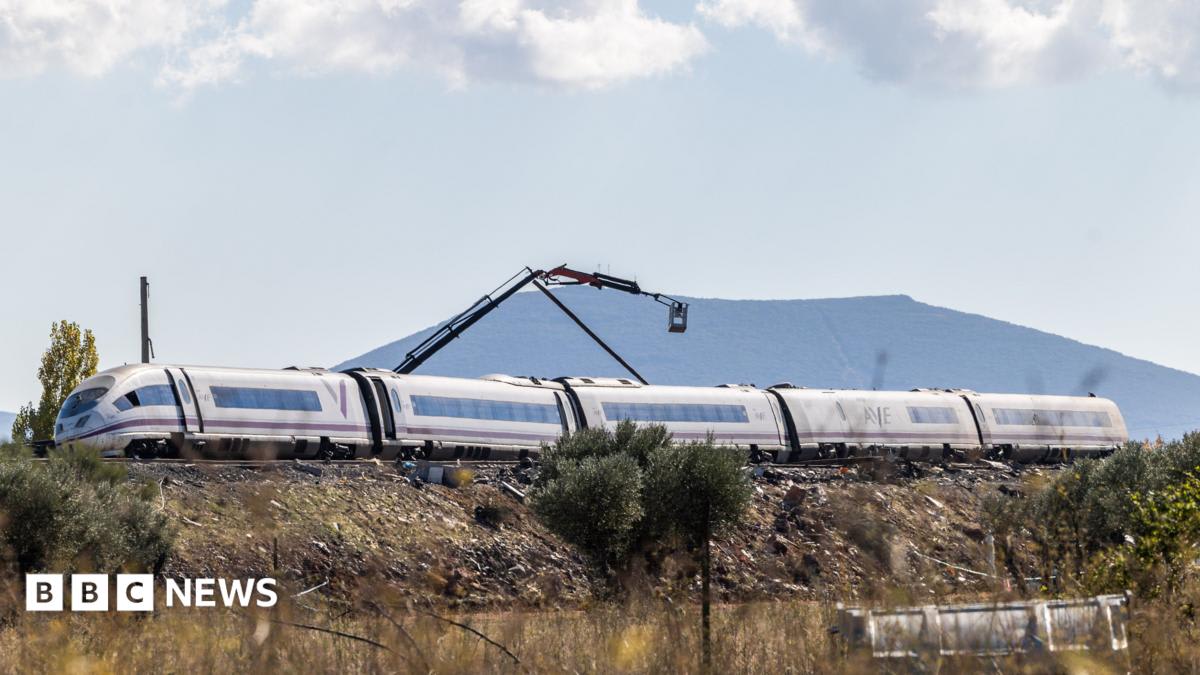
European Union prosecutors are investigating the potential misuse of infrastructure funds following a deadly train crash on Spain's Madrid-Seville line. This inquiry follows a series of rail disasters, including a previous incident in January, raising serious questions about safety standards and oversight.
The Urda Rail Disaster: A Deep Investigation into EU Oversight
The Scope of the European Fraud Probe
European Union prosecutors have launched a formal investigation into the potential misuse of EU funds earmarked for the modernization and safety upgrading of the Spanish railway network. This probe specifically focuses on the Madrid-Seville high-speed line, the site of a catastrophic collision that resulted in 69 fatalities on October 28. The investigation, supported by the Spanish Guardia Civil, is currently targeting the administrative offices of Adif, the state-owned rail infrastructure authority, and the AESF, the national rail safety agency. The core objective is to determine whether allocated European funds were misappropriated or mismanaged, directly contributing to the systemic failures that enabled this tragedy.
A Pattern of Systemic Failure
This investigation is particularly concerning as it marks the second major inquiry into Spanish railway finances within a single calendar year. In January, a separate rail accident at Adamuz resulted in 46 deaths, also occurring on the Madrid-Seville line. The recurrence of fatal accidents on the same infrastructure corridor suggests a deeply ingrained systemic issue rather than a series of isolated human errors. The fact that the EU has opened multiple fraud inquiries indicates that Brussels is increasingly skeptical of the transparency and efficacy of safety expenditures managed by the relevant Spanish authorities.
The Mechanics of the Tragedy
The October 28 disaster occurred when a train operated by the state-owned rail provider Renfe collided with a stationary train belonging to the private operator Iryo. The collision, which took place outside of Urda, is classified as one of the most severe railway incidents in Europe in the 21st century. The involvement of both a state operator and a private entity highlights the complexities of modern rail management, where infrastructure oversight remains the responsibility of state agencies like Adif, even as private competition increases on high-speed lines.
Implications for EU Infrastructure Funding
For the European Union, the misuse of cohesion and infrastructure funds is a matter of both fiscal integrity and public safety. These funds are intended to provide the technological upgrades—such as advanced signaling and automatic braking systems—necessary to ensure passenger safety. If these funds were diverted, the political and legal repercussions for Spanish rail authorities will be significant. The EU's involvement signals a shift toward stricter, centralized oversight of how member states utilize regional development funds for critical transportation networks.
Future Outlook and Accountability
Looking forward, the results of this probe are expected to reshape the governance of Spanish rail infrastructure. If investigators find evidence of negligence or fraud, it will likely lead to a restructuring of the AESF and a more rigorous auditing process for all future rail projects. Furthermore, the tragedy has catalyzed a national debate regarding the prioritization of speed over safety on high-speed rail networks. Restoring public trust in the Madrid-Seville corridor will require not only legal accountability but also a comprehensive, transparent overhaul of the safety protocols that currently appear to be failing the Spanish public.