Find 8 differences in this warm and inviting living room — your 60 seconds start now
Source Entity
The Indian Express
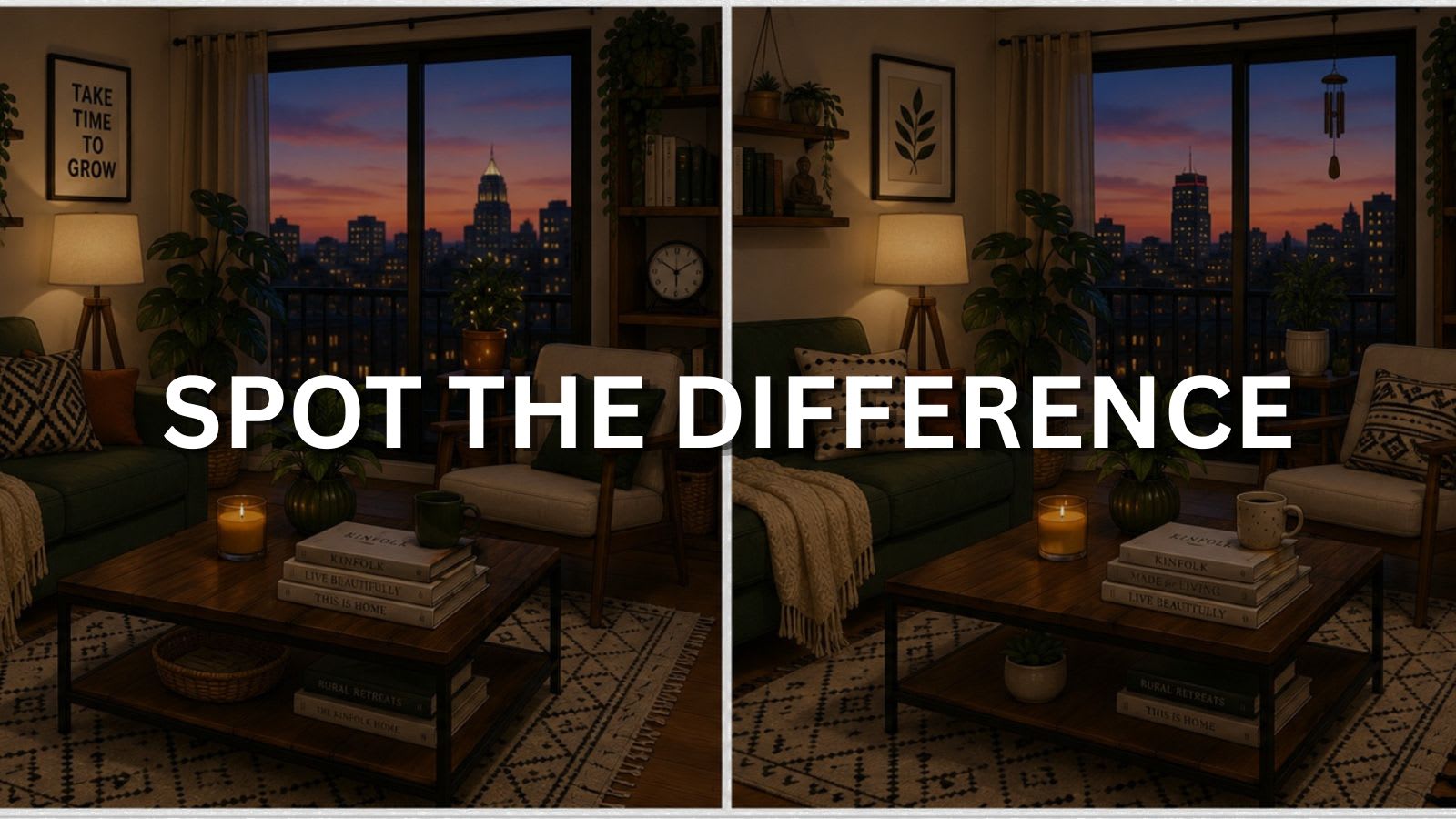
This visual puzzle challenges readers to identify eight subtle differences between two images of a living room. It serves as a popular form of digital brain training and interactive engagement.
The Art of Visual Perception
Visual puzzles, such as the 'spot the difference' challenge, occupy a unique space in digital entertainment and cognitive stimulation. By presenting two nearly identical images of a warm, inviting living room, this activity forces the human brain to engage in high-level pattern recognition and selective attention. The task of finding eight specific discrepancies within a 60-second window is designed to test how quickly our visual cortex processes environmental details.
Analyzing the Discrepancies
The specific differences provided in the challenge range from structural changes to minor decorative variations. For instance, the presence of a toaster on one countertop versus its absence in the other, and the shifting color of a dish towel from blue-striped to solid green, require the viewer to scan the periphery of the image. More complex changes, such as the replacement of a French press with a pastry or the substitution of white daisies for pink tulips, demonstrate how subtle modifications in a domestic setting can fundamentally alter the narrative of the scene.
Cognitive Benefits of Puzzle Solving
Engaging in these types of visual exercises offers more than just fleeting entertainment. Psychologically, these puzzles serve as a form of mindfulness, requiring the participant to focus entirely on the present task. By forcing the brain to isolate specific objects—like the black versus green teapot or the changing design of the lemon bowl—individuals can improve their visual processing speed and attention to detail, skills that are highly transferable to real-world tasks.
The Role of Digital Engagement
In the era of rapid digital consumption, these interactive puzzles have become a staple of online content. They provide a low-stakes environment for users to challenge themselves while interacting with aesthetically pleasing, 'warm' interior design imagery. The inclusion of a time constraint, such as the 60-second limit mentioned, adds a layer of gamification that encourages repeat attempts and social sharing, turning a solitary activity into a competitive experience.
Conclusion: The Value of Detail
Ultimately, this 'spot the difference' exercise highlights the importance of observational awareness. Whether it is noticing the botanical artwork that appears only in the right-hand image or detecting the altered pattern on a chair cushion, the activity rewards patience and precision. While seemingly simple, the exercise effectively demonstrates how our brains categorize and store visual information, reminding us that even in a familiar setting like a living room, there is always more to discover if one knows where to look.