‘India has lowest data prices’: Zoho CEO Sridhar Vembu hits back at Elon Musk
Source Entity
The Indian Express
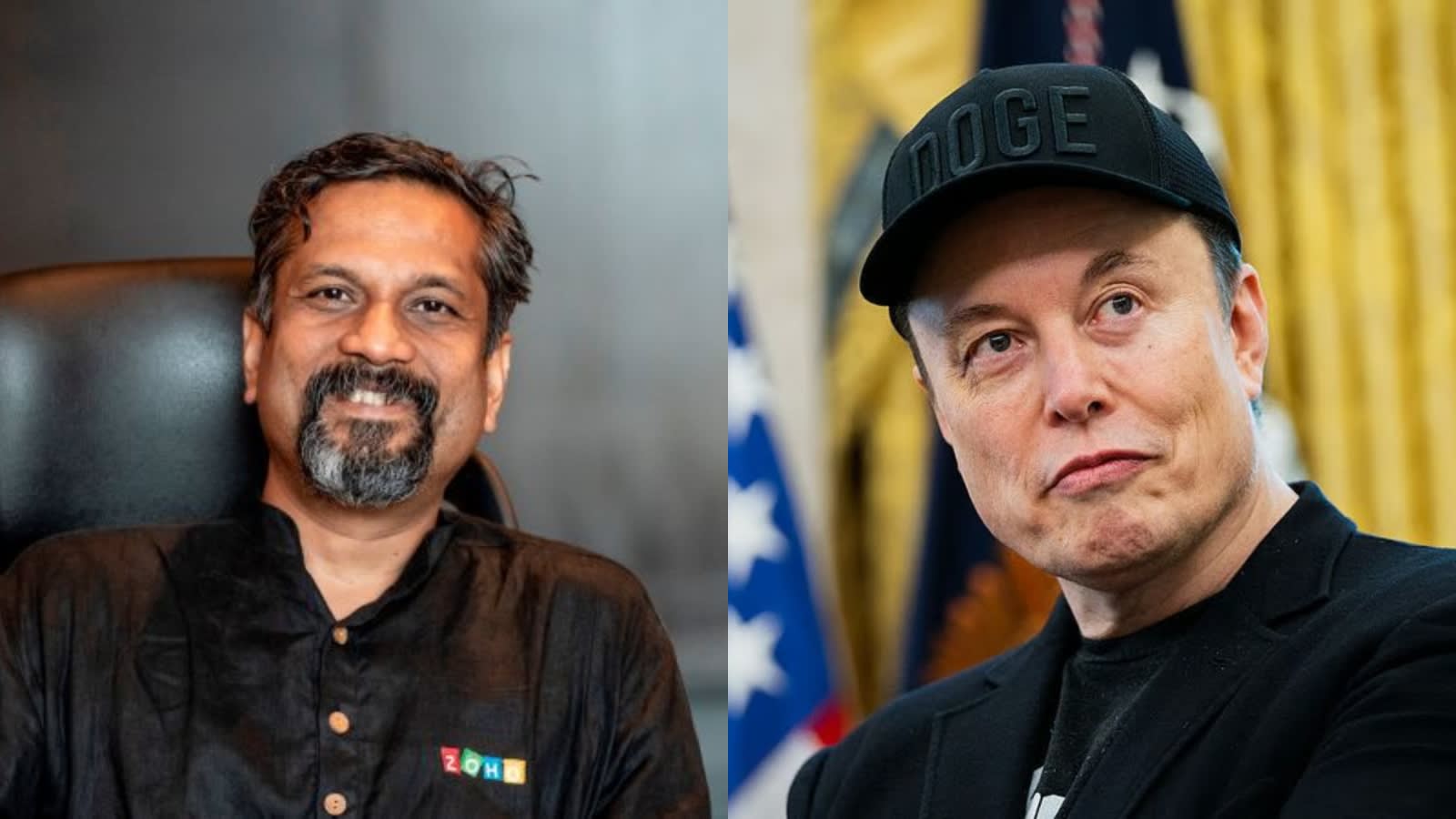
Zoho CEO Sridhar Vembu has defended India’s competitive telecom market against Elon Musk’s claims that 'oligarchs' are blocking Starlink. The Indian government has officially denied these allegations, asserting that its satellite communication regulatory framework is fair and non-discriminatory.
The Clash Over Indian Satellite Connectivity
The landscape of Indian telecommunications has become the stage for a high-stakes confrontation between SpaceX founder Elon Musk and the Indian corporate and regulatory establishment. The tension escalated when Musk, via his social media platform X, alleged that 'certain oligarchs' were obstructing the entry of Starlink into the Indian market to maintain a 'monopolistic chokehold' on consumers. This accusation marks a significant point of friction between global tech giants and the domestic market dynamics of India.
The Defense of the Indian Market
Zoho founder and CEO Sridhar Vembu has emerged as a vocal defender of India's current digital ecosystem. In a series of rebuttals to Musk’s claims, Vembu highlighted the affordability and accessibility of Indian data, noting that the nation boasts some of the lowest data prices globally. By pointing to the nation’s robust digital payment infrastructure and affordable medicine, Vembu framed the Indian market not as a closed, monopolistic system, but as a hyper-competitive environment fostered by the current administration’s support for startups and digital expansion.
Government Regulatory Stance
The Ministry of Communications has formally responded to the controversy, categorically rejecting Musk’s claims of discriminatory regulatory practices. The government asserts that it has implemented a fair and non-discriminatory authorization framework specifically designed to govern telecommunication services, including the emerging satellite communication sector. This official rebuttal serves to underscore the government's position that entry into the Indian market is dictated by established policy rather than the influence of private interests.
The Market Duopoly Context
At the heart of Musk’s grievance is the current structure of the Indian telecom sector, which is largely dominated by two major players: Reliance Jio and Bharti Airtel. Together, these entities control over 80% of the market share. Musk’s rhetoric suggests that the incumbent power dynamics are effectively creating barriers to entry for satellite internet services, though he has refrained from naming the specific entities he describes as 'oligarchs.'
Broader Implications for Global Tech
This incident highlights a broader trend where global satellite internet providers are increasingly clashing with national telecom incumbents. As Starlink seeks to capture the vast, untapped potential of rural and remote connectivity in India, the regulatory hurdles it faces are being viewed through the lens of protectionism versus innovation. The outcome of this dispute will likely set a precedent for how future satellite-based internet providers navigate India's complex regulatory environment.
Future Trends and Conclusion
Looking ahead, the resolution of this conflict will depend on whether Starlink can align its business model with the government's newly established authorization frameworks. While the debate currently centers on allegations of obstruction, the long-term trend suggests that India’s push toward complete digital connectivity will necessitate a balance between protecting domestic infrastructure and inviting global innovation to bridge the remaining connectivity gaps.
Multiple Citing Sources