'Wada kursi se bada hai': Srinagar MP to quit NC, targets J&K CM Omar over ideology
Source Entity
NASEER GANAI
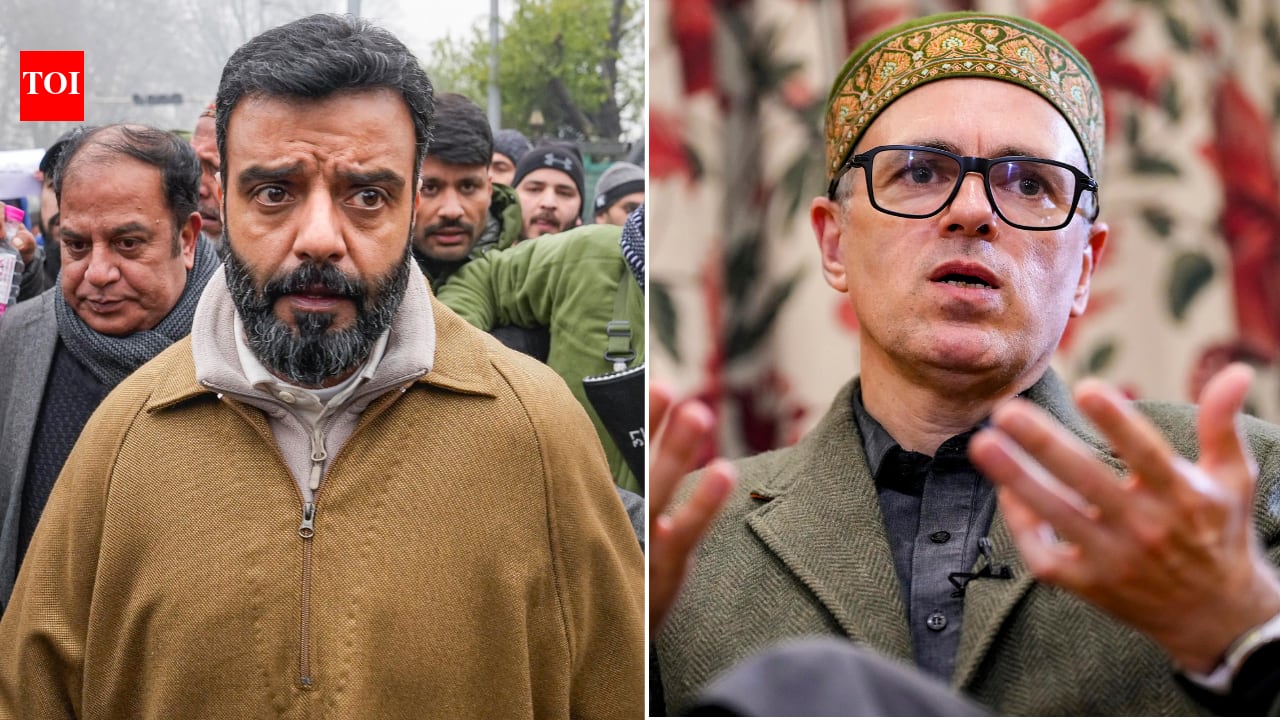
Srinagar MP Aga Syed Ruhullah Mehdi has announced his departure from the National Conference, citing ideological disagreements with CM Omar Abdullah. The rift centers on critical policy stances regarding Article 370, Waqf management, and the party's positioning against the BJP.
Political Turmoil in Jammu & Kashmir: The Rift Within the National Conference
The Departure of an Influential Voice
The recent announcement by Srinagar Member of Parliament Aga Syed Ruhullah Mehdi regarding his decision to quit the National Conference (NC) marks a significant shift in the political landscape of Jammu & Kashmir. By declaring that his commitment to his principles outweighs his political position—famously stating, 'Wada kursi se bada hai' (A promise is greater than the chair)—Mehdi has signaled a deep-seated ideological fracture within the regional party hierarchy. This move is not merely a personnel change but a fundamental challenge to the current leadership under Chief Minister Omar Abdullah.
The Core Ideological Divergence
At the heart of this confrontation are three pillars of contemporary J&K politics: the status of Article 370, the management of Waqf properties, and the party's broader stance against the Bharatiya Janata Party (BJP). Mehdi’s resignation reflects a growing frustration among certain factions within the NC who feel that the leadership has not been sufficiently assertive or consistent in defending the region’s special constitutional history and its unique socio-religious institutions. The disagreement suggests that the party is struggling to reconcile its traditional autonomy-focused platform with the harsh realities of post-2019 governance.
Article 370 and the Politics of Identity
The revocation of Article 370 remains the most contentious issue in Jammu & Kashmir. For leaders like Mehdi, the constitutional protections previously afforded to the region were essential to preserving its distinct identity. His departure highlights a perceived vacuum in the NC's strategy to address the legal and political repercussions of the 2019 reorganization. By positioning himself against the current direction of the NC, Mehdi is likely attempting to capture the sentiment of voters who feel that the party has become too conciliatory toward the central government's policies.
Waqf and Administrative Control
The mention of the Waqf board as a point of contention points to a deeper struggle over the control of religious and community assets. The administration of Waqf properties has become a major flashpoint in J&K, with various political actors vying for influence over how these resources are managed. Mehdi’s challenge to the NC’s stance on this issue suggests that he perceives the current management or the party's silence on the matter as a compromise of community interests, further distancing him from the Chief Minister's office.
Challenging the BJP Narrative
Finally, the critique of the NC’s relationship with the BJP is critical to understanding the future of J&K's opposition. Mehdi’s exit suggests that he believes the NC is failing to provide a robust, uncompromising alternative to the BJP’s influence in the region. By distancing himself, he is attempting to carve out a political space that is explicitly antagonistic toward the current central government, potentially aiming to consolidate a more radical or purist base that feels the NC has lost its ideological compass.
Conclusion: A Future of Political Realignment
As the dust settles on this high-profile departure, the National Conference faces a difficult period of introspection. The departure of a key parliamentary voice suggests that the party must address internal dissent before it impacts their broader electoral strategy. Whether this leads to a new political front or simply weakens the NC’s hold on Srinagar, it is clear that the discourse surrounding Article 370, religious institutions, and opposition to the BJP will remain the primary drivers of political change in the region for the foreseeable future.