Startup taps underwater volcano as energy source in "proof point" test
Source Entity
Jeremy Hsu
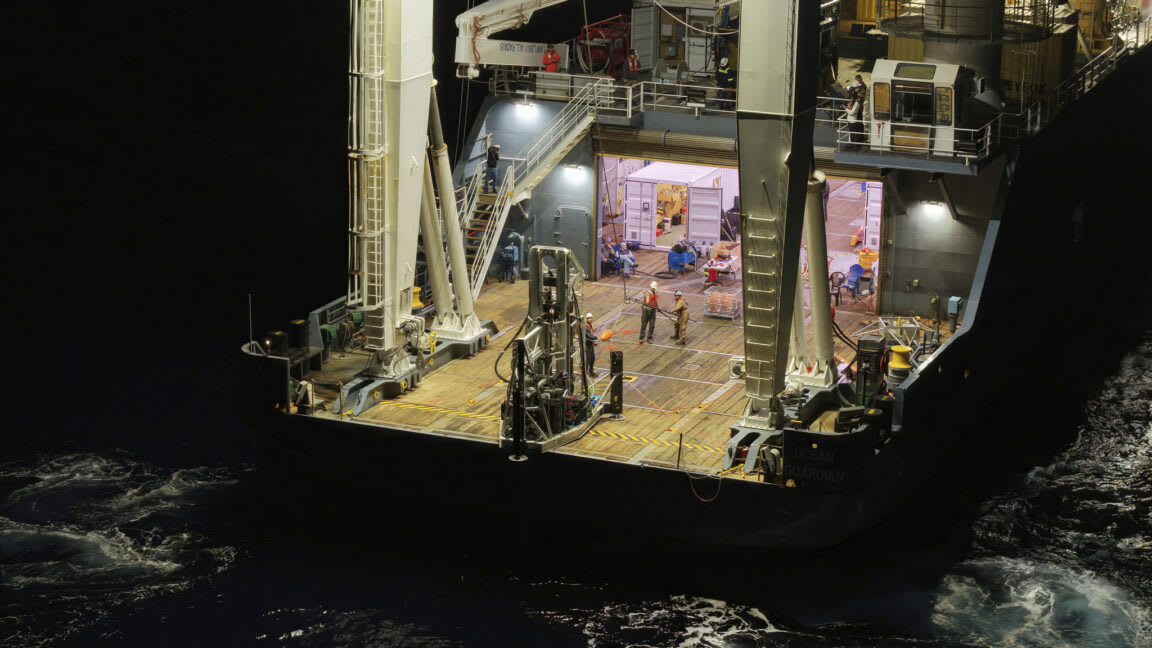
Seattle startup Endurance Energy has successfully conducted the world's first subsea geothermal power demonstration at the Axial Seamount. This proof-of-concept test highlights the potential for deep-sea volcanic energy to provide renewable alternatives for Pacific Rim nations.
Pioneering Deep-Sea Energy: The Axial Seamount Breakthrough
In a landmark development for renewable energy, Seattle-based startup Endurance Energy has successfully executed the world's first demonstration of a subsea geothermal power plant. Conducted at the Axial Seamount in the northeast Pacific Ocean, this three-week deployment represents a significant leap in our ability to harness unconventional energy sources. By operating nearly a mile beneath the ocean surface, the team proved that the immense pressure and extreme temperatures of underwater volcanic activity could be converted into usable electricity.
The Mechanics of Subsea Geothermal Power
The technical feasibility of this project hinges on the unique environment of the deep ocean. Endurance Energy’s 3-ton prototype leverages the natural characteristics of the seafloor: the deep ocean provides an unlimited supply of cold seawater, which is essential for the cooling cycles required in geothermal energy conversion. Furthermore, the immense hydrostatic pressure at these depths assists in maintaining the integrity of the well and the system, creating a stable, high-pressure environment that is difficult to replicate in terrestrial settings.
A Milestone for Renewable Reliability
While the recent test generated less than 10 seconds of net-positive electricity, its significance should not be underestimated. In the world of experimental engineering, such a 'proof point' is often the most difficult hurdle to clear. By transitioning from theoretical models to a functional, submerged prototype, the startup has demonstrated that the engineering challenges of operating in such a hostile, high-pressure environment can be overcome, paving the way for future long-term power generation experiments.
Strategic Implications for Pacific Rim Nations
The broader implications of this technology are particularly profound for Pacific island nations and coastal regions currently reliant on imported fossil fuels. Many of these regions face exorbitant energy costs due to the logistics of transporting oil and gas across vast maritime distances. If subsea geothermal power can be successfully commercialized, it would offer a localized, constant, and renewable energy source that is not subject to the weather-dependent limitations of solar or wind power.
Future Trends and Scalability
Looking ahead, the shift toward deep-sea geothermal energy could redefine the energy landscape for volcanic regions. While the commercialization phase remains on the horizon, the ability to tap into the earth's crust beneath the ocean offers a massive, untapped reservoir of power. Future iterations of this technology will likely focus on increasing the duration of power generation and scaling the infrastructure to provide consistent electricity for grid-level distribution in remote coastal and island communities.
Conclusion: Assessing the Path Forward
The successful test at the Axial Seamount marks a critical starting point in the search for high-density, reliable renewable energy. By validating the core physics of subsea geothermal extraction, Endurance Energy has opened a new frontier. As the technology matures, it has the potential to decouple isolated economies from the volatility of global fossil fuel markets, providing a sustainable pathway toward energy independence for some of the most vulnerable nations on the Pacific Rim.