Wangchuk broke his fast at midnight. Here’s how the protest site found out
Source Entity
Akriti Kanodia
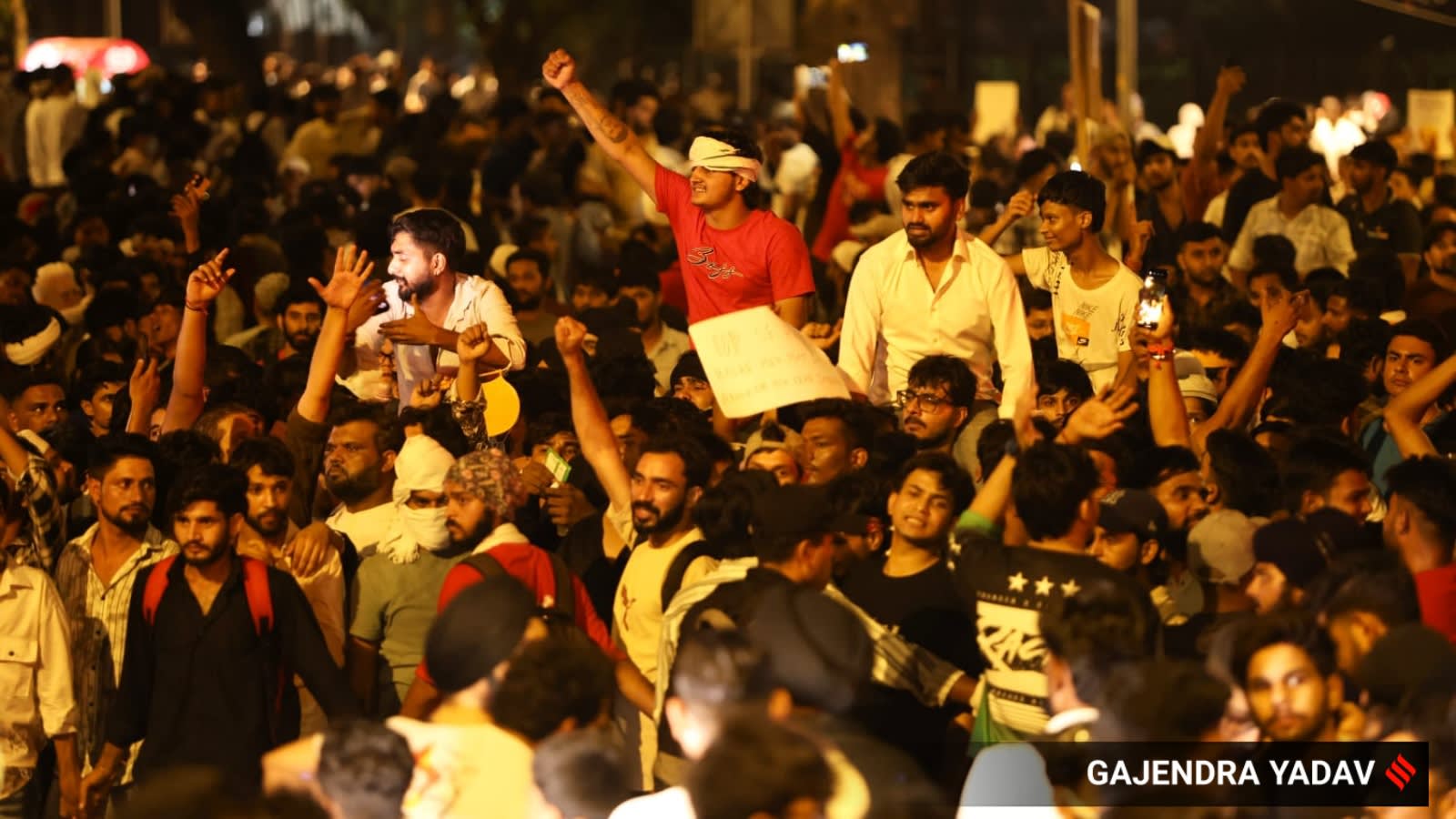
Student organizations and activists are protesting nationwide against alleged paper leaks and NTA's handling of examinations. Concurrently, climate activist Sonam Wangchuk's family expressed concern as his hunger strike reached a critical juncture.
Growing Unrest Over Examination Integrity
The recent surge in student-led protests across India, specifically involving the Naujawan Bharat Sabha (NBS) and the Disha Students’ Organisation, highlights a deep-seated crisis of confidence in the nation's examination infrastructure. By organizing demonstrations near the GVMC office and expressing solidarity with the Jantar Mantar protesters, these groups are signaling a coordinated pushback against systemic failures. At the heart of this discontent is the demand for accountability regarding alleged paper leaks and the perceived mismanagement of high-stakes testing processes.
Demands for Institutional Accountability
The agitation has transcended local grievances, evolving into a national debate over the efficacy of the National Testing Agency (NTA). Protesters have explicitly demanded the abolition of the NTA, arguing that the agency has failed to maintain the sanctity of competitive examinations. The call for Union Education Minister Dharmendra Pradhan’s resignation by figures like Avinash of the Disha Students’ Organisation illustrates the intensity of the political pressure currently mounting on the Ministry of Education to address these systemic vulnerabilities.
The Role of Activism and Public Discourse
Abhijeet Dipke, founder of the CJP, has actively engaged with media outlets to amplify these concerns, notably inviting Minister Pradhan to address the grievances of protesters at Jantar Mantar. This strategy of public confrontation is intended to force a dialogue between the government and the youth. By bringing these issues to the national stage via platforms like NDTV, activists are attempting to bridge the gap between regional protests and central policymaking, ensuring that the government cannot ignore the mounting public outcry.
Intersection of Protests and Civil Rights
A critical component of these demonstrations is the condemnation of police action against students in New Delhi. The protesters claim that the state’s response to peaceful agitation has been one of physical assault, which has only served to galvanize support across various student bodies. This narrative of a 'crackdown' on dissent adds a civil rights dimension to the academic integrity debate, framing the movement as a broader struggle for the right to protest against administrative negligence.
Parallel Movements and Future Implications
While student groups focus on academic reform, other forms of public dissent continue to run parallel in the national consciousness, as evidenced by the high-profile hunger strike of climate activist Sonam Wangchuk. His brother, Dorjey, recently highlighted the family’s worry as the fast reached its initial deadline of July 20. These disparate movements—one focused on education, the other on regional governance—collectively paint a picture of a nation where various segments of society are increasingly turning to protest to influence policy, suggesting a turbulent period ahead for the administration as it manages these overlapping crises.
Multiple Citing Sources