Supreme Court agrees to urgently hear Greater Bengaluru Authority’s plea to postpone civic polls due to SIR
Source Entity
India Latest News: Top National Headlines Today & Breaking News | The Hindu
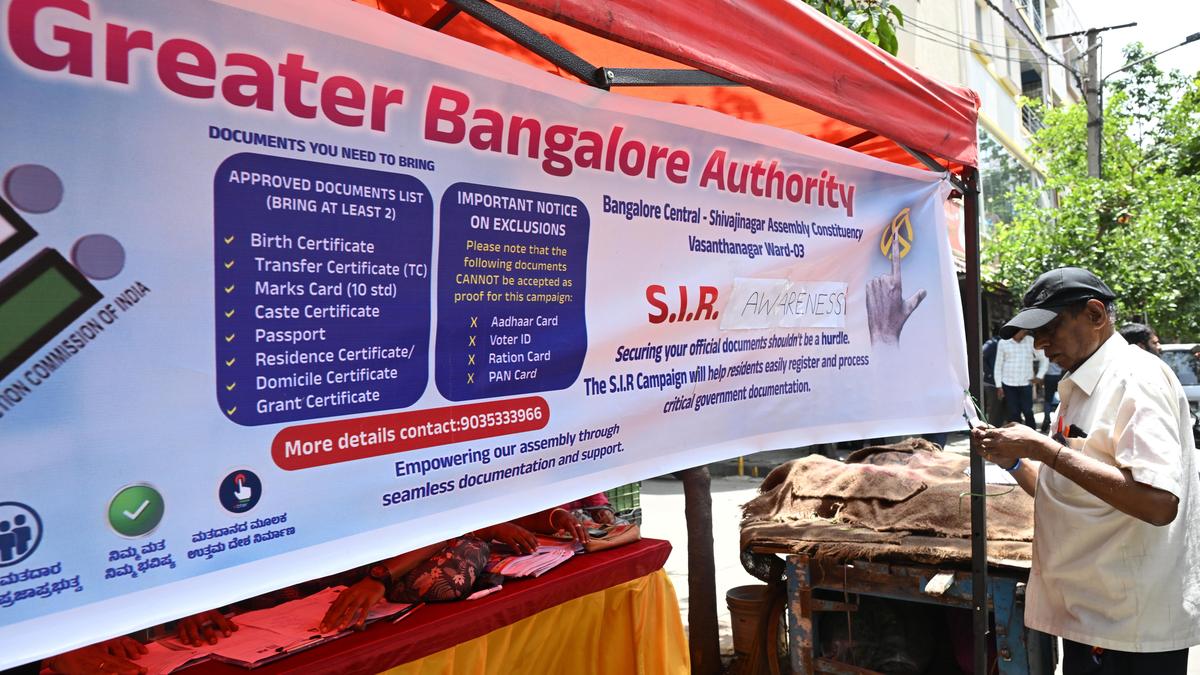
Appearing before a Bench headed by Chief Justice of India Surya Kant, senior advocate Kapil Sibal, in an oral mentioning, said the elections were due on August 31, and it would be “seemingly impossible” to prepare for the polls while the massive SIR exercise was on.
Judicial Intervention in Bengaluru's Civic Governance
The legal landscape of urban governance in Karnataka has reached a critical juncture as the Supreme Court of India intervenes in a dispute regarding the timing of civic elections in Bengaluru. The Greater Bengaluru Authority (GBA) has approached the apex court, seeking an urgent postponement of the polls originally slated for August 31. This move, championed by senior advocate Kapil Sibal, highlights a significant tension between the mandatory timelines of democratic processes and the practical realities of large-scale administrative restructuring.
The Conflict: Democratic Mandates vs. Administrative Logistics
At the heart of this legal plea is the "SIR exercise," a massive administrative undertaking that the GBA claims makes the preparation for civic polls "seemingly impossible." While the specific technicalities of the SIR (likely referring to Special Investment Regions or a similar systemic restructuring of urban boundaries and assets) are complex, the core issue is one of resource allocation. Conducting a city-wide election requires an immense amount of manpower, the verification of voter rolls, and the establishment of polling stations. When these requirements overlap with a transformative administrative exercise like the SIR, the risk of operational failure increases, potentially compromising the integrity of the electoral process.
The Role of the Supreme Court and Legal Strategy
The involvement of senior advocate Kapil Sibal underscores the high stakes of this petition. By mentioning the matter before a Bench headed by Chief Justice of India Surya Kant, the GBA is seeking a legal shield against the potential repercussions of missing a statutory election deadline. The Supreme Court's willingness to hear the plea urgently suggests that the court recognizes the validity of the "impossibility" argument, provided it can be substantiated with evidence. This sets a precedent for how the judiciary balances the constitutional necessity of regular elections with the state's need to implement critical structural reforms.
Broader Implications for Urban Planning
This delay, if granted, reflects a broader trend in Indian urban governance where the creation of "Greater" authorities (like the GBA) often leads to a period of instability as old systems are phased out and new ones are integrated. The SIR exercise likely aims to streamline investment and infrastructure, but the friction it creates with local civic polls illustrates the difficulty of updating a megacity's governance framework while it is in active motion. The delay in elections means that the city may continue to be run by appointed officials or extended terms, potentially leading to a temporary deficit in direct democratic accountability.
Potential Risks and Future Trends
Looking forward, the decision of the Supreme Court will either provide a blueprint for other metropolitan authorities facing similar administrative bottlenecks or serve as a warning against using structural exercises to delay elections. If the polls are postponed, the GBA will be under intense pressure to complete the SIR exercise swiftly to avoid further legal challenges. The outcome will likely hinge on whether the court views the SIR exercise as a legitimate administrative necessity or a convenient excuse to defer a political contest.
Summary of the Legal Standoff
In summary, the Greater Bengaluru Authority is currently caught between the deadline of August 31 and the demands of a massive internal restructuring. With the Supreme Court now overseeing the matter, the focus shifts to whether administrative efficiency can legally override the schedule of civic democracy. The resolution of this plea will not only determine the date of the next election but will also define the operational priorities of Bengaluru's evolving governance structure.
Verification Required?