Neither approved nor disapproved, Supreme Court clarifies stance on Form 6 alterations
Source Entity
India Latest News: Top National Headlines Today & Breaking News | The Hindu
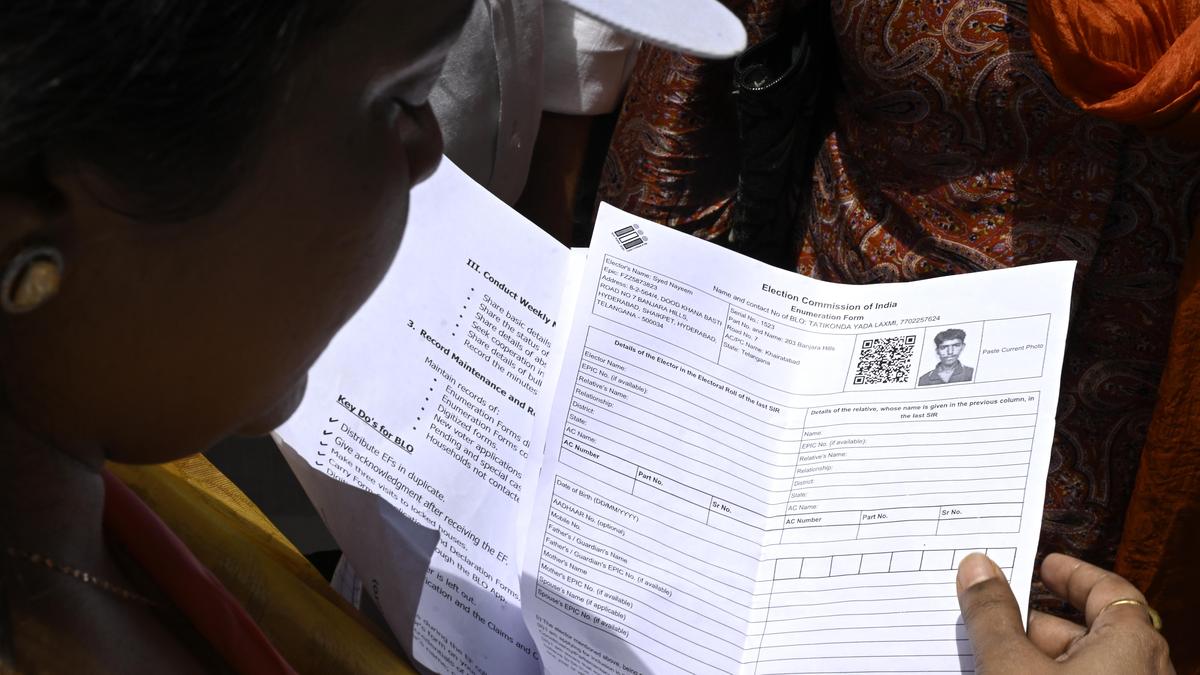
The Supreme Court of India has clarified that it did not approve the modified Form 6 for voter registration, noting the changes were introduced after its May 27 judgment. The Court will examine the legality of these new requirements, including ancestry and roll-linkage, in late October.
Supreme Court Clarifies Stance on Controversial Form 6 Revisions
On October 12, 2026, the Supreme Court of India issued a pivotal clarification regarding the ongoing controversy surrounding the Election Commission of India’s (ECI) modified Form 6. The Bench, headed by the Chief Justice and featuring Justice Joymalya Bagchi, explicitly stated that it has neither approved nor disapproved the new version of the form, which has become a focal point of intense legal and political scrutiny.
The Temporal Disconnect
The core of the confusion stems from a temporal discrepancy between judicial rulings and administrative policy changes. The Supreme Court’s May 27 judgment focused exclusively on the legality of the pilot Special Intensive Revision (SIR) process in Bihar. Because the controversial alterations to Form 6—which mandate applicants provide detailed ancestry information and proof of linkage to previous SIR rolls on the ECINet portal—were only introduced by the ECI in July, they were not subject to the Court’s earlier adjudication.
Implications of the ECI's Claims
This clarification is highly significant because it directly challenges the ECI’s narrative. The Election Commission had previously suggested that the Supreme Court had implicitly upheld the declarations appended to Form 6 during the Bihar SIR exercise. By explicitly stating that its earlier observations cannot be construed as a validation of the current form, the Court has effectively stripped away the ECI's shield of judicial legitimacy regarding these specific bureaucratic changes.
Legal Scrutiny and Future Trends
The Court has indicated that it intends to substantively examine the validity of the new Form 6 on October 27. This upcoming hearing is expected to address whether the added requirements—such as the mandatory disclosure of ancestry and historical roll linkages—impose an undue or unconstitutional burden on citizens seeking to exercise their fundamental right to vote. The judiciary’s intervention signals a rigorous check on the ECI's administrative discretion in designing voter registration protocols.
Broader Constitutional Context
At the heart of this issue is the balance between administrative efficiency in maintaining electoral rolls and the accessibility of the democratic process. Requiring citizens to navigate complex digital portals (ECINet) and provide granular genealogical data creates potential barriers that could disenfranchise vulnerable populations. The Supreme Court’s decision to revisit this matter highlights the judiciary's role as a guardian of voter accessibility, ensuring that administrative "revisions" do not inadvertently or intentionally shrink the democratic base.
Conclusion
As the October 27 hearing approaches, the focus remains on whether the ECI’s modifications to Form 6 align with constitutional protections. By distancing itself from the ECI's previous claims, the Supreme Court has set the stage for a critical debate on the limits of electoral administration. The resolution of this dispute will likely set a precedent for how the ECI handles future modifications to voter registration, emphasizing transparency and the primacy of the citizen’s right to register.
Multiple Citing Sources
Verification Required?