UPSC Prelims 2027 Polity Quiz (Week 178): MCQs on distinguished jurist, Sardar Patel National Unity Award and more
Source Entity
Nitendra Pal Singh
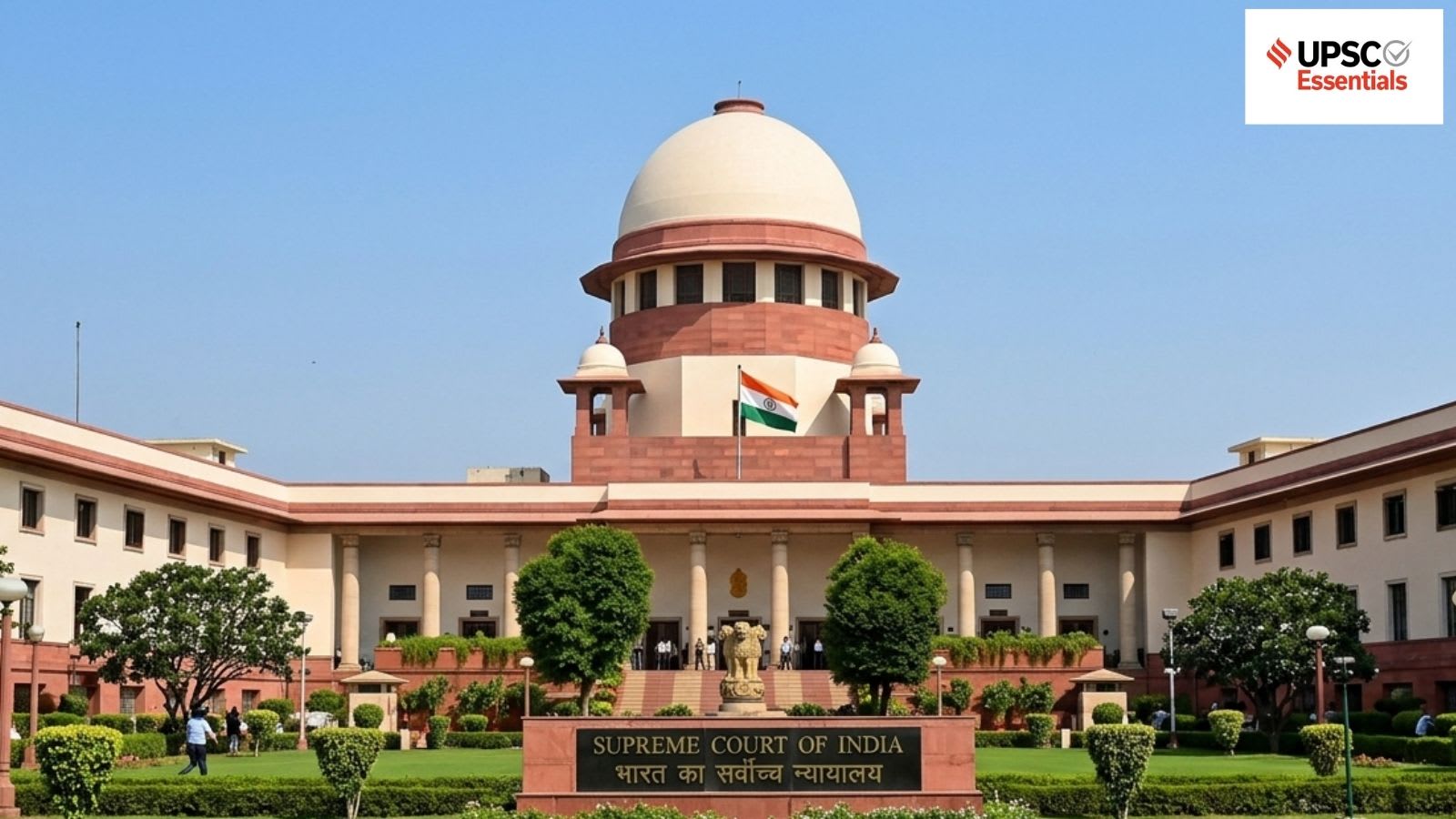
Supreme Court Judge Justice Ujjal Bhuyan has highlighted the long-standing non-utilization of the 'distinguished jurist' provision under Article 124(3) of the Indian Constitution. Despite 76 years of constitutional history, no legal academic has been elevated to the Supreme Court via this route. The discourse calls for a re-evaluation of how judicial diversity could be enhanced through such appointments.
The Unused Mandate: Revisiting Article 124(3)
In a significant address at the 13th convocation of the National Law University, Delhi, on August 30, 2026, Supreme Court Judge Justice Ujjal Bhuyan brought to the forefront a dormant constitutional provision. Article 124(3) of the Indian Constitution delineates three distinct pathways for qualifying as a Supreme Court judge, one of which includes the appointment of a person who is, in the opinion of the President, a “distinguished jurist.” Despite the country celebrating over 76 years of constitutional governance, this specific pathway remains entirely unutilized.
Understanding the Constitutional Framework
Article 124(3) serves as a testament to the framers' vision of a diverse and intellectually robust judiciary. By providing for the inclusion of a distinguished jurist, the Constitution makers intended to bridge the gap between pure legal practice and the theoretical, academic mastery of law. This provision was designed to ensure that the Supreme Court could benefit from the insights of scholars who have contributed profoundly to the evolution of legal thought, even if they have not served as high court judges or practicing advocates.
The Debate on Judicial Diversity
Justice Bhuyan’s critique centers on the potential for institutional enrichment. He argued that the elevation of a distinguished jurist would fundamentally “diversify the Bench.” In the current judicial ecosystem, the reliance remains heavily on the elevation of judges from the High Courts or senior advocates. Integrating an academic perspective could offer a unique, nuanced approach to constitutional interpretation, potentially moving beyond the strict confines of precedent to address modern socio-legal challenges with a broader, scholarly lens.
Why the Provision Remains Dormant
For over seven decades, the legal fraternity and the executive have navigated the appointment process exclusively through the channels of judicial seniority and legal practice. The reasons for the stagnation of the 'distinguished jurist' route are multifaceted, ranging from the ambiguity surrounding the definition of a 'distinguished jurist' to the institutional comfort of existing appointment protocols. The lack of a clear, codified criteria for identifying such a candidate has historically acted as a barrier to implementation.
Implications for Future Appointments
As the legal landscape of India evolves, the conversation surrounding Article 124(3) is gaining academic traction, as evidenced by its inclusion in educational resources like the UPSC Prelims 2027 preparatory materials. This indicates a growing awareness among the future generation of lawyers and civil servants regarding the untapped potential of our constitutional framework. The discourse initiated by Justice Bhuyan suggests that the time may be ripe for a structural re-evaluation of how we define judicial merit.
Conclusion
The silence surrounding the 'distinguished jurist' clause is a subject of both academic curiosity and institutional debate. Whether the judiciary will eventually embrace this constitutional mandate remains to be seen, but the advocacy for its activation signals a desire for a more inclusive and theoretically diverse Supreme Court. By revisiting this 76-year-old provision, the legal community is challenging the status quo and inviting a broader definition of what it means to be a guardian of the Constitution.
Multiple Citing Sources