Why is the Supreme Court examining polygamy again? | Explained
Source Entity
India Latest News: Top National Headlines Today & Breaking News | The Hindu
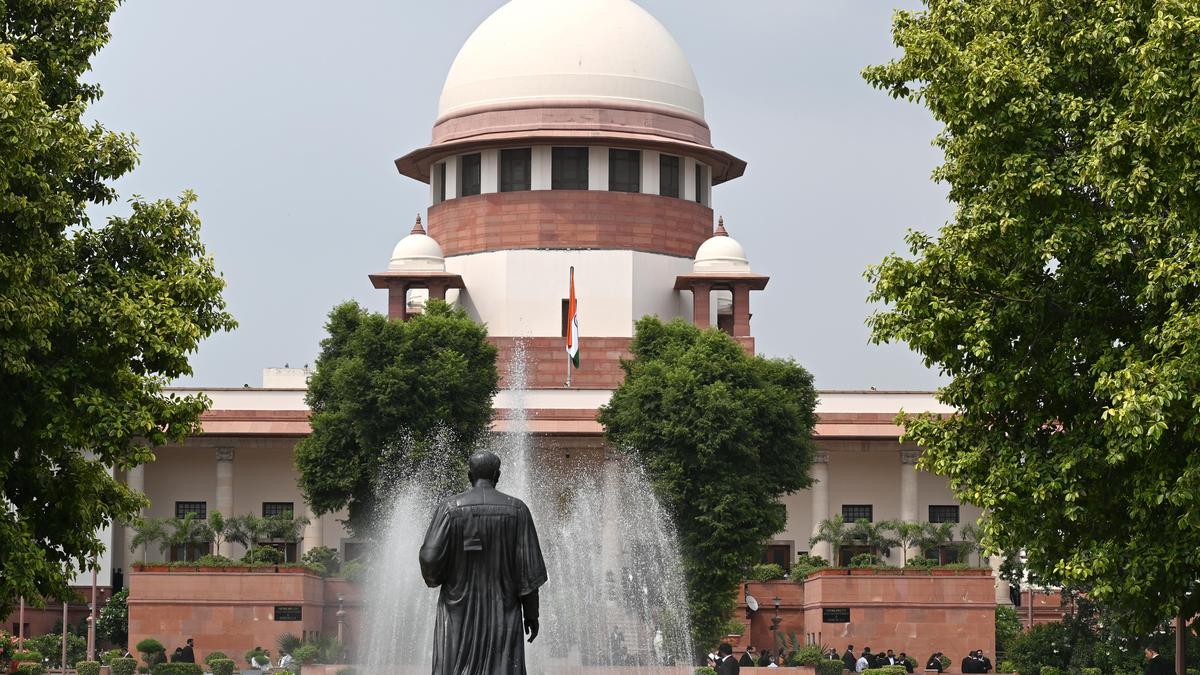
The Supreme Court of India is re-examining the constitutionality of polygamy following a petition by activists seeking its criminalization across all religions. The court has requested a response from the Centre regarding legislative measures to ensure uniform marital laws.
The Legal Challenge to Polygamy in India
The Supreme Court of India has once again initiated a critical examination of the practice of polygamy, prompted by a petition filed by five activists. This legal challenge seeks to address the constitutional status of multiple marriages, specifically targeting the exemptions currently afforded under Muslim Personal Law. The court’s decision to solicit a response from the Centre signals a potential shift in the judiciary’s approach toward harmonizing personal laws with broader constitutional mandates.
The Core Legal Argument
At the heart of the petitioners' argument is the demand that polygamy be treated as a criminal offense under Section 82 of the Bharatiya Nyaya Sanhita. Currently, this section applies exclusively to non-Muslims, imposing a penalty of up to seven years of imprisonment for entering into a second marriage while a prior marriage is still legally subsisting. By challenging the existing exemptions, the petitioners are pushing for a uniform legal standard that does not differentiate based on religious identity, thereby raising fundamental questions about the intersection of personal law and criminal justice.
Legislative and Judicial Context
The Supreme Court’s directive for the Centre to consider legislative steps to abolish polygamy for all citizens, regardless of their religious affiliation, marks a significant development in the ongoing discourse surrounding the Uniform Civil Code (UCC). Historically, the Indian judiciary has navigated a delicate balance between respecting religious freedom and upholding the fundamental rights of equality and non-discrimination. This latest move suggests an increasing judicial inclination toward a singular, secular framework for marital law.
Broader Societal Implications
The implications of this case extend far beyond the courtroom. If the court proceeds with the petitioners' request to annul exemptions under Muslim Personal Law, it could fundamentally alter the social fabric of various communities in India. Critics of such a move often cite the protection of religious identity and cultural autonomy, while proponents argue that a universal law is essential to protect the rights of women and ensure gender equality within the institution of marriage.
Future Trends and Judicial Trajectory
Looking ahead, the response from the Centre will be a definitive factor in how the Supreme Court shapes its future rulings. If the government proposes legislative reform, it could lead to the most significant overhaul of personal laws in decades. The court’s focus on 'suitable legislative steps' indicates that it prefers a parliamentary solution to this complex issue, rather than relying solely on judicial intervention. This case will undoubtedly serve as a bellwether for the future of civil law reform in India, balancing centuries-old traditions against modern constitutional values.
Verification Required?