NEET protests: SC says SIT may be set up to probe police excesses
Source Entity
India Latest News: Top National Headlines Today & Breaking News | The Hindu
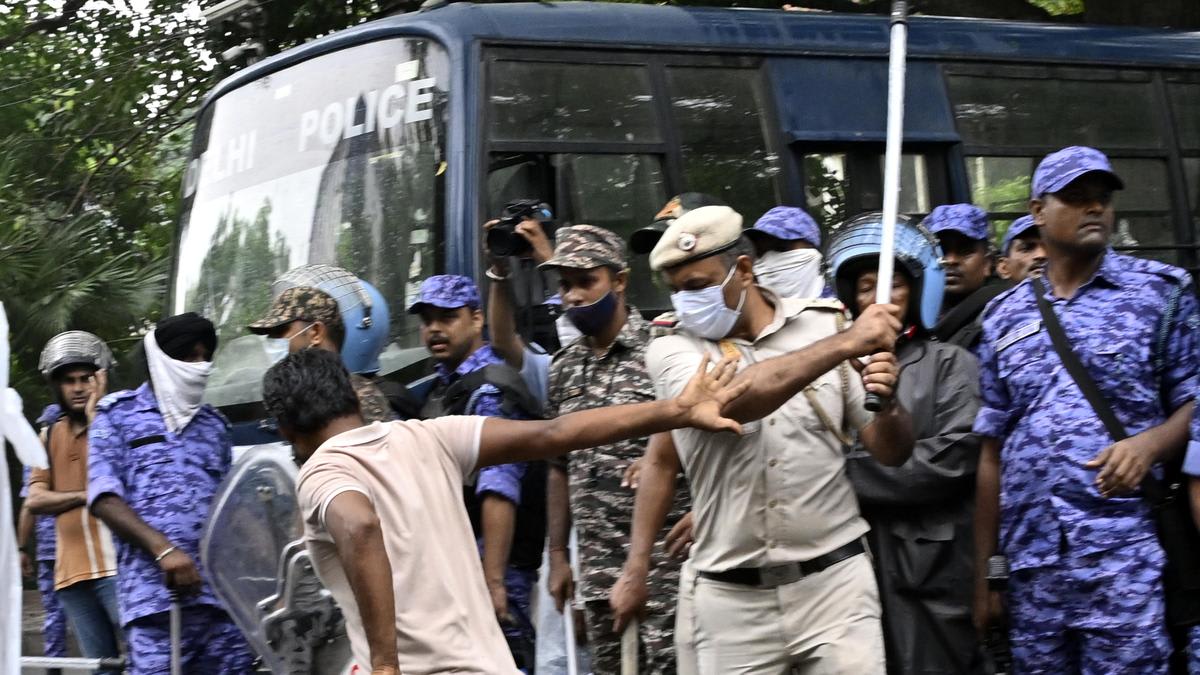
The Supreme Court has ordered a transparent inquiry, potentially via a Special Investigation Team, into allegations of police excesses during student-led protests against NEET paper leaks. The court emphasized that accountability is essential when law enforcement exceeds defined protocols during demonstrations.
Supreme Court Intervention in NEET Protest Violence
Accountability in Law Enforcement
The Supreme Court of India has taken a firm stance regarding the recent wave of protests sparked by the NEET paper leak controversy. Observing that a prima facie case exists for an independent investigation, the bench led by Chief Justice Surya Kant emphasized that any individual or official who "took the law into their hands" must be held accountable. This judicial intervention underscores the constitutional necessity of maintaining a balance between the state's duty to maintain public order and the citizens' right to peaceful protest.
The Necessity of an Independent Inquiry
The proposal to establish a Special Investigation Team (SIT) marks a significant step toward ensuring transparency. By moving beyond departmental probes, the court aims to address serious allegations of police brutality, including reports of disproportionate force used against students. The bench, which includes Justices Joymalya Bagchi and V Mohana, has explicitly stated that a probe is essentially meaningless if it fails to fix responsibility, signaling a shift toward more rigorous judicial oversight of law enforcement conduct.
Contextualizing the July 20 Unrest
The volatility observed on July 20, when protests organized by the CJP attempted to march toward Parliament, serves as the primary catalyst for these proceedings. The use of tear gas, batons, and reports of extreme force—such as the alleged use of an AK-47 by an officer in Bihar—has drawn sharp criticism from opposition leaders like MP Manoj Kumar Jha. The Supreme Court’s focus on these incidents highlights the danger of escalating force in response to student-led movements.
Framing Future Protocols
A critical component of the Supreme Court's mandate is the development of a comprehensive protocol for handling future student protests. The court recognizes that the current handling of these demonstrations has been inconsistent and, in some instances, illegal. By framing a new protocol, the judiciary hopes to mitigate the risk of violence and ensure that police behavior remains within the boundaries of established legal standards, even during high-tension public demonstrations.
Broader Implications for Civil Liberties
This case transcends the immediate NEET issue, touching upon the broader implications of civil liberties in India. When students, who represent the future of the nation, are met with excessive force, it raises fundamental questions about the health of democratic dissent. The Supreme Court’s insistence on a transparent inquiry serves as a reminder that the state’s power is subject to the rule of law, and that accountability is the bedrock of a functioning democracy.
Conclusion and Future Outlook
As the SIT formation progresses, the legal community and the public will be watching closely to see if this inquiry leads to tangible reforms. The court’s insistence that "law must take care of it" when protocols are violated sets a precedent that may discourage arbitrary police action in the future. The ultimate success of this intervention will depend on the impartiality of the investigation and the willingness of the state to accept the findings of the commission.
Multiple Citing Sources
Verification Required?