SIR in Delhi: Supreme Court says notices seem ‘mechanical’, seeks ECI’s response
Source Entity
Ananthakrishnan G
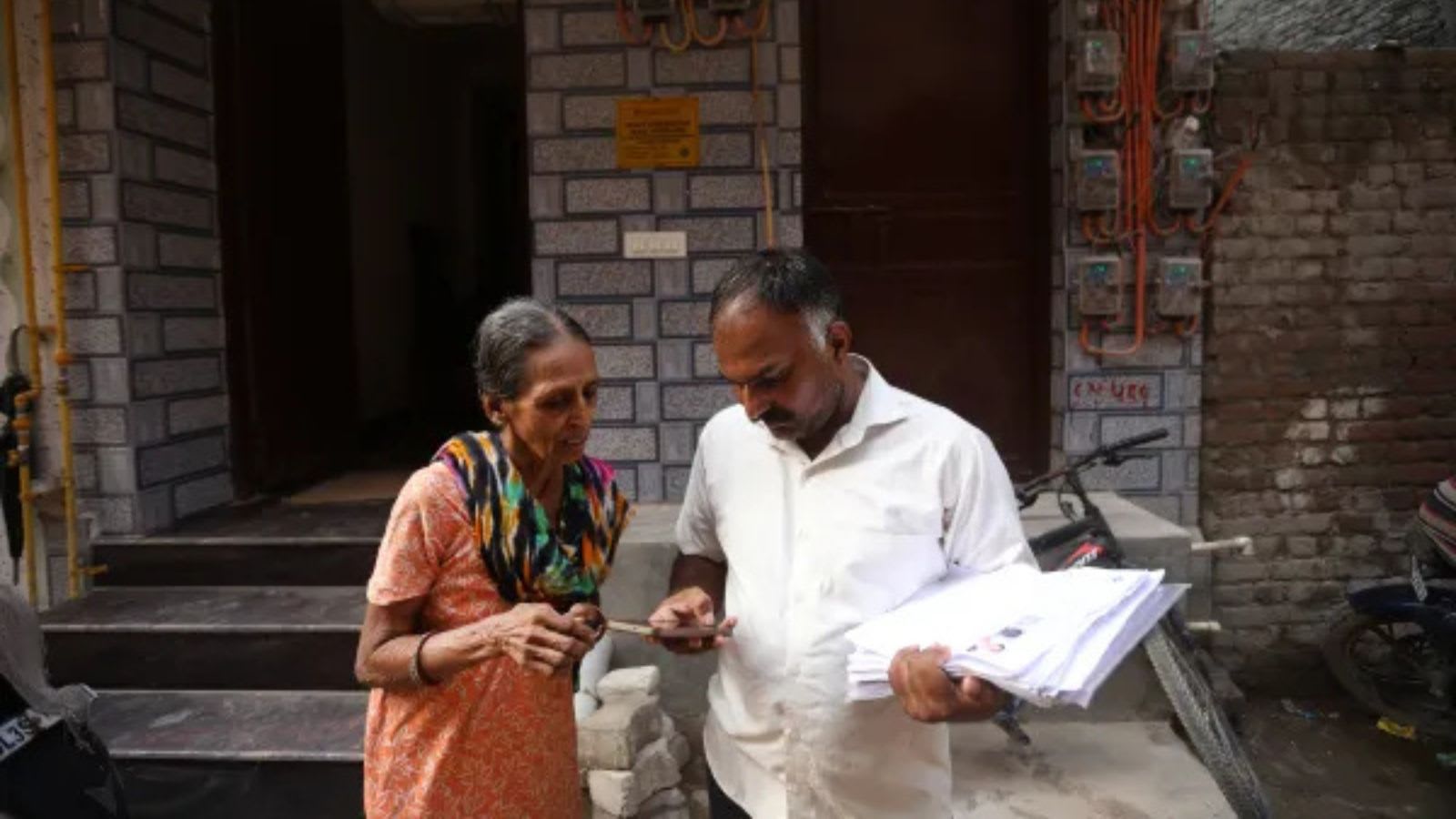
The Supreme Court has questioned the Election Commission of India over mechanically issued notices sent to 33 lakh Delhi voters citing 'logical discrepancies.' The court and the Aam Aadmi Party have raised concerns regarding the transparency and process of the Special Intensive Revision (SIR) which excluded 47 lakh names.
The Controversy Over Delhi's Electoral Revision Process
Recent proceedings in the Supreme Court have brought the Election Commission of India’s (ECI) Special Intensive Revision (SIR) process in Delhi under intense judicial scrutiny. The core of the legal challenge pertains to the issuance of notices to over 33 lakh voters, citing vague reasons such as 'logical discrepancies' or 'no mapping' with previous electoral records. This action has sparked significant concern regarding the potential disenfranchisement of a massive segment of the electorate, particularly given that the draft electoral roll had already excluded approximately 47 lakh names.
Judicial Skepticism of 'Machine-Generated' Notices
A three-judge Bench, led by Chief Justice Surya Kant and including Justices Joymalya Bagchi and V. Mohana, sharply criticized the nature of these notices. Justice Bagchi remarked that the communications appeared to be 'machine-generated' and issued without sufficient human oversight or 'application of mind.' The Court emphasized that there is a critical need for refinement, questioning whether the ECI had properly evaluated the necessity of such mass-scale notices or if additional filters could prevent the harassment of legitimate voters.
The Ambiguity of 'Logical Discrepancies'
A central point of contention raised by petitioners and acknowledged by the Court is the lack of a clear definition for the term 'logical discrepancies.' Without a precise explanation provided to the voters, the recipients of these notices are left in a state of confusion, unable to understand what specific documentation or proof they must provide to rectify their status. The ECI’s counsel, senior advocate Dama Seshadri Naidu, faced direct questioning on whether the affected citizens were even informed of the specific nature of the errors they were expected to disprove.
Political Implications and the AAP’s Stance
The Aam Aadmi Party (AAP) has been at the forefront of questioning the SIR process, alleging that the mechanism poses a systemic risk to the integrity of the voter list. By highlighting the exclusion of 47 lakh names from the draft rolls, the party has framed the issue as a matter of democratic fairness. The ECI has attempted to mitigate these concerns by clarifying that the receipt of a notice does not equate to an automatic deletion from the rolls, yet this assurance has done little to quell the skepticism surrounding the procedural transparency of the revision.
Broader Implications for Electoral Integrity
This case underscores the delicate balance between maintaining an updated, accurate electoral roll and ensuring that administrative efficiency does not come at the cost of voter rights. The reliance on automated systems to verify electoral data is a modern necessity, but the Supreme Court's intervention serves as a reminder that technological tools must remain subservient to constitutional safeguards. If the ECI cannot clearly articulate the criteria for 'logical discrepancies,' the legitimacy of the entire SIR process remains vulnerable to public and legal distrust.
Future Trends and Judicial Expectations
Looking ahead, the ECI will likely be forced to conduct a thorough audit of its automated notification systems. The Supreme Court's insistence on 'additional filters' suggests that future electoral revisions will require greater human intervention and clearer communication protocols. As the ECI prepares its response to the Court, the focus will remain on whether they can restore confidence in the electoral roll by providing transparency to the 33 lakh voters who currently find their voting status in a state of administrative limbo.
Multiple Citing Sources