Non-recovery of train ticket from deceased passenger can't defeat compensation claim: Supreme Court
Source Entity
India Latest News: Top National Headlines Today & Breaking News | The Hindu
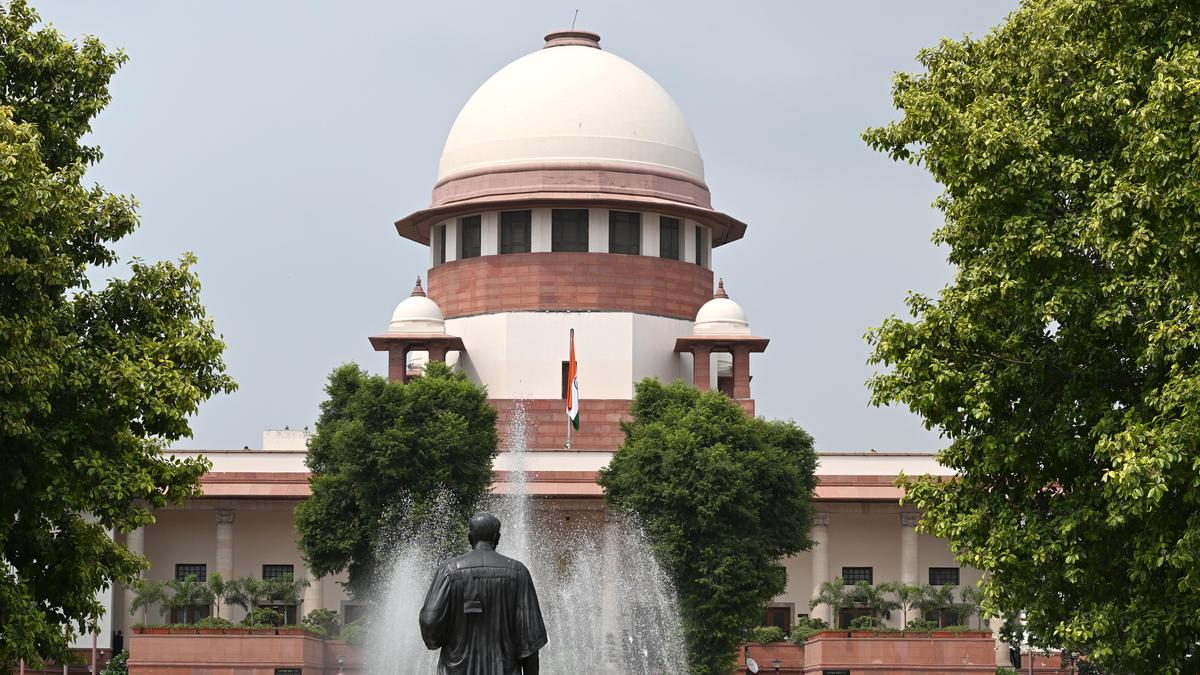
The Supreme Court ruled that the absence of a train ticket cannot disqualify a compensation claim for a deceased passenger. The court overturned a Gujarat High Court decision, emphasizing that witness testimony and circumstantial evidence should prevail in such cases.
Supreme Court Reaffirms Passenger Rights in Compensation Claims
In a landmark ruling, the Supreme Court of India has clarified the legal standing of compensation claims involving train accidents, specifically addressing the evidentiary weight of missing tickets. A bench comprising Justices Ujjal Bhuyan and A.S. Chandurkar set aside a previous Gujarat High Court order that had denied compensation to the parents of a man named Maheshbhai, who tragically died in 2017 after falling from a moving train. This ruling serves as a vital precedent for victims' families who often face procedural hurdles when seeking justice from railway authorities.
The Case of Maheshbhai: A Procedural Injustice
The incident occurred on September 27, 2017, when Maheshbhai was traveling from Ahmedabad to Surat. According to the facts, the victim fell from a general compartment due to a sudden jerk and jolt of the train. While the original tribunal had initially awarded compensation to his parents, the Gujarat High Court later rejected this claim, placing undue focus on the fact that no railway ticket was recovered from the deceased’s person. The Supreme Court found this reasoning to be fundamentally flawed and legally unsustainable.
Prioritizing Evidence Over Technicality
The Supreme Court’s decision hinges on the principle of the "preponderance of probabilities." The bench observed that the High Court failed to account for the statement made on oath by the victim's father, which provided critical context regarding the victim's travel. Furthermore, the court noted that the victim had been hospitalized for over a month following the incident, a period during which personal effects—including a ticket—could easily be lost or misplaced. By ignoring these circumstances, the lower court had placed an impossible burden of proof on the grieving family.
Broader Implications for Railway Litigation
This ruling carries significant weight for future litigation involving the Indian Railways. It signals a shift away from hyper-technical defenses that railway authorities often use to deny liability. By explicitly stating that the absence of a ticket does not inherently disqualify a claimant, the Supreme Court has strengthened the position of ordinary passengers. This is particularly important for those traveling in general compartments, where maintaining possession of physical tickets during transit or subsequent emergency medical transport is not always guaranteed.
Ensuring Justice for Victims
The Supreme Court’s intervention ensures that the compensation process is guided by human context rather than strictly bureaucratic requirements. By restoring the payout to Maheshbhai’s parents, the court has underscored that the primary objective of the Railway Claims Tribunal is to provide relief to victims of train mishaps. This judgment will likely force authorities to adopt a more empathetic and evidence-based approach when investigating claims, rather than relying solely on the recovery of physical documents.
Conclusion: A Protective Precedent
Ultimately, this judgment reinforces the judiciary's role as a protector of citizens' rights against rigid institutional procedures. By setting aside the Gujarat High Court’s order, the Supreme Court has provided a clear directive: the loss of a ticket should not result in the loss of justice. This decision stands as a crucial milestone in Indian jurisprudence, ensuring that families of accident victims are not further victimized by the very systems meant to support them.
Verification Required?