Supriya Sule urges Devendra Fadnavis to be Pune Guardian Minister to tackle spiralling crimes in Pune
Source Entity
Ajay Jadhav
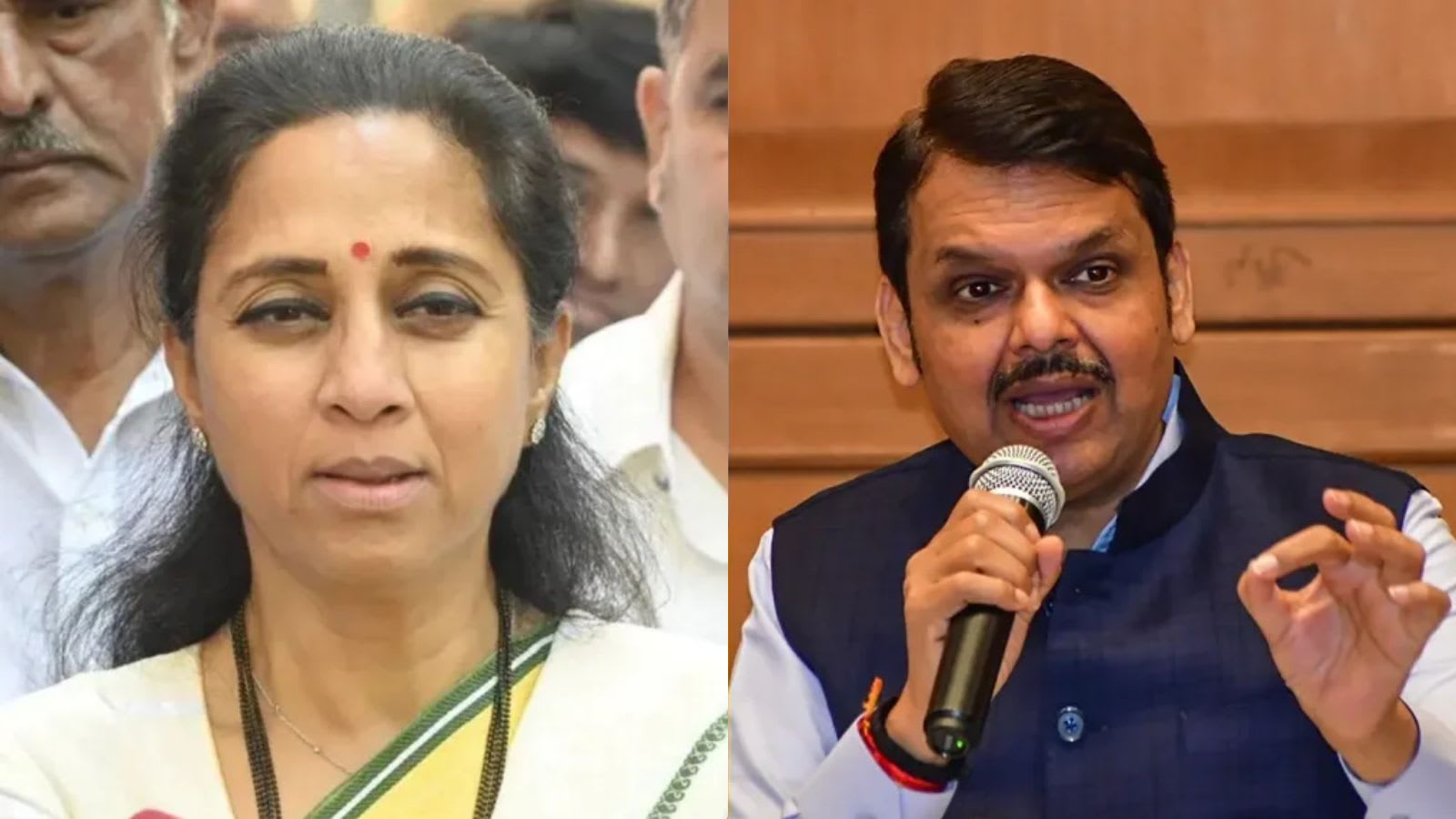
NCP (SP) leader Supriya Sule has urged Deputy Chief Minister Devendra Fadnavis to assume the role of Pune Guardian Minister, citing concerns over rising crime. She criticized the current handling of law and order, prompting a political push for stronger administrative oversight in the city.
Political Tensions Rise Over Pune's Security Crisis
NCP (SP) executive president Supriya Sule has ignited a significant political discourse by formally requesting that Deputy Chief Minister Devendra Fadnavis assume the role of Pune Guardian Minister. This move, framed as a response to the city’s deteriorating law and order situation, serves as a direct, albeit veiled, critique of the current administration’s efficacy. By bypassing the incumbent, Sunetra Pawar, Sule is highlighting a perceived vacuum in leadership that has left the city’s residents vulnerable to a rising tide of criminal activity.
Analyzing the Security Concerns
The core of Sule’s argument rests on the alarming increase in crime rates within Pune, a city that serves as a critical economic and educational hub for Maharashtra. Sule’s public statement underscores a growing frustration among opposition leaders regarding the state government's inability to maintain public safety. While she maintains that her request is motivated by genuine concern for the populace, the political implications of calling for a change in guardianship cannot be ignored in the context of Maharashtra’s complex coalition dynamics.
Institutional Trust and Police Accountability
A notable element of Sule’s critique is the nuanced stance she takes toward the Maharashtra Police. While she expressed pride in the state force as a whole, she explicitly accused the Pune city police apparatus of failing to perform their duties effectively. This distinction is crucial; it suggests that the failure is not necessarily one of personnel or resources, but rather one of administrative oversight and strategic direction. By separating the reputation of the state police from the local failures in Pune, she creates a targeted argument for leadership reform.
The Role of the Guardian Minister
In the administrative structure of Maharashtra, the Guardian Minister plays a pivotal role in coordinating district-level development and ensuring that law enforcement agencies receive the necessary political support and accountability. By urging Devendra Fadnavis—who is already a senior figure in the state government—to take up this mantle, Sule is signaling a lack of confidence in the current political management of the district. This is a strategic move to hold the senior-most leadership directly responsible for the safety of one of the state's most prominent cities.
Future Implications for Maharashtra Politics
The ongoing debate over Pune’s safety is likely to intensify as the city continues to expand and face urban challenges. If the government fails to address the crime surge, the narrative pushed by Sule could resonate deeply with the electorate, potentially shifting the political winds in upcoming cycles. The demand for a change in guardianship is not merely a bureaucratic suggestion; it is a calculated political maneuver aimed at exposing gaps in the ruling alliance’s governance model.
Conclusion
Ultimately, Supriya Sule’s intervention highlights a critical juncture for Pune. Whether the government chooses to heed this request or defend its current leadership will reveal much about its internal stability and its priorities regarding urban safety. As Pune grapples with its reputation as a burgeoning metropolis, the pressure to restore order will remain a central theme in the state's political discourse, forcing the administration to choose between maintaining the status quo or bowing to public and political pressure for reform.