‘Time to end threat culture at JU’: Suvendu Adhikari at Vande Mataram event
Source Entity
Atri Mitra
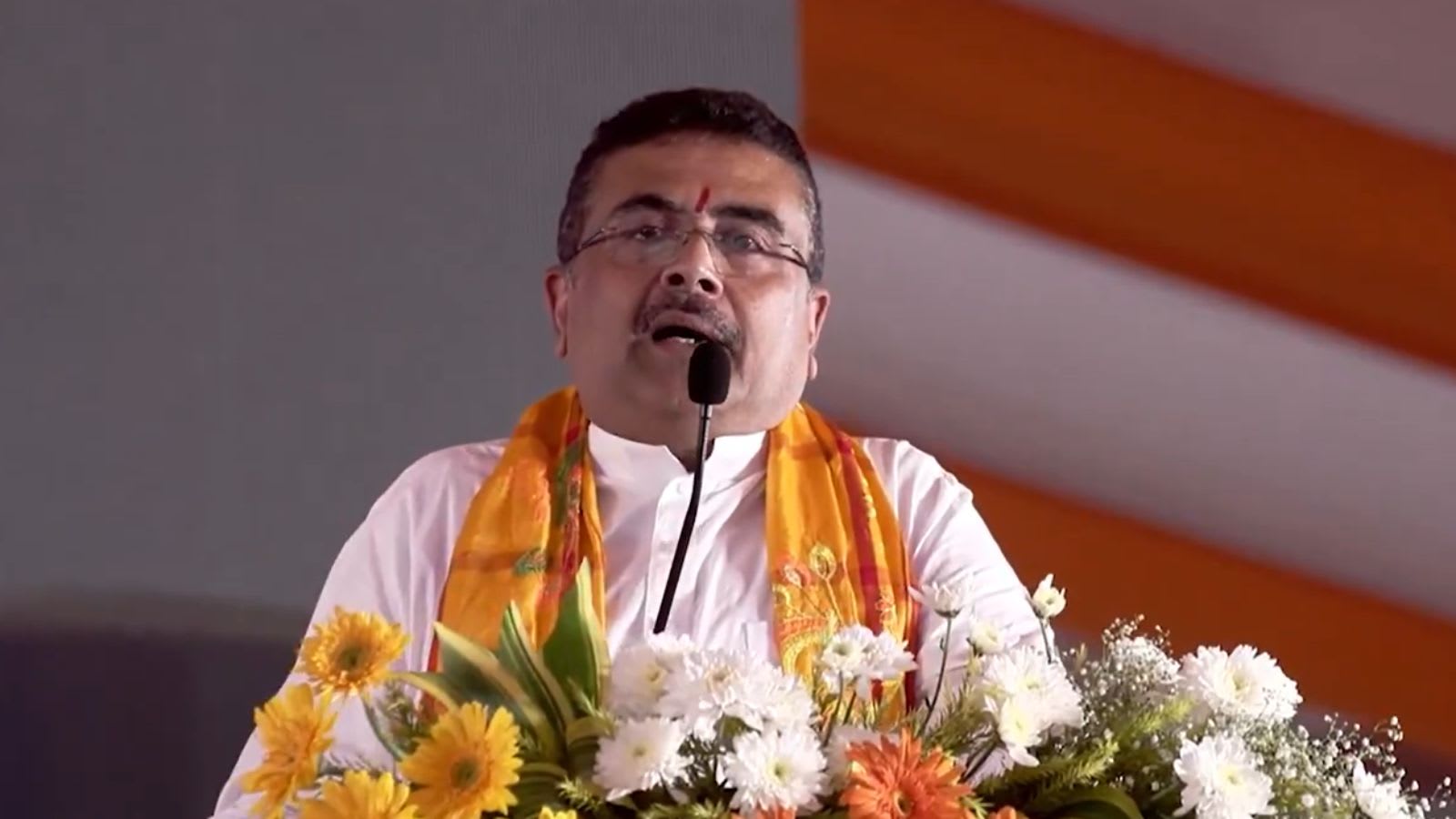
West Bengal Chief Minister Suvendu Adhikari has launched a sharp critique against Jadavpur University students, accusing them of promoting anti-national ideologies. The CM led a mass Vande Mataram recital to challenge what he describes as a 'threat culture' and the influence of radical groups on campus.
Nationalist Mobilization at Jadavpur University
West Bengal Chief Minister Suvendu Adhikari has initiated a high-stakes confrontation with the student body at Jadavpur University (JU), characterizing the institution as a breeding ground for ideologies he deems antithetical to national interests. During a recent public event on the occasion of Raksha Bandhan, where thousands gathered to participate in a mass recital of the national song Vande Mataram, Adhikari utilized the platform to explicitly condemn slogans related to ‘azaadi’ (freedom) and alleged support for Maoist activities, the Palestinian cause, and Kashmiri independence.
The Rhetoric of Nationalism vs. 'Tukre-Tukre' Claims
Adhikari’s rhetoric centers on the framing of campus activism as a manifestation of the ‘tukre-tukre gang’—a term often used in Indian political discourse to describe individuals or groups accused of harboring divisive or anti-state sentiments. By questioning the nature of the ‘azaadi’ slogans raised by students, the Chief Minister sought to delegitimize the protest culture at JU. He explicitly linked these slogans to the consumption of illicit substances, thereby attempting to shift the narrative from political dissent to moral and social decay.
Operation Sindoor and the Ideological Divide
Central to the Chief Minister’s critique is the students’ response to ‘Operation Sindoor,’ a state-led operation that sparked significant backlash within the university. Adhikari alleged that students held protest marches against this operation, which he contrasted with his own vision of national integrity. His suggestion that students should focus on the liberation of Pakistan-occupied Kashmir rather than advocating for internal independence or foreign causes highlights a hardening stance on what constitutes acceptable political expression in academic spaces.
Addressing the 'Threat Culture'
The Chief Minister’s visit and the subsequent mass recital come on the heels of violent clashes between the ABVP and SFI student wings. Adhikari has framed his intervention as a necessary measure to dismantle the 'threat culture' that he claims has permeated the university. By positioning his administration as the 'medicine' for the 'disease' of anti-nationalist sentiment, he is signaling a proactive, perhaps interventionist, approach to managing campus politics in West Bengal.
Broader Implications for Academic Autonomy
This confrontation raises critical questions regarding the balance between the state’s role in maintaining public order and the traditional autonomy of university campuses. As the government attempts to instill a 'storm of nationalism,' the tension between state-led cultural initiatives and student-led political activism is likely to intensify. The move to use large-scale public events to counter campus discourse represents a significant shift in how political leaders engage with student dissent in India.
Future Trends in State-University Relations
Looking ahead, it is probable that the West Bengal government will continue to prioritize the restoration of ‘nationalist values’ within Jadavpur University through both legislative and public pressure tactics. This ongoing friction suggests that Jadavpur University will remain a focal point for ideological battles, with the state government increasingly willing to exert its influence to curb activities it deems subversive. The long-term impact on the university's academic environment and the political landscape of West Bengal remains a subject of significant concern and debate.
Multiple Citing Sources