Tahir Hussain, armed mob dragged and murdered IB officer Ankit Sharma: Delhi court
Source Entity
Latest News: Today's Latest News Headlines from India & World | Hindustan Times | Hindustan Times
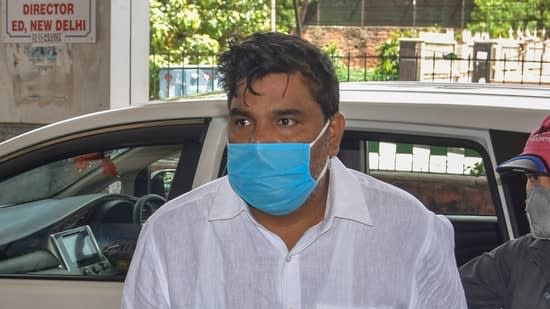
A Delhi court has convicted Tahir Hussain and four others for the brutal murder of Intelligence Bureau (IB) officer Ankit Sharma, who was dragged and killed by an armed mob during the 2020 North East Delhi riots.
Judicial Accountability: The Conviction of Tahir Hussain in the Ankit Sharma Murder Case
In a significant legal development, a Delhi court has held Tahir Hussain and four other individuals guilty of the murder of Ankit Sharma, an officer of the Intelligence Bureau (IB). The court's verdict concludes a harrowing chapter involving an armed mob that dragged the officer to his death. While five individuals were convicted, the court acquitted six others due to a lack of sufficient evidence, demonstrating a measured judicial approach to distinguishing between active perpetrators and those whose presence at the scene could not be legally linked to the crime.
Historical Context: The 2020 North East Delhi Riots
To understand the gravity of this verdict, it is essential to look back at the broader context of the 2020 North East Delhi riots. The violence erupted amid intense polarization surrounding the Citizenship Amendment Act (CAA) and the National Register of Citizens (NRC). The riots were characterized by widespread arson, communal clashes, and targeted killings, leaving dozens dead and thousands displaced. The murder of Ankit Sharma was one of the most egregious acts of violence during this period, symbolizing the breakdown of law and order and the extreme vulnerability of individuals caught in the crossfire of communal hatred.
Analysis of the Crime and Victim Profile
The nature of Ankit Sharma's death—being dragged and murdered by an armed mob—highlights a level of brutality that goes beyond spontaneous rioting, suggesting a calculated act of violence. The fact that the victim was an officer of the Intelligence Bureau adds a layer of complexity to the event; targeting a government official involved in national security indicates a direct challenge to the state's authority. The court's finding that Tahir Hussain and his associates led or participated in this specific act underscores the organized nature of the violence in certain pockets of the city.
Legal and Political Implications
The conviction of Tahir Hussain is particularly noteworthy given his political visibility and the high-profile nature of the investigations surrounding him. For years, this case has been a flashpoint for debates regarding the impartiality of the legal system and the speed of justice in riot-related crimes. By delivering a guilty verdict based on evidence, the court has sent a strong message that political affiliations or social standing do not grant immunity from the law. This ruling serves as a critical precedent for other pending cases from the 2020 riots, emphasizing that individual criminal liability will be pursued regardless of the collective nature of the unrest.
Societal Impact and the Path to Closure
For the family of Ankit Sharma and the wider community, this verdict represents a long-awaited step toward closure. Communal violence often leaves deep psychological scars and a lingering sense of injustice when perpetrators remain free. The judicial confirmation of the guilt of the primary accused helps in validating the victim's suffering and reinforces the rule of law in a society prone to volatile communal tensions. However, the acquittal of six others also serves as a reminder of the high burden of proof required in criminal law, ensuring that convictions are based on concrete evidence rather than collective guilt.
Future Trends in Riot Prosecution
Looking forward, this case is likely to influence how the Indian judiciary handles mass-violence events. There is an increasing trend toward utilizing forensic evidence and digital footprints to pinpoint specific roles within a mob, moving away from broad-brush accusations. As more cases from the 2020 riots reach their conclusion, the consistency of these verdicts will be crucial in deterring future communal violence. The legal system is increasingly being tasked with balancing the need for swift justice with the necessity of a fair trial, a balance that this specific verdict attempts to strike by convicting the guilty while acquitting those not proven to be involved.
Verification Required?