Kin of IB officer killed in 2020 Delhi riots want ex-AAP leader Tahir Hussain, other convicts hanged
Source Entity
Latest News: Today's Latest News Headlines from India & World | Hindustan Times | Hindustan Times
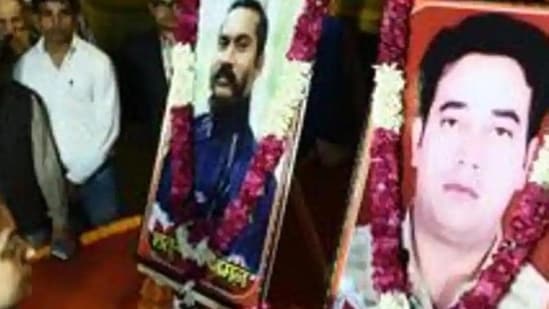
A Delhi court on Monday convicted Hussain and four others for being involved in the killing of Ankit Sharma, who was killed during the 2020 Delhi riots.
Justice for Ankit Sharma: Analysis of the Conviction of Tahir Hussain
In a significant legal development regarding the 2020 Delhi riots, a Delhi court has convicted former Aam Aadmi Party (AAP) leader Tahir Hussain and four other individuals for the murder of Ankit Sharma. Ankit Sharma, who served as an officer in the Intelligence Bureau (IB), was one of the many victims of the brutal communal violence that gripped the national capital in February 2020. This verdict represents a critical milestone in the judicial process, providing a semblance of closure to the victim's family while highlighting the severe legal consequences for those found guilty of inciting and participating in riot-related killings.
The Gravity of the Crime and Judicial Findings
The conviction of Tahir Hussain and his co-accused stems from the targeted violence that led to the death of Ankit Sharma. The court's decision to convict these individuals suggests that the prosecution successfully established a direct link between the accused and the fatal assault. The nature of the crime—the killing of a government official during a period of civil unrest—adds a layer of gravity to the case, as it underscores the vulnerability of individuals caught in the crossfire of communal polarization. The legal proceedings have focused on the premeditated nature of the violence and the role of the convicts in orchestrating the attack.
Political Implications and Public Accountability
The involvement of Tahir Hussain, a former leader of the Aam Aadmi Party, brings a political dimension to the case. His conviction serves as a potent reminder that political affiliation does not grant immunity from criminal prosecution, especially in cases of extreme violence. The fallout from the 2020 riots has long been a point of political contention in Delhi, with various parties debating the causes and the state's response. By holding a former political figure accountable for a specific murder, the judiciary is sending a clear signal regarding the rule of law and the necessity of individual accountability for acts of hate and violence.
Contextualizing the 2020 Delhi Riots
To understand the significance of this verdict, one must look at the broader context of the 2020 Delhi riots. The violence was characterized by clashes between different community groups, resulting in dozens of deaths and widespread property destruction. These riots were not isolated incidents but were the culmination of escalating tensions. The killing of Ankit Sharma was part of a larger pattern of mob violence where individuals were targeted based on their identity. The slow pace of trials in many riot-related cases has often been a point of criticism; therefore, this conviction is seen as a necessary step in the broader effort to ensure that the perpetrators of the 2020 violence do not escape justice.
The Demand for Capital Punishment
Following the conviction, the kin of Ankit Sharma have explicitly called for the death penalty for Tahir Hussain and the other convicts. This demand reflects the deep trauma and the perceived inadequacy of life imprisonment for a crime of such brutality. In the Indian legal system, the death penalty is reserved for the 'rarest of rare' cases. The family's plea will likely be a central point of discussion during the sentencing phase, as the court weighs the brutality of the murder against the legal precedents for capital punishment in the context of riot-induced killings.
Future Trends in Riot-Related Litigation
This case is likely to set a precedent for other pending trials related to the 2020 Delhi riots. As more convictions are handed down, there will be an increased focus on the role of 'instigators' versus 'participants.' The legal battle is expected to continue through various appeals in higher courts, but the initial conviction establishes a factual basis for the guilt of the accused. Future trends suggest that the judiciary will be under increasing pressure to expedite these cases to prevent the erosion of public trust in the legal system and to deter future occurrences of communal violence.
Summary of Legal Significance
Ultimately, the conviction of Tahir Hussain and four others for the murder of IB officer Ankit Sharma is a pivotal moment in the aftermath of the 2020 Delhi riots. It bridges the gap between the chaos of the riots and the structured demand for justice. While the final sentencing remains to be seen, the court's determination of guilt provides a critical victory for the victim's family and reinforces the principle that violence, regardless of the political or social context, will be met with legal retribution.
Verification Required?