Fair, reasoned process must decide citizenship: Supreme Court
Source Entity
India Latest News: Top National Headlines Today & Breaking News | The Hindu
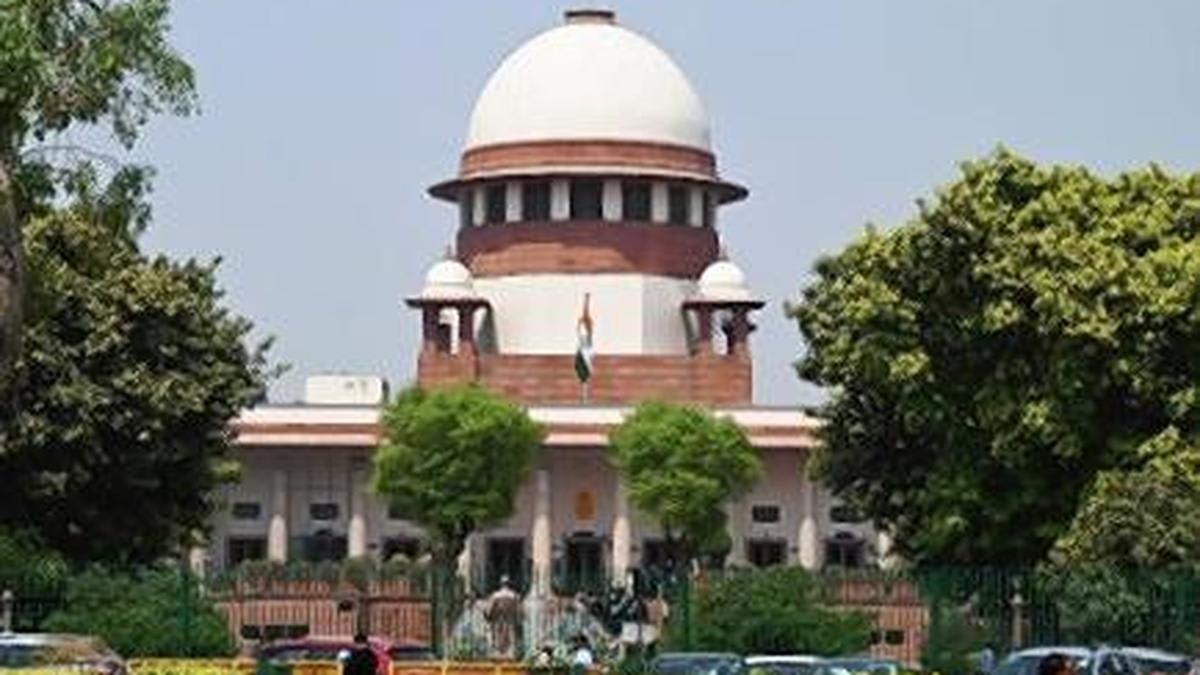
SC sets aside 27 judgments of Guahati High Court on foreigners, tells tribunals to adjudicate afresh; it says such declarations cannot be sustainable if “procedure adopted is mechanical, one-sided, or devoid of application of mind”
Upholding Due Process: The Supreme Court's Intervention in Citizenship Adjudication
In a significant move to safeguard individual liberties and the rule of law, the Supreme Court of India has set aside 27 judgments delivered by the Gauhati High Court concerning the determination of citizenship for individuals labeled as 'foreigners.' The apex court's intervention underscores a critical legal mandate: that the process of deciding a person's nationality and right to reside in the country must be fair, reasoned, and transparent. By ordering that these cases be adjudicated afresh by the relevant tribunals, the Supreme Court has sent a clear signal that the gravity of citizenship status demands a rigorous judicial standard that cannot be bypassed for the sake of administrative convenience.
The Danger of 'Mechanical' Adjudication
Central to the Supreme Court's ruling is the condemnation of "mechanical" or "one-sided" procedures. In legal terms, a mechanical decision is one where the adjudicating body fails to engage with the specific facts of a case, instead applying a rigid or formulaic approach that ignores nuanced evidence or the specific pleas of the defendant. When the court describes a process as "devoid of application of mind," it suggests a failure of the judiciary to perform its primary duty: the critical evaluation of evidence. In citizenship cases, where the stakes involve the potential loss of home, property, and freedom, such a failure is not merely a procedural error but a violation of fundamental justice.
Regional Context and the Role of Foreigners Tribunals
To understand the weight of this ruling, one must consider the specific geopolitical context of the Gauhati High Court's jurisdiction, primarily Assam. The region has a complex history of migration and has seen the implementation of the National Register of Citizens (NRC) and the operation of Foreigners Tribunals. These quasi-judicial bodies are tasked with determining whether a person is a citizen of India or a foreigner. Because these tribunals often handle vast volumes of cases, there is an inherent risk of rushed proceedings. The Supreme Court's ruling acts as a necessary corrective, ensuring that the push for national security and immigration control does not override the constitutional guarantee of a fair trial.
Implications for the Rights of the Accused
This judgment reinforces the principle of audi alteram partem—the right to be heard. By insisting that declarations of foreign nationality are unsustainable if the process is one-sided, the Supreme Court is protecting individuals from arbitrary state action. If a tribunal or a high court relies solely on government reports without allowing the individual to effectively challenge the evidence or present their own documentation, the resulting judgment is legally hollow. This ruling ensures that the burden of proof and the opportunity to rebut evidence are handled with the utmost diligence, preventing the wrongful disenfranchisement of legitimate residents.
Establishing a National Legal Precedent
While this specific order targets 27 judgments from one High Court, its implications ripple across the entire Indian judicial landscape. It establishes a precedent that any court or tribunal dealing with citizenship—a matter of existential importance to the individual—must provide a "reasoned" order. A reasoned order is one where the judge explicitly explains why a certain piece of evidence was accepted or rejected. This transparency allows for meaningful appeals and prevents the judiciary from acting as a rubber stamp for executive decisions. Future citizenship disputes across different states will now be viewed through this lens of strict procedural adherence.
Future Trends in Citizenship Litigation
Looking forward, this ruling is likely to lead to a surge in petitions seeking the review of previous citizenship judgments that may have been reached through similar "mechanical" means. We can expect tribunals to become more cautious, potentially slowing down the pace of disposals to ensure that every case is backed by a detailed, reasoned record. Furthermore, this may prompt a systemic review of how Foreigners Tribunals are trained and monitored, shifting the focus from the quantity of cases closed to the quality of the legal reasoning applied in each instance.
Conclusion: Balancing Sovereignty and Human Rights
Ultimately, the Supreme Court's decision strikes a delicate balance between the state's sovereign right to regulate its borders and the individual's right to a fair legal process. By overturning these 27 judgments, the court has reaffirmed that the pursuit of national interest cannot come at the cost of judicial integrity. The mandate for a fair and reasoned process ensures that the determination of citizenship remains a judicial act of conscience and evidence, rather than a bureaucratic exercise in categorization.
Verification Required?