Tamil Nadu explains to Cauvery Authority the rationale behind its demand for clearing backlog of 16 tmc ft
Source Entity
India Latest News: Top National Headlines Today & Breaking News | The Hindu
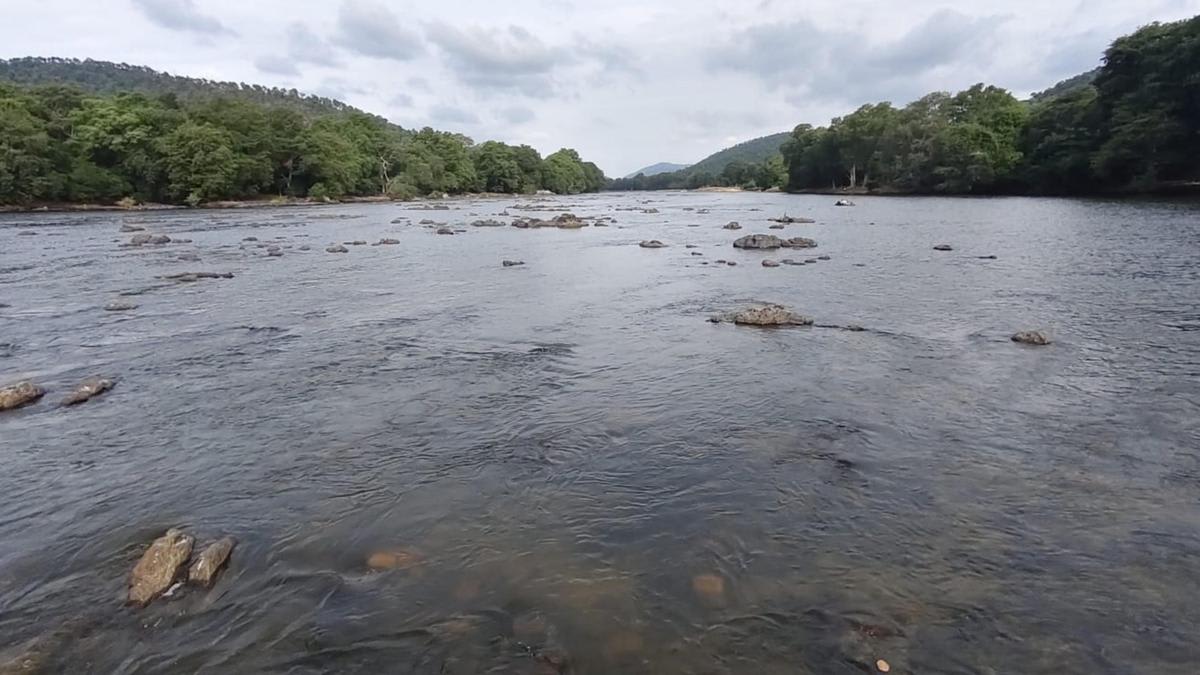
Tamil Nadu has formally requested the Cauvery Water Management Authority to clear a 16 TMC ft water backlog. The state emphasizes that this demand is grounded in the pro-rata sharing principle mandated by the Supreme Court for distress periods.
The Cauvery Water Dispute: Understanding the 16 TMC Backlog
The ongoing dispute over the Cauvery River water remains one of India's most complex inter-state resource conflicts. Recently, the Tamil Nadu government intensified its efforts to secure its rightful allocation by formally approaching the Cauvery Water Management Authority (CWMA) to address a mounting backlog of 16 thousand million cubic feet (TMC ft) of water. This move underscores the state's insistence on adhering to established legal frameworks to ensure its agricultural and drinking water needs are met during periods of hydrological deficit.
The Pro-Rata Principle in Distress Management
At the heart of Tamil Nadu’s claim is the legal doctrine of 'pro-rata' sharing. Both the Cauvery Water Disputes Tribunal and the Supreme Court of India have previously emphasized that in times of distress—when monsoon rains fail or reservoir levels are insufficient—water should be distributed proportionally among the riparian states. By invoking this principle, Tamil Nadu is arguing that if the total realized flow in the river basin is lower than expected, the burden of that deficit must be shared equally rather than falling disproportionately on downstream users.
Distinguishing Realized Flows from Predictions
A critical aspect of the state’s communication to the CWMA and the Cauvery Water Regulation Committee (CWRC) is the clarification regarding the nature of their demand. The government has explicitly stated that it is not asking for water based on speculative future rainfall or optimistic flow predictions. Instead, the demand is strictly tied to the water that has already been realized in the basin. This pragmatic approach aims to bypass the perennial debate over weather forecasting accuracy and focuses solely on the empirical reality of water availability.
Legal and Administrative Implications
The demand for the 16 TMC ft backlog highlights the administrative friction that persists despite the creation of the CWMA. While the authority was established to provide a scientific and technical solution to the water-sharing deadlock, the practical implementation of its orders often faces resistance due to competing agricultural requirements in both Karnataka and Tamil Nadu. The reliance on the Supreme Court's past directives serves as a reminder that the judicial intervention remains the ultimate arbiter in this long-standing interstate conflict.
Future Trends and Regional Stability
Looking ahead, the resolution of this backlog will likely set a significant precedent for how the CWMA handles distress periods in the future. As climate change continues to make monsoon patterns increasingly erratic, the reliance on rigid, pre-allocated water schedules is becoming less viable. The shift toward a dynamic, pro-rata sharing mechanism, as championed by Tamil Nadu, may become the standard model for water management across India's river basins to prevent localized shortages and maintain inter-state harmony.
Verification Required?