Before ‘Arohara’ for Tamil Nadu CM Vijay, two eminent musicians composed ragas in praise of Jayalalithaa
Source Entity
India Latest News: Top National Headlines Today & Breaking News | The Hindu
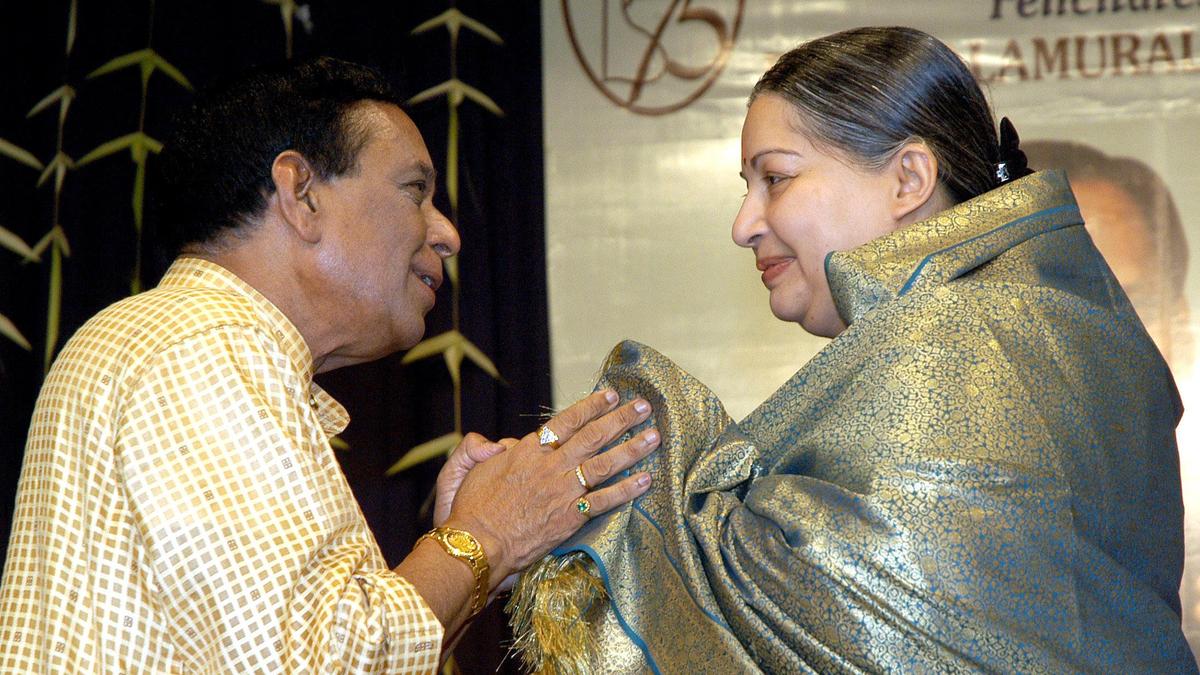
The use of the sacred 'Arohara' chant for CM C. Joseph Vijay has sparked controversy, drawing parallels to historical instances of musical adulation for former CM Jayalalithaa. This incident highlights the complex intersection of political personality cults and religious tradition in Tamil Nadu.
The Intersection of Political Adulation and Religious Tradition
The recent controversy surrounding the use of the sacred chant 'Arohara' in reference to Tamil Nadu Chief Minister C. Joseph Vijay has ignited a firestorm of criticism. During the 'Soorasamharam' celebrations on November 15, 2026, the invocation—traditionally reserved for the deity Lord Murugan—was repurposed to praise the Chief Minister. This appropriation drew sharp rebukes from both opposition political factions and various Hindu organizations, who viewed the act as a transgression of religious protocol and a conflation of secular leadership with divine status.
Historical Precedents in Tamil Nadu Politics
While the incident involving C. Joseph Vijay has caused significant public outcry, it is not an isolated phenomenon within the state's political history. Tamil Nadu has long been characterized by a political culture where leaders often occupy a larger-than-life space in the public consciousness. During the tenure of former Chief Minister J. Jayalalithaa, the state witnessed similar instances of intense musical adulation. Notable musicians composed specific ragas intended solely to honor her, often blurring the lines between political figures and mythological or divine entities.
The Deification of Political Figures
One of the most striking aspects of these historical tributes was the degree of elevation accorded to the leadership. In several instances during the Jayalalithaa era, musicians went beyond mere praise, with one performer explicitly equating the former Chief Minister to the presiding deity of the Tirumala Tirupati temple. Such comparisons serve to underscore the deep-seated tradition of the 'cult of personality' in regional politics, where public devotion is often expressed through the vocabulary of religious worship.
The Role of Public Expression and Accountability
Following the backlash from the November 15 event, folk singer Velmurugan issued a public expression of regret, promising that such an invocation would not be repeated. This reaction highlights the tension between the freedom of artistic expression in public performances and the sensitivity surrounding religious sentiments. The incident serves as a reminder that even in a climate accustomed to political hero-worship, there remain clear boundaries that, when crossed, trigger immediate social and political consequences.
Broader Implications and Future Trends
This event forces a broader conversation regarding the conduct of political supporters and the responsibilities of public figures. As the political landscape in Tamil Nadu continues to evolve, the scrutiny of how leaders are presented to the public is likely to intensify. The contrast between the swift backlash faced by supporters of CM Vijay and the historical context of similar acts during the Jayalalithaa era suggests a changing public awareness and a lower tolerance for the perceived sacrilege of traditional chants for political ends. Future political discourse will likely need to navigate these cultural sensitivities with greater care to avoid alienating the traditionalist segments of the electorate.
Verification Required?