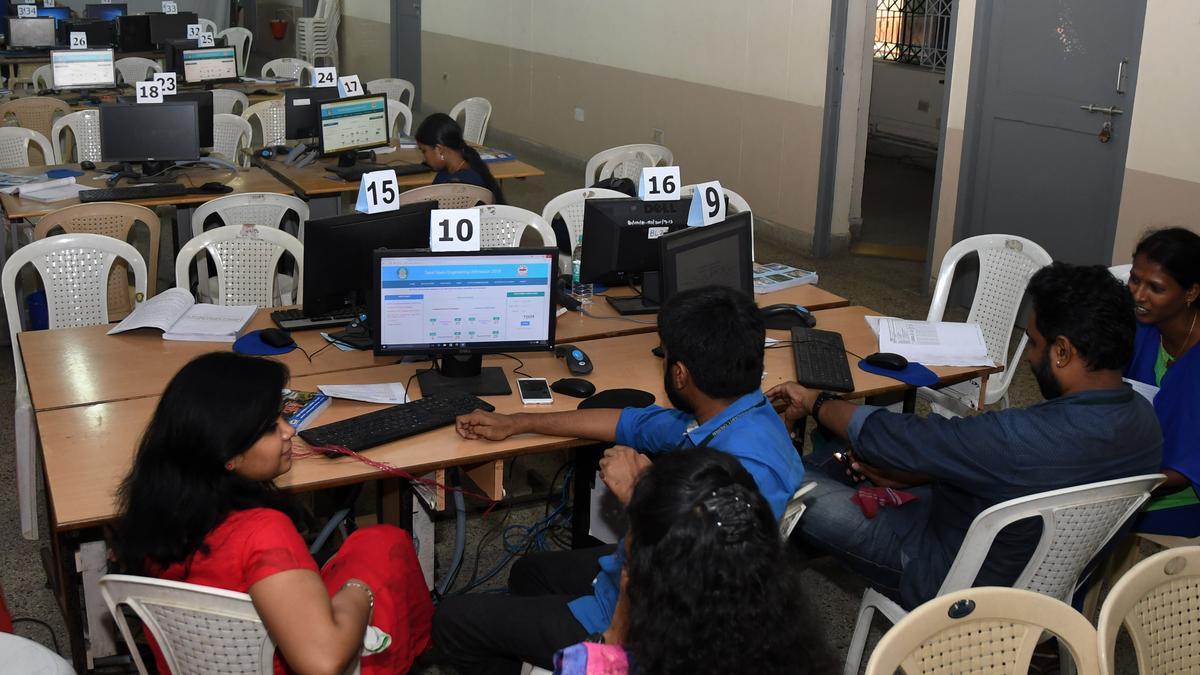
Over 2.5 lakh engineering UG seats available in T.N. this academic year
Source Entity
India Latest News: Top National Headlines Today & Breaking News | The Hindu
Anna University officials claim ‘ghost’ faculty issue has been resolved
Tamil Nadu's Engineering Education Landscape: Capacity and Quality Control
Tamil Nadu continues to solidify its position as one of India's primary hubs for technical education. The announcement that over 2.5 lakh undergraduate (UG) engineering seats are available for the current academic year underscores the state's massive investment in educational infrastructure. This volume of seats reflects a strategic push to cater to the growing demand for technical professionals, aiming to fuel the state's robust industrial and manufacturing sectors. However, the sheer scale of availability also raises critical questions regarding the balance between quantitative growth and qualitative excellence in engineering pedagogy.
The Challenge of 'Ghost Faculty'
A significant highlight of this year's academic cycle is the claim by Anna University officials that the 'ghost faculty' issue has been resolved. In the context of Indian higher education, 'ghost faculty' refers to the practice where institutions list qualified professors on paper to meet the mandatory faculty-to-student ratios required by regulatory bodies like the AICTE (All India Council for Technical Education) and UGC, while these individuals are not actually employed or teaching at the college. This systemic malpractice often leads to a severe deficit in actual classroom instruction, leaving students with theoretical knowledge but lacking the mentorship and practical guidance essential for engineering success.
Institutional Accountability and Anna University's Role
As the primary affiliating body for most engineering colleges in the state, Anna University bears the burden of ensuring academic integrity. The claim that the ghost faculty problem is resolved suggests a move toward stricter auditing and perhaps the implementation of more rigorous verification processes, such as biometric attendance or digital payroll audits. By addressing this issue, the university is attempting to restore trust in the degree's value. If the resolution is genuine, it will lead to a more transparent ecosystem where students are guaranteed access to qualified educators, thereby improving the overall employability of graduates entering a competitive global market.
Broader Implications for Technical Education
The availability of such a high number of seats, coupled with the cleanup of faculty records, points toward a transitional phase in Tamil Nadu's education sector. For years, the focus was on expanding capacity to accommodate the youth bulge. Now, the focus is shifting toward 'quality assurance.' The engineering sector is currently facing a crisis where many graduates are deemed 'unemployable' due to a gap between academic curricula and industry needs. Resolving the faculty crisis is the first step in bridging this gap, as qualified teachers are the primary drivers of curriculum innovation and practical application.
Future Trends and Economic Outlook
Looking forward, the success of this academic year will depend on whether the 'resolution' of the ghost faculty issue translates into better learning outcomes. We can expect a trend toward more stringent accreditation processes and a possible consolidation of smaller, low-quality colleges that cannot sustain genuine faculty requirements. Furthermore, with the rise of AI and automation, the 2.5 lakh students entering these seats will require an education that transcends traditional textbooks. The state's ability to maintain a genuine, high-quality teaching force will determine if Tamil Nadu remains a leader in the global tech supply chain.
Conclusion
In summary, while the availability of over 2.5 lakh engineering seats demonstrates Tamil Nadu's immense capacity for technical training, the real victory lies in the administrative crackdown on 'ghost faculty.' By prioritizing the presence of actual educators over paper-based compliance, Anna University is taking a necessary step toward safeguarding the future of thousands of students. The transition from quantitative expansion to qualitative refinement will be the defining characteristic of the state's engineering education in the coming decade.
Verification Required?