Tech stocks live updates: Tech stocks fall as AI trade faces scrutiny, SK Hynix falls
Source Entity
Yahoo Finance
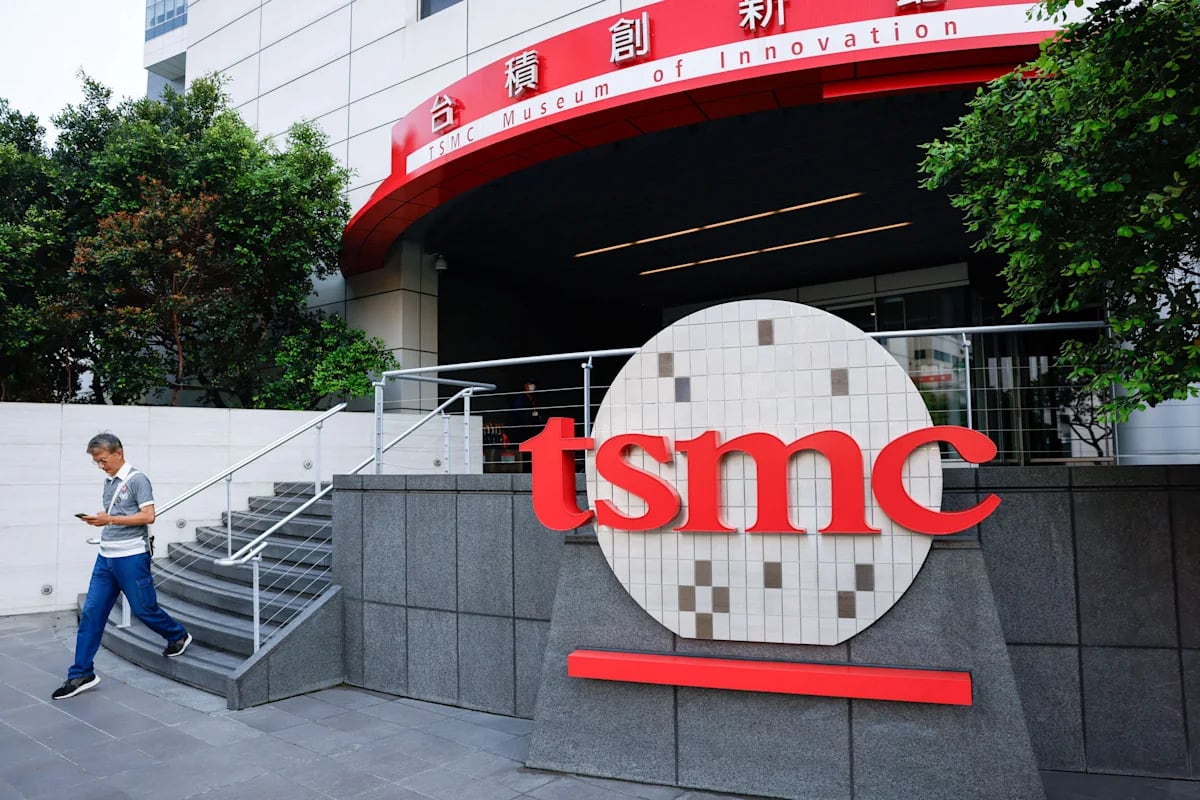
Tech stocks experienced a downturn on Monday, driven by a combination of geopolitical instability involving US-Iran hostilities and growing investor skepticism regarding the actual profitability and spending levels associated with the artificial intelligence boom, with SK Hynix seeing notable declines.
Market Volatility: Tech Sector Retreats Amid Geopolitical and Economic Headwinds
On Monday, the technology sector faced a coordinated downturn as a confluence of geopolitical instability and internal industry skepticism triggered a broad sell-off. The decline was not isolated to a single company but reflected a wider market sentiment shift, characterized by a move away from high-growth, high-valuation assets. This volatility highlights the fragile nature of the current market rally, which has been heavily dependent on the perceived inevitability of AI-driven growth and a stable global political environment.
The Geopolitical Catalyst: US-Iran Hostilities
A significant driver of the broader market downturn was the renewal of hostilities between the United States and Iran. Geopolitical tensions of this magnitude typically trigger a 'risk-off' sentiment among institutional investors. When instability arises in the Middle East, markets often anticipate fluctuations in energy prices and potential disruptions to global trade routes. Because tech stocks—particularly those in the growth phase—are highly sensitive to macroeconomic stability and interest rate expectations, they are often the first assets to be liquidated as investors seek safer havens, such as gold or government bonds.
The AI Profitability Debate
Beyond geopolitics, the 'AI trade' is currently facing a period of intense scrutiny. For the past several quarters, the market has rewarded companies based on their capacity to integrate generative AI and their investment in infrastructure. However, a critical pivot is occurring: investors are shifting their focus from potential to profitability. There is a growing debate over whether the massive capital expenditure (CAPEX) required to build AI data centers and purchase high-end GPUs will yield a proportional increase in revenue in the short to medium term. This skepticism creates a valuation gap, where the current stock prices may exceed the immediate financial reality of AI implementation.
Impact on Hardware: The Case of SK Hynix
The decline of SK Hynix is particularly telling. As a primary provider of High Bandwidth Memory (HBM) essential for AI accelerators, SK Hynix serves as a bellwether for the hardware side of the AI revolution. A drop in its stock price suggests that the market is questioning the sustainability of the current demand surge for AI chips. If the software layer of the AI ecosystem fails to monetize quickly, the demand for the underlying hardware—led by companies like SK Hynix and NVIDIA—could plateau, leading to a correction in the semiconductor sector that echoes previous cyclical downturns in the memory market.
Historical Context and the 'Hype Cycle'
This current phase of the AI trade mirrors historical patterns seen during the dot-com bubble of the late 1990s. In that era, massive investments were made in fiber-optic cables and server infrastructure before the consumer applications (like e-commerce and social media) were fully realized. While the long-term trajectory of AI is likely positive, the market is currently navigating the 'Trough of Disillusionment' within the Gartner Hype Cycle. The transition from speculative excitement to proven utility always involves a period of price correction as the market filters out unsustainable valuations.
Future Outlook and Market Trends
Looking forward, the tech sector's recovery will likely depend on two factors: the stabilization of US-Iran relations and the presentation of concrete ROI metrics during upcoming earnings calls. We can expect a trend where 'AI leaders' are bifurcated into those who can demonstrate actual productivity gains and revenue growth, and those who are merely leveraging AI as a buzzword. Additionally, the semiconductor industry may experience increased volatility as the market attempts to price in the long-term demand for HBM and advanced logic chips against a backdrop of global economic uncertainty.
Summary
The Monday slump in tech stocks represents a intersection of macroeconomic fear and a necessary correction in the AI narrative. While geopolitical tensions provided the immediate spark, the underlying fire is a rigorous re-evaluation of AI's financial viability. For investors, the era of 'buying the hype' is transitioning into an era of 'buying the results,' signaling a more mature, albeit more volatile, phase of the technology market.