Won't let Bihar become 'police State': Tejashwi Yadav
Source Entity
India Latest News: Top National Headlines Today & Breaking News | The Hindu
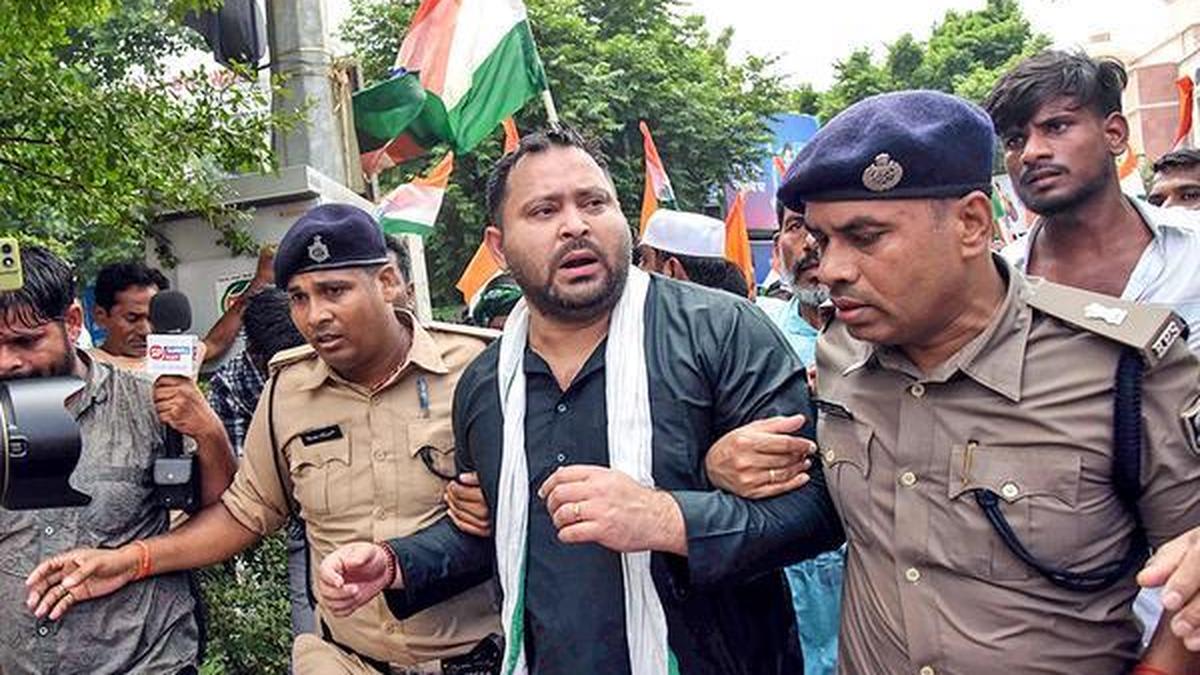
RJD leader Tejashwi Yadav has condemned the Bihar government over alleged police brutality and a breakdown in law and order. The criticism follows the suspicious death of 19-year-old Roshan Yadav in Madhubani Jail, prompting calls for accountability.
Political Tensions Escalate in Bihar
On August 20, 2026, Rashtriya Janata Dal (RJD) leader and Leader of the Opposition, Tejashwi Yadav, launched a scathing critique of the ruling National Democratic Alliance (NDA) government in Bihar. Asserting that the state's law and order machinery has "completely collapsed," Yadav vowed that he would not permit Bihar to transform into a "police state." This rhetoric marks a significant escalation in the ongoing political friction between the ruling coalition and the opposition, setting the stage for heightened legislative and public discourse regarding governance standards.
The Case of Roshan Yadav
The immediate catalyst for this confrontation is the death of 19-year-old Roshan Yadav, who was discovered dead in Madhubani Jail on August 10, 2026. While official reports from the jail administration suggest that the young man died by suicide, Tejashwi Yadav has publicly challenged this narrative. By meeting with the victim's family, the RJD leader has effectively signaled that his party intends to frame this specific incident as part of a broader pattern of state-sponsored impunity and institutional failure.
Concerns Over Police Brutality
Tejashwi Yadav’s allegations center on what he terms "rising police brutality" within the state. This accusation strikes at the heart of public trust in Bihar’s law enforcement agencies. When an opposition leader characterizes police actions as evidence of a failing state, it risks delegitimizing the authority of the police force in the eyes of the public. This narrative of a "police state" is a powerful political tool, often used to galvanize supporters and draw attention to systemic issues within the criminal justice system.
Broader Implications for Governance
The discourse surrounding the death of Roshan Yadav highlights the precarious nature of custodial safety in regional jails. Questions regarding the transparency of investigations into in-custody deaths are critical for the maintenance of democratic norms. If the opposition successfully frames this as a failure of the NDA government to protect human rights, it could lead to increased pressure for independent inquiries or judicial oversight, potentially shifting the political momentum in the state assembly.
Future Trends and Political Fallout
Looking ahead, this issue is likely to dominate the upcoming legislative sessions. As Tejashwi Yadav continues to champion the cause of those he claims are victims of state overreach, the NDA government will be forced to defend its administrative record. The outcome of this standoff will depend heavily on the findings of any subsequent investigations and whether the government can provide a transparent account that satisfies the public. If the perception of "police brutality" continues to gain traction, it may necessitate significant reforms in how Bihar handles custodial supervision and police accountability.
Verification Required?