How injured Tejaswin put aside heartbreak to help Kushare script CWG history
Source Entity
TOI SPORTS DESK
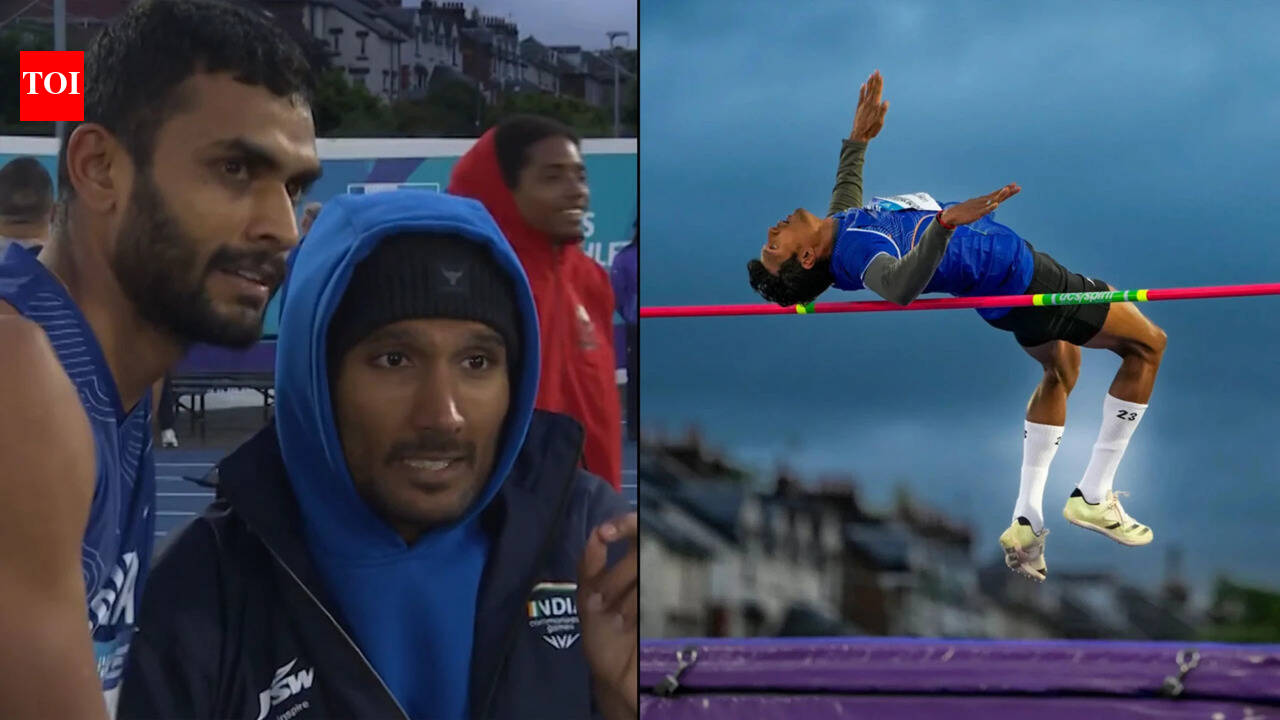
Despite suffering an injury that ended his own Commonwealth Games campaign, Tejaswin Shankar mentored Sarvesh Kushare to a historic silver medal in high jump. Kushare overcame late-stage nerves to secure the podium finish, crediting Shankar's tactical guidance for his success.
A Lesson in Sportsmanship and Tactical Mentorship
The narrative of the 23rd Commonwealth Games in Glasgow has been defined by the remarkable collaboration between two of India's premier high jumpers: Tejaswin Shankar and Sarvesh Kushare. When Shankar, an established international medalist, saw his own campaign derailed by a persistent knee injury, he transitioned from a competitor to a mentor. This shift in role highlights the depth of camaraderie within the Indian track and field contingent, proving that an athlete's contribution to their nation can extend far beyond their own physical performance on the track.
Overcoming the Psychological Barrier
Sarvesh Kushare’s journey to the silver medal was far from straightforward. Despite a string of clean clearances, the 31-year-old faced a critical juncture when he failed his first two attempts at 2.25 meters. The pressure of a major international final can be overwhelming, and the physical manifestation of nerves—the racing heart and the technical lapses—often derail even the most experienced athletes. It was at this precise moment that the influence of Tejaswin Shankar proved instrumental.
The Strategic Edge
By providing real-time technical advice and calming influence, Shankar helped Kushare recalibrate his approach for the third and final attempt at 2.25m. Kushare explicitly credited Shankar’s guidance for his ability to clear the bar, effectively turning a potential collapse into a historic podium finish. This interaction underscores the importance of analytical coaching during high-stakes competitions where split-second adjustments can mean the difference between a medal and an early exit.
Historical Significance for Indian Athletics
This silver medal marks a significant milestone in Indian sports history, as it represents only the second time an Indian male high jumper has stood on a Commonwealth Games podium. The first instance was Tejaswin Shankar’s own bronze medal performance at the 2022 Birmingham Games. By helping Kushare secure silver, Shankar has effectively helped build a legacy for the sport in India, ensuring that the momentum gained in Birmingham continues to translate into international success.
Future Outlook and Resilience
Despite the heartbreak of his own injury, Shankar remains focused on the future. His stated ambition to transition into the decathlon—a grueling ten-event competition—despite his ongoing knee issues, speaks volumes about his resilience and dedication to the sport. As for Kushare, this silver medal serves as a validation of his career and a testament to his ability to perform under extreme pressure, setting a new benchmark for his future international endeavors.
Conclusion
Ultimately, the story of the Glasgow high jump final is one of triumph over adversity. It serves as a powerful reminder that in elite sports, the support network surrounding an athlete is just as vital as their individual talent. Through mutual respect and shared expertise, Shankar and Kushare have demonstrated that the path to history is often paved by those willing to lift others up, even when their own dreams are put on hold.