Begin identifying tenant farmers under 2011 Act, parties urge govt.
Source Entity
India Latest News: Top National Headlines Today & Breaking News | The Hindu
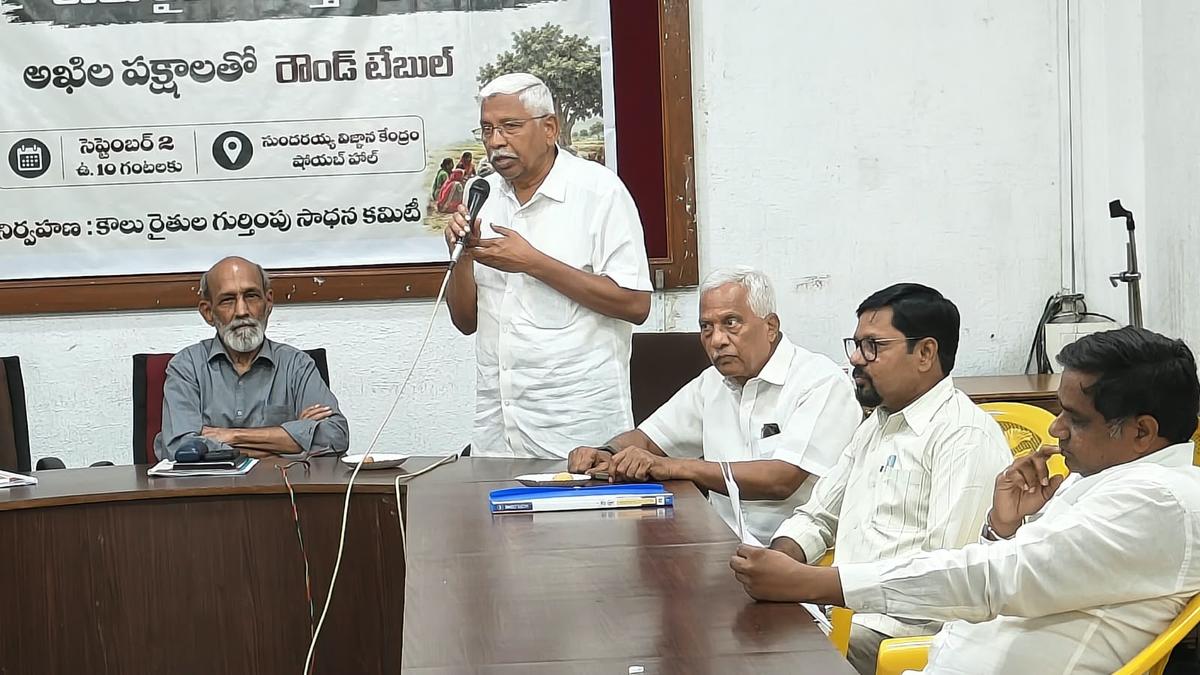
Eight political parties in Telangana have united to demand the immediate implementation of the 2011 Licensed Cultivators Act. They are calling for the state to identify tenant farmers and provide them with essential government support, identity cards, and agricultural resources.
The Call for Tenant Farmer Recognition in Telangana
In a significant political development, eight political parties in Telangana have coalesced to demand the immediate enforcement of the Licensed Cultivators Act, 2011. This collective action, organized under the auspices of the Telangana Tenant Farmers Recognition Struggle Committee, represents a growing consensus on the need to integrate invisible agricultural workers into the formal state support system. By urging the government to begin the identification process during the current Kharif season, these parties aim to bridge the gap between policy intent and ground-level execution.
The Legal Framework: Licensed Cultivators Act, 2011
The 2011 Act was designed to provide a legal identity to tenant farmers, who often operate without land ownership titles, thereby excluding them from critical government benefits. The current demand emphasizes that the rules framed under this legislation are sufficient to initiate the identification process. By failing to issue identity cards, the state inadvertently denies these cultivators access to institutional credit, subsidized inputs, and emergency support, leaving them vulnerable to predatory private lending and market volatility.
Socio-Economic Implications for Kharif Season
The timing of this demand is crucial, as the Kharif season is the primary agricultural period for the region. Advocates argue that if the identification process is delayed, tenant farmers will miss out on the vital support needed for the upcoming harvest cycle. The demand for direct access to government schemes is not merely a request for financial aid; it is a plea for structural equity. Without recognition, tenant farmers remain outside the formal economy, effectively barring them from the very safety nets designed to stabilize the agricultural sector.
The Role of Collective Political Advocacy
The all-party meeting, held at the Sundarayya Vignana Kendram and led by Prof. D. Narasimha Reddy, underscores the bipartisan nature of this concern. When diverse political entities unite on a single platform, it signals that the plight of tenant farmers has become a pressing socio-political issue that transcends partisan divides. This unified front increases the pressure on the state government to move beyond rhetoric and adopt a transparent, rule-based approach to farmer registration.
Future Trends and Policy Outlook
Looking ahead, the successful implementation of the 2011 Act could serve as a model for other states grappling with similar land-tenure complexities. If the Telangana government complies with these demands, it could lead to a more resilient agricultural ecosystem where the risks of farming are distributed more equitably. However, the success of this initiative will depend on the bureaucratic efficiency of the registration process and the political will to ensure that identity cards translate into actual, tangible benefits for the cultivators on the ground.
Verification Required?