No little kids allowed, and other new info about Tesla’s Cybercab
Source Entity
Sean O'Kane
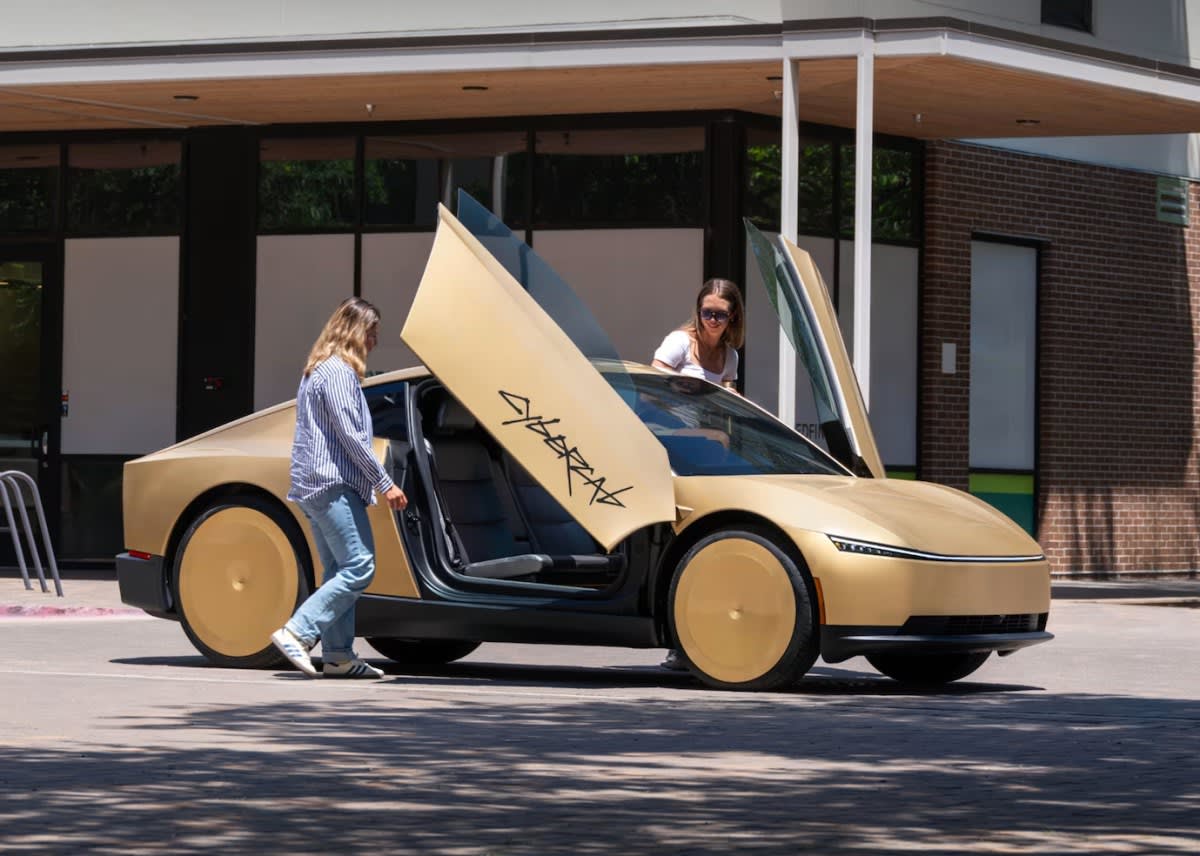
Tesla is officially launching its driverless, two-seater Cybercab in Austin, Texas, featuring a design devoid of steering wheels or pedals. The company is exploring a business model involving third-party fleet operators to scale its autonomous vehicle network.
The Dawn of the Driverless Era: Tesla’s Cybercab Debut
Tesla’s recent activities surrounding the Cybercab represent a pivotal shift in the company’s trajectory. By teasing a vehicle explicitly designed without a steering wheel or pedals, Tesla is moving beyond traditional automotive manufacturing into the realm of pure autonomous robotics. The anticipation surrounding the Austin, Texas, event highlights the company's transition from a consumer-focused EV maker to a leader in the robotaxi sector.
Engineering the Future of Mobility
The Cybercab design, characterized by its signature gold aesthetic and butterfly doors, serves as a radical departure from conventional vehicle architecture. By eliminating manual controls, Tesla is leaning heavily into its proprietary AI and camera-based navigation systems. This design choice implies a total reliance on machine intelligence to navigate complex urban environments, a feat that has been the subject of intense scrutiny and development by Tesla’s AI team, led by Ashok Elluswamy.
A Strategy for Massive Scale
Beyond the physical design, Tesla’s recent solicitation of interest from third-party fleet operators signals a major strategic pivot. By distributing a form for businesses to express interest in purchasing Cybercab fleets or providing infrastructure, Tesla is signaling that it does not intend to operate as a sole provider. This "fork in the road" moment suggests that Tesla aims to create an ecosystem where external partners contribute to the growth of the robotaxi network, rather than relying solely on personal ownership models.
Regulatory and Logistical Challenges
The presence of hundreds of autonomous vehicles already registered in Texas underscores the logistical preparation behind this launch. However, the move to autonomous fleets introduces significant challenges, ranging from municipal transit regulations to the infrastructure required to support a large-scale, driverless network. The "storm of Cybercabs" mentioned by CEO Elon Musk suggests a rapid deployment strategy, yet the success of this vision depends heavily on the reliability of the AI in real-world, unpredictable traffic scenarios.
Broader Implications for the Automotive Industry
If successful, the Cybercab could redefine urban transportation by lowering the cost of transit and reducing the need for private vehicle ownership. Historically, Tesla’s mission has evolved from high-end electric performance cars to mass-market vehicles, and finally to autonomous fleets. This transition reflects a broader trend in the tech industry toward 'Transportation as a Service' (TaaS), where software and connectivity supersede mechanical hardware in value.
Conclusion: The Road Ahead
As Tesla launches its Cybercab in Austin, the world is watching to see if the company can bridge the gap between ambitious promises and functional, large-scale reality. The shift toward third-party fleet sales suggests that Tesla is preparing for a future where its technology is ubiquitous. Whether this model proves sustainable depends on the company's ability to demonstrate safety, regulatory compliance, and the seamless integration of its AI into the daily lives of millions of riders.
Multiple Citing Sources