Tesla driver in fatal Texas crash overrode FSD by pressing accelerator ‘100 percent,’ investigators confirm
Source Entity
Emma Roth
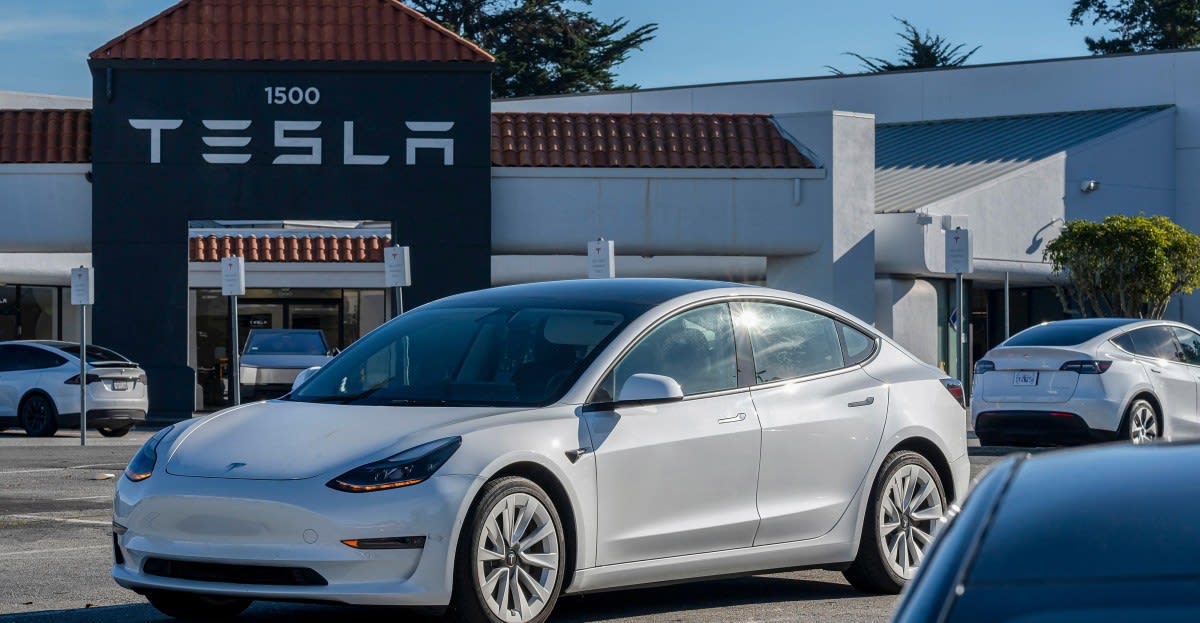
The National Transportation Safety Board (NTSB) has released a preliminary report confirming that a Tesla driver in a fatal Texas crash manually overrode the vehicle's Full Self-Driving (FSD) system by pressing the accelerator to 100% before striking a home and killing a woman.
Investigation into Fatal Tesla FSD Crash in Texas
A preliminary report from the National Transportation Safety Board (NTSB) has shed critical light on a tragic incident in Texas, where a Tesla Model 3 crashed into a residential home, resulting in the death of a woman. The central finding of the investigation is a stark clarification of the role of human intervention: the driver did not merely fail to intervene, but actively and manually overrode the vehicle's Full Self-Driving (FSD) software. According to electronic data logs, the driver pressed the accelerator pedal to 100 percent, effectively seizing control from the automated system immediately prior to the collision.
The Technicality of Manual Override
This specific detail—the 100% application of the gas pedal—is pivotal to understanding the dynamics of the crash. In the architecture of Tesla's driver-assistance systems, manual inputs from the driver are designed to take precedence over the software's commands to ensure that the human operator always has the final say in emergency situations. By flooring the accelerator, the driver triggered a manual override that bypassed the FSD's trajectory and speed calculations. This indicates that the vehicle's failure was not a software glitch or a 'phantom braking' event, but rather a result of direct human command that accelerated the vehicle into the structure.
The Paradox of 'Full Self-Driving' Branding
This incident highlights the ongoing tension between the marketing of 'Full Self-Driving' and the technical reality of Level 2 automation. While the name suggests a level of autonomy that allows the driver to disengage, Tesla's FSD requires active driver supervision. The Texas crash serves as a grim example of the 'automation bias'—a psychological phenomenon where users over-trust automated systems, potentially leading to a dangerous lack of situational awareness. When the driver in this case chose to override the system with maximum acceleration, it raises questions about the driver's perception of the vehicle's environment and the system's state at the moment of the crash.
Regulatory Implications and NTSB Oversight
Historically, the NTSB has been critical of Tesla's approach to driver monitoring. This crash is likely to fuel further regulatory scrutiny regarding how Tesla ensures drivers remain attentive. The NTSB often uses these preliminary reports to advocate for more robust 'driver-in-the-loop' safeguards, such as advanced infrared camera systems that track eye movement, rather than relying on steering wheel torque sensors. The fact that a driver could accelerate to 100% in a residential area while FSD was active suggests a gap in how the system manages high-risk manual overrides in dense environments.
Broader Impact on Autonomous Vehicle Safety
Beyond the legal ramifications for the driver and the manufacturer, this event underscores a broader challenge for the entire autonomous vehicle (AV) industry: the transition period between human-driven and fully autonomous cars. As vehicles become more capable, the 'handoff' between the AI and the human becomes the most dangerous point of operation. This crash demonstrates that even when a system is functioning, a sudden, aggressive human intervention can lead to catastrophic outcomes if the driver is not fully synchronized with the vehicle's current operational state.
Future Trends in Driver Intervention Systems
Moving forward, it is probable that we will see a shift toward 'intelligent overrides.' Instead of a binary switch where a pedal press immediately disables all safety envelopes, future iterations of ADAS (Advanced Driver Assistance Systems) may implement 'sanity checks'—where the vehicle analyzes if a 100% acceleration command is logical given the proximity of obstacles. While this would move the system closer to Level 3 or 4 autonomy, it would mitigate the risk of human error during high-stress manual overrides.
Summary
The NTSB's findings transform the narrative of this crash from one of potential software failure to one of human-driven acceleration. By confirming a 100% accelerator override, the investigation clarifies that the driver's direct actions were the primary catalyst for the fatal impact. This event continues the global conversation on the dangers of misleading automation branding and the urgent need for more stringent driver-monitoring technologies to prevent human-induced tragedies in the age of AI-assisted driving.