World model companies are keeping a lot of secrets
Source Entity
Russell Brandom
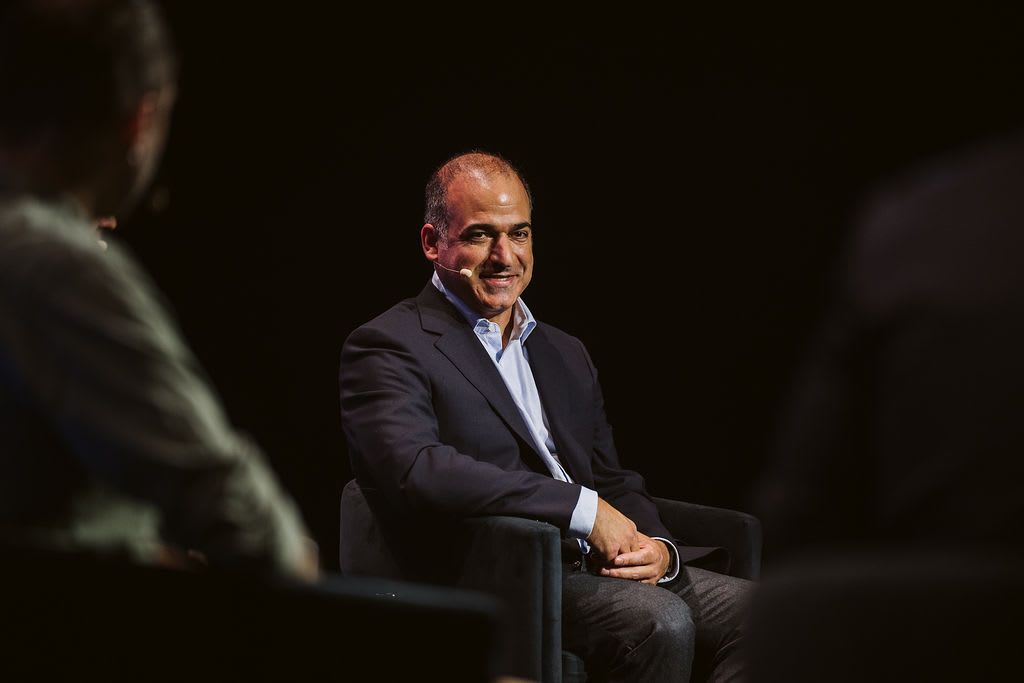
Leading AI firms like AMI Labs and World Labs are heavily funded but remain opaque regarding their commercialization strategies. These companies are focused on developing 'world models' to automate spatial intelligence for future robotics and autonomous systems.
The Opaque Frontier of World Models
The burgeoning sector of 'world models' represents one of the most intellectually ambitious pursuits in the artificial intelligence landscape. While companies like Yann LeCun’s AMI Labs and Fei-Fei Li’s World Labs have successfully secured significant capital and generated substantial industry buzz, they remain notoriously guarded about their internal roadmaps. This lack of transparency stands in stark contrast to the rapid, product-focused deployment seen in other areas of generative AI, such as Large Language Models (LLMs).
Defining Spatial Intelligence
At the technical heart of these endeavors is the pursuit of 'spatial intelligence.' Unlike traditional AI that processes static text or imagery, world models aim to help machines understand, navigate, and predict the physical environment. By moving beyond simple pattern recognition, these models attempt to simulate the laws of physics and the complexities of three-dimensional spaces, a foundational requirement for any machine expected to operate autonomously in the real world.
The Gap Between Research and Revenue
Despite the immense potential of this technology, a significant disconnect persists between research breakthroughs and commercial viability. Current players in the space appear to be prioritizing long-term foundational development over immediate monetization. During recent industry discourse, including panels at the All In conference, it became evident that even key figures within these organizations are hesitant to define clear commercial pathways, leaving investors and observers to speculate on how these models will eventually generate profit.
Potential Trajectories for Commercialization
While the current business models remain 'foggy,' the potential applications for spatial intelligence are vast. The technology could revolutionize robotics, allowing machines to operate in unstructured environments with human-like dexterity. Furthermore, these models are expected to drastically improve interactive video generation and provide the next leap in self-driving vehicle systems, which currently struggle with the unpredictable nature of real-world navigation.
The Challenge of Intellectual Secrecy
The secrecy surrounding these companies, including insights from leaders like AMI Labs co-founder Michael Rabbatt, suggests that the competitive advantage in this space is currently tied to proprietary training methodologies and data acquisition. As these firms continue to build in relative silence, the industry waits to see which player will successfully bridge the gap between abstract spatial modeling and a tangible, scalable product that can be deployed across commercial sectors.
Future Outlook and Industry Implications
Looking ahead, the shift from 'buzz' to 'business' will likely depend on how these organizations handle the tension between academic research rigor and the demands of venture capital. As the sector matures, we can expect a transition where internal secrecy is balanced by the necessity of proving utility to shareholders. The company that first successfully integrates spatial intelligence into a consumer or industrial product will likely define the next decade of AI evolution.