Tiger stripes: How these unique patterns help them stay hidden
Source Entity
The Indian Express
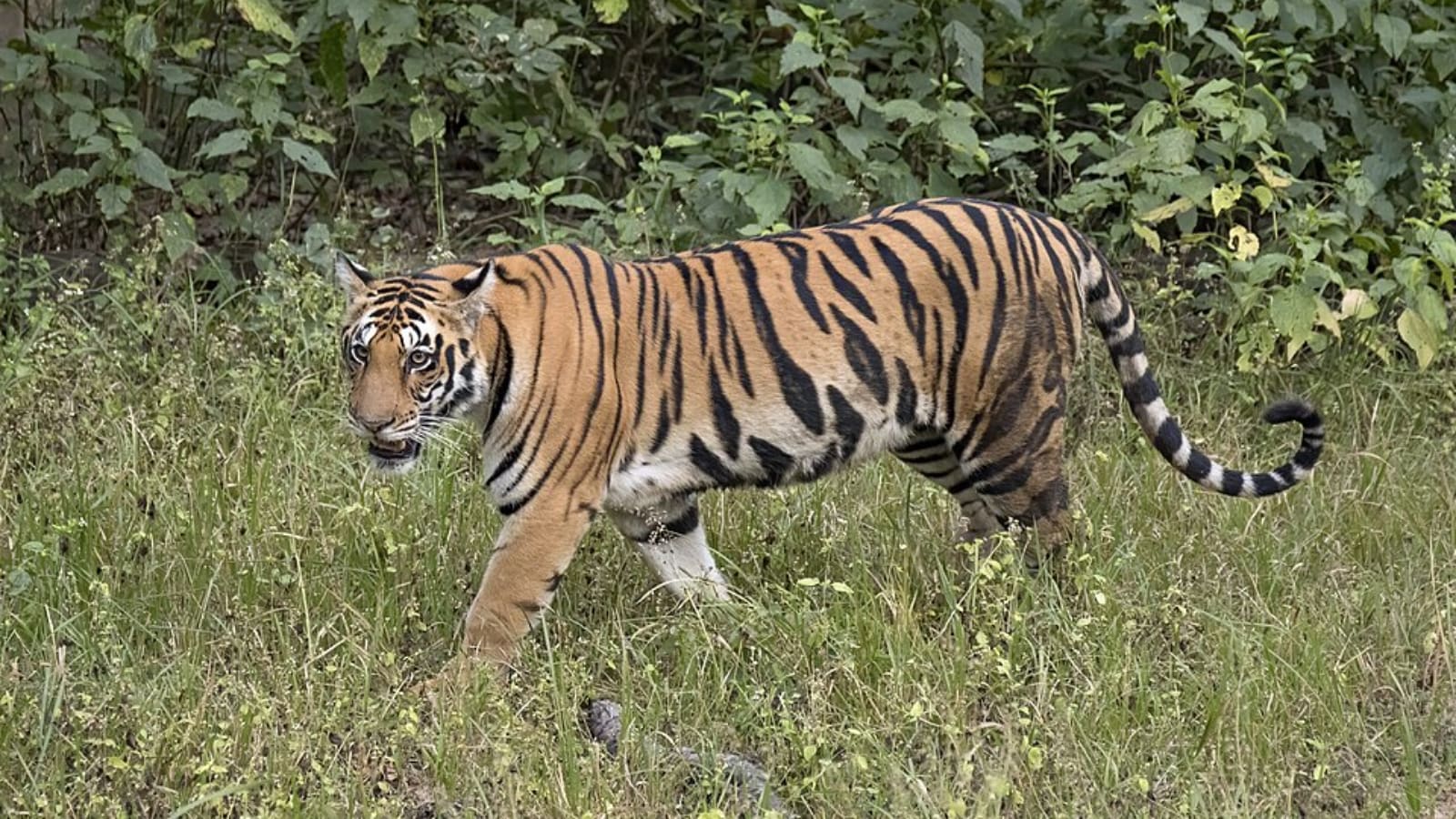
Tiger stripes function as a sophisticated biological camouflage, breaking up the animal's silhouette to aid in stealth hunting. This evolutionary trait allows tigers to effectively stalk prey within dense forest and grassland environments.
The Evolutionary Genius of the Tiger's Coat
The tiger (Panthera tigris) stands as one of nature’s most formidable predators, and its iconic coat is far more than a mere aesthetic marvel. While humans often perceive the high-contrast orange and black stripes as bold, in the ecological theatre of the wild, they function as a highly evolved mechanism for survival. By breaking up the animal’s physical outline, these patterns provide a critical advantage in the complex, light-dappled environments where tigers reside.
Disruptive Coloration in Practice
According to wildlife photographer Indrajit Ghorpade, the tiger’s vertical stripes serve a specific function known as disruptive coloration. This biological strategy works by confusing the visual perception of prey; as the tiger moves through tall grass, reeds, or shrubs, the vertical orientation of the stripes mimics the play of light and shadow found in those habitats. This makes it exceptionally difficult for prey species—which may have limited color vision—to distinguish the tiger from the surrounding vegetation.
Mastering the Art of the Stalk
Unlike ambush predators that rely solely on speed, the tiger is a master of stealth. The effectiveness of its camouflage is paramount during the final stages of a hunt, where the margin between success and failure is measured in inches. By remaining inconspicuous as it navigates dense undergrowth, the tiger can close the distance to its target without triggering a flight response. This ability to 'vanish' into the background is essential for an animal that relies on a surprise attack to secure its sustenance.
The Interaction of Light and Habitat
Beyond the mere pattern, the stripes operate in tandem with the tiger's environment. In the forests and grasslands of Asia, sunlight filters through the canopy or grass blades, creating shifting patterns of light and dark. The tiger’s coat essentially mirrors this environment, rendering the predator nearly invisible to prey that is scanning the horizon for danger. This synchronization between phenotype and habitat is a testament to the long-term evolutionary pressures exerted on the species.
Broader Ecological Implications
Understanding the functionality of tiger stripes offers deeper insight into the broader evolutionary history of big cats. While other felids like leopards and jaguars utilize spots to blend into the dappled light of woodland canopies, the tiger’s vertical stripes are specifically adapted for the verticality of tall grasses and forest stems. This specialization highlights how niche-specific adaptations dictate the survival strategies of apex predators across different ecosystems.
Conclusion: A Legacy of Adaptation
Ultimately, the tiger’s stripes represent a perfect union of form and function. Through the lens of evolutionary biology, we see that these patterns are not merely decorative but are vital tools that enable the tiger to occupy its role as a top-tier predator. As we continue to study these magnificent creatures, the appreciation for their unique physical traits serves as a reminder of the intricate balance that has allowed the tiger to thrive in the wild for millennia.