Dog that hunts invasive 'sea vomit' honoured as animal of the year
Source Entity
BBC News
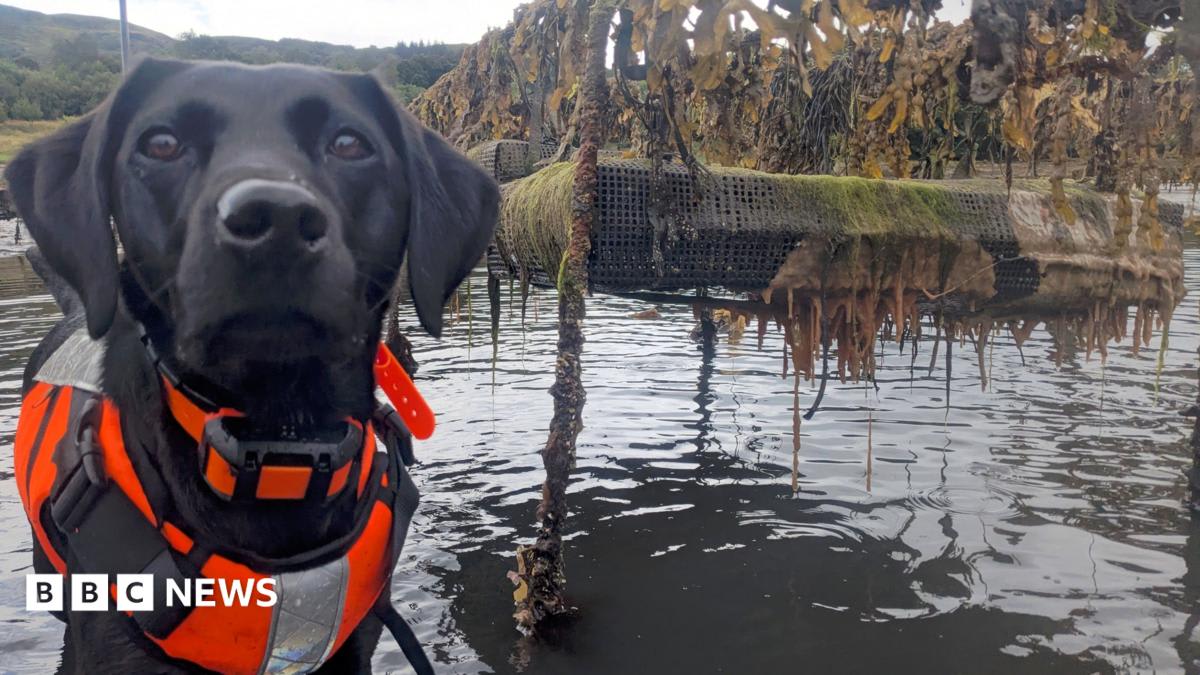
A conservation dog named Sgiath has been named Animal of the Year for her pioneering work in detecting the invasive 'sea vomit' (Didemnum vexillum). Her success marks a breakthrough in using scent-detection canines to manage marine ecosystems.
A Canine Pioneer in Marine Conservation
In a groundbreaking achievement for environmental science, a working dog named Sgiath has been honored as Animal of the Year. This recognition stems from her unique role in hunting out Didemnum vexillum, an invasive marine organism colloquially known as 'sea vomit.' The project, led by Dr. Sim, represents a significant shift in conservation methodology, transitioning from traditional human-led surveys to the highly efficient use of canine scent detection in intertidal zones.
The Challenge of Didemnum vexillum
Formally identified as Didemnum vexillum, the carpet sea squirt is an invasive species believed to have originated in Japan. Since its arrival on the shores of southern England and Wales in 2008, it has posed a persistent threat to native marine biodiversity. Because the organism forms dense, mat-like colonies that can smother the seabed, it effectively competes with indigenous species for space and resources, necessitating innovative management strategies to curb its spread.
Expanding the Canine Toolkit
While dogs have long been utilized in terrestrial conservation—tracking endangered species and assisting in the investigation of environmental crimes—their application in marine environments was previously untested. Dr. Sim’s proof-of-concept project sought to determine if these animals could adapt their scent-detection skills to the complex, wet, and often inaccessible conditions of the coastline. The success of Sgiath, who is able to navigate beneath seaweed at low tide to pinpoint the exact location of the sea squirt, has exceeded all initial expectations.
The Efficiency of Scent Detection
Sgiath’s methodology is deceptively simple: she performs a systematic survey using her nose, allowing researchers to identify infestations with surgical precision. This ability to detect the organism beneath layers of seaweed or in difficult terrain significantly increases the accuracy of environmental monitoring. By providing a reliable way to map the presence of Didemnum vexillum, Sgiath allows conservationists to target their removal efforts, making the management of this invasive species far more effective than previous methods.
Broader Implications and Future Trends
This project serves as a model for future interdisciplinary conservation efforts. The success of using dogs in marine environments suggests that we may see a wider adoption of scent-detection animals in managing other aquatic invasive species. As ecosystems face increasing pressure from non-native organisms, the ability to combine traditional ecological knowledge with the sensory capabilities of trained animals offers a promising, scalable solution for protecting fragile coastal habitats.
Concluding Thoughts
The recognition of Sgiath as Animal of the Year is not merely a celebration of a working dog; it is a validation of innovative science. By bridging the gap between land-based conservation tactics and marine management, Dr. Sim’s work has provided a blueprint for future environmental stewards. As we continue to battle the encroachment of invasive species like the carpet sea squirt, the role of canine partners will likely become an indispensable tool in our collective effort to preserve global biodiversity.