Tornado tears through French village leaving dozens injured
Source Entity
BBC News
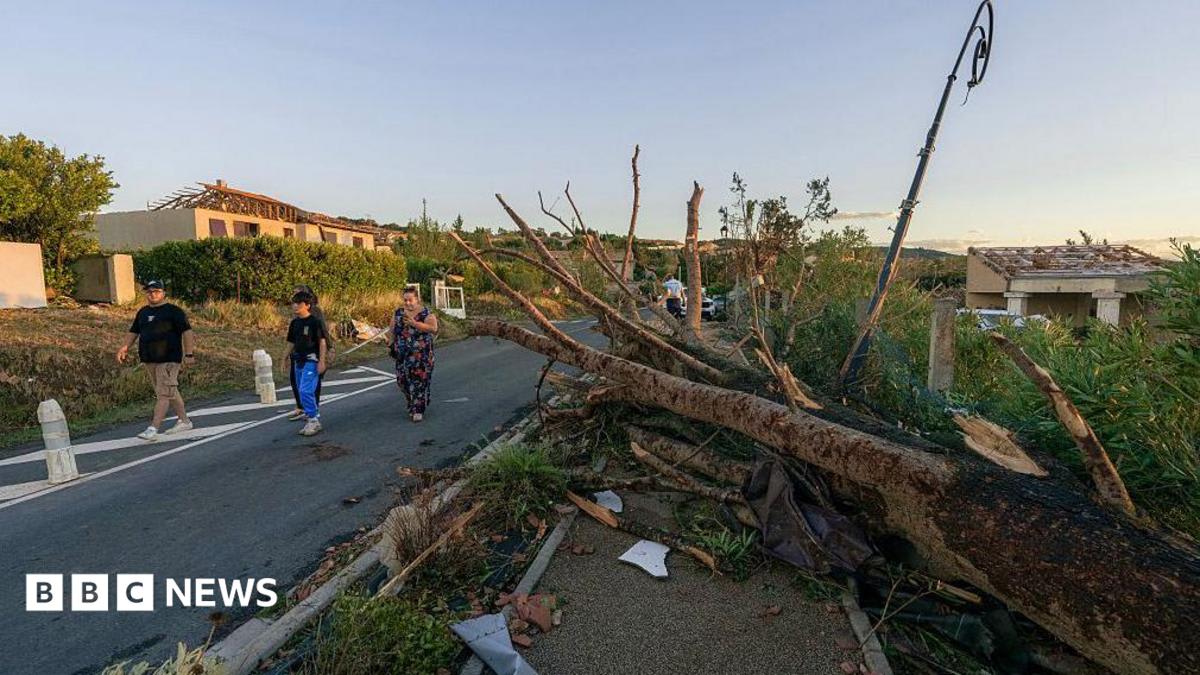
A powerful tornado struck the village of Pomas in southwestern France, injuring 41 people and damaging hundreds of homes. Emergency crews are currently managing widespread power outages and structural destruction caused by the 117km/h winds.
Devastation in Southern France: A Tornado Incident
A powerful and destructive tornado tore through the southwestern French village of Pomas on Monday, leaving a trail of significant structural damage and human injury. The storm, characterized by intense winds reaching up to 117km/h, has fundamentally altered the landscape of this quiet community. With approximately 300 homes reported damaged and 41 individuals injured, the event serves as a stark reminder of the volatile nature of extreme weather patterns in the region.
The Human Impact and Emergency Response
The human cost of the disaster is substantial, with 15 people requiring hospitalization following the event. Among the most critical cases reported is a pregnant woman who sustained injuries when her home collapsed during the peak of the storm. In response to the crisis, more than 120 emergency responders were immediately deployed to Pomas and surrounding areas to conduct search and rescue operations, clear debris, and provide medical aid to the affected residents.
Infrastructure and Regional Disruption
Beyond the immediate physical injuries, the tornado caused widespread infrastructure failure. Approximately 2,800 households were left without electricity as the storm damaged power lines and grid connectivity. Furthermore, the destruction of roofs and the scattering of building debris across roadways led to significant transport disruptions, complicating the access of emergency vehicles to the most isolated parts of the village.
Meteorological Context and Warning Systems
The tornado formed beneath a severe thunderstorm, an event captured by eyewitnesses in the nearby village of Verzeille. French authorities had proactively issued an orange alert for thunderstorms across large swathes of the country's southwest. Despite these warnings, the localized intensity of the tornado—which reached speeds exceeding 100km/h—demonstrates the difficulty in predicting specific touchdown points for such phenomena.
Broader Implications and Future Trends
This incident highlights the growing concern regarding the frequency and severity of extreme weather events in Europe. While tornadoes are historically less common in France than in other parts of the world, atmospheric instability linked to severe thunderstorms remains a constant threat. As climate patterns shift, local authorities will likely need to refine their disaster response protocols, focusing on structural reinforcement for homes and more granular, localized alert systems to protect citizens from sudden, high-intensity wind events.
Conclusion
As the village of Pomas begins the arduous process of recovery, the focus remains on the well-being of the injured and the restoration of essential services. The coordination between local authorities and emergency personnel has been vital in managing the immediate aftermath. Moving forward, the lessons learned from this storm will be critical in preparing for future meteorological challenges in the region.