8,000 fans, one heartbeat: how Delhi turned a semi-final loss into a celebration
Source Entity
Pritish Raj
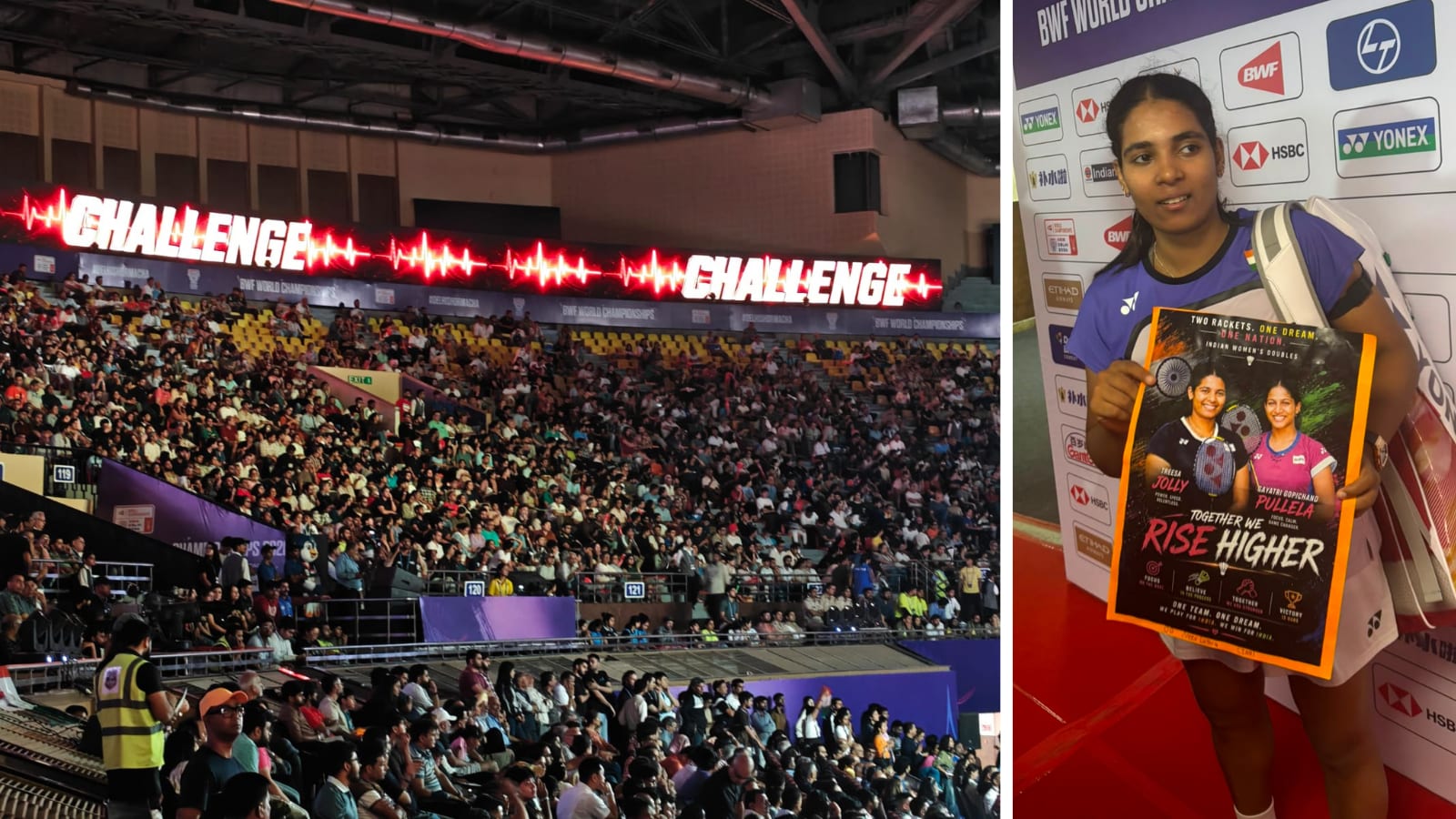
Treesa Jolly and Gayatri Gopichand made history at the BWF World Championships in New Delhi by securing a bronze medal in women's doubles. Despite a valiant semi-final loss to world number one Liu Sheng Shu and Tan Ning, the pair ended India's 15-year wait for a doubles medal at the event.
A Historic Feat for Indian Badminton
The recent BWF World Championships held at the Indira Gandhi Indoor Stadium in New Delhi served as a watershed moment for Indian women's doubles badminton. As the tournament progressed, many of India's established stars exited the competition prematurely. However, the duo of Treesa Jolly and Gayatri Gopichand emerged as the breakout stars, defying expectations to reach the semifinals and securing a historic bronze medal for the nation.
The Weight of History
The significance of this achievement cannot be overstated. By reaching the semifinals, Jolly and Gopichand ended a 15-year drought for Indian women's doubles at the World Championships. This accomplishment maintains the country’s impressive streak of winning at least one medal at every World Championship since 2011, a tradition inaugurated by the legendary pair of Jwala Gutta and Ashwini Ponnappa. Gutta, acknowledging the magnitude of this performance, publicly urged the young duo to strive for the gold, underscoring the high expectations now placed upon them.
A Battle Against the World No. 1
In the semifinal clash, the Indian pair faced the ultimate test against the defending champions and world number one duo, Liu Sheng Shu and Tan Ning of China. Despite being ranked 39th, Jolly and Gopichand displayed immense tactical maturity, clinching the first game 21-18. This initial success sent the 8,000-strong home crowd into a frenzy, with chants of "Jolly good" echoing through the arena. The energy in the stadium reflected the deep emotional investment of the fans, who treated every rally as a pivotal moment in national sporting history.
The Turning of the Tide
While the momentum initially favored the Indians, the experience and clinical precision of the Chinese top seeds eventually took control. The match concluded with a scoreline of 21-18, 13-21, 8-21. Although the loss prevented them from advancing to the final, the path taken by Jolly and Gopichand—which included defeating three seeded pairs earlier in the tournament—confirms their status as formidable contenders on the international circuit.
Broader Implications and Future Trends
This performance signals a shift in the landscape of Indian badminton. Historically dependent on individual singles stars, India is now seeing a resurgence in its doubles department. The ability of Jolly and Gopichand to perform under the pressure of a home crowd indicates a level of psychological resilience that will be essential for future Olympic cycles. As they continue to climb the rankings, their success is likely to inspire a new generation of players, potentially shifting training focus and investment toward specialized doubles development.
Conclusion
The bronze medal secured by Treesa Jolly and Gayatri Gopichand is more than just a trophy; it is a testament to the growth of Indian badminton. By challenging the world’s best and ending a long-standing medal drought, the duo has solidified their place in the history books. As they move forward, the challenge will be to maintain this high level of play and convert these breakthrough semifinal appearances into championship-winning campaigns.