Why are rival groups of Trinamool Congress laying claim over party funds | Explained
Source Entity
India Latest News: Top National Headlines Today & Breaking News | The Hindu
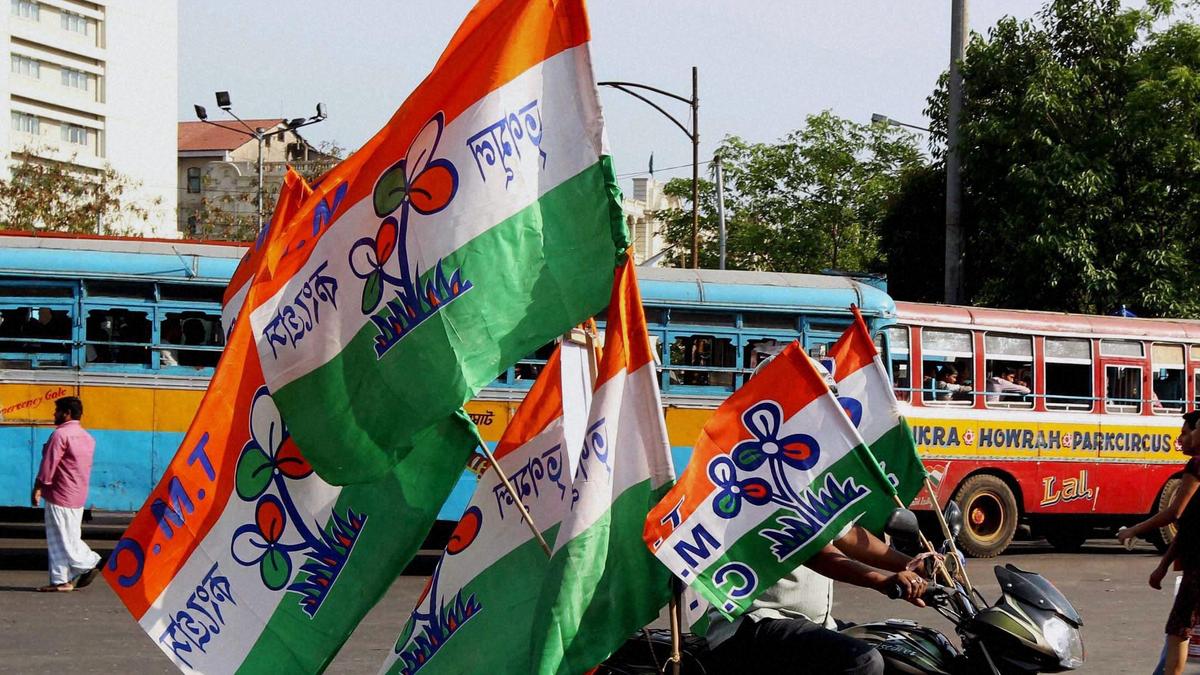
Trinamool Congress is one the richest political parties in the country with hundreds of crores lying in its bank accounts
Internal Strife and Financial Stakes in the Trinamool Congress
The Trinamool Congress (TMC) has established itself as a dominant force in Indian politics, particularly within West Bengal. However, the party's immense financial success—characterized by hundreds of crores in its bank accounts—has become a double-edged sword. The emergence of rival groups claiming ownership or control over these party funds signals a deeper systemic instability within the party's internal hierarchy. This conflict is not merely about money, but about the power and influence that such financial resources command during election cycles and organizational maneuvering.
The Financial Architecture of a Political Giant
The fact that the TMC is one of the richest political parties in the country is a testament to its electoral dominance and its ability to mobilize resources. In the landscape of Indian politics, party funds are essential for maintaining a grassroots network, funding massive rallies, and managing sophisticated digital campaigns. When a party accumulates 'hundreds of crores,' these funds become a primary target for ambitious factions. The dispute over these assets typically arises when there is a lack of clarity in the party's financial bylaws or when internal leadership contests reach a stalemate, leading different groups to seek legal or administrative control over the treasury to secure their own political survival.
Factionalism and the Struggle for Control
Political factionalism is a common trait in large parties, but it intensifies when significant financial assets are involved. In the case of the TMC, the rivalry between different groups suggests a struggle for the 'purse strings' of the organization. Control over party funds allows a faction to reward loyalists, fund local candidates, and influence party decisions. When rival groups lay claim to these funds, it often indicates a breakdown in the centralized authority of the party leadership. This struggle can lead to protracted legal battles, which not only drain the party's resources but also project an image of disunity to the electorate.
Legal Implications and Regulatory Oversight
The dispute over party funds brings the TMC under the scrutiny of electoral and financial regulators. In India, political parties are governed by strict guidelines regarding the disclosure of funds and the management of accounts. If rival factions are fighting over the control of bank accounts, it raises critical questions about the party's internal governance and whether the funds are being managed according to the party's own constitution. Such disputes often end up in court, where the legal definition of 'party ownership' versus 'leadership control' is tested, potentially opening the door for audits or investigations into the sources of the party's wealth.
Broader Implications for West Bengal's Political Landscape
The instability within the TMC has direct implications for the governance and political stability of West Bengal. A party distracted by internal financial warfare is less capable of implementing policy and responding to the needs of its constituents. Furthermore, the public perception of a 'rich' party fighting over its hoard of cash can be politically damaging, providing ammunition to opposition parties who may frame the conflict as a symptom of greed or corruption. The ability of the TMC to resolve these claims internally will determine whether it remains a cohesive unit or fractures into smaller, competing entities.
Conclusion: The Path Forward
In summary, the claim over party funds by rival groups within the Trinamool Congress is a manifestation of internal power struggles amplified by the party's significant wealth. To maintain its hegemony, the TMC must establish transparent financial protocols and resolve its factional disputes through democratic internal mechanisms. Failure to do so may result in a prolonged period of instability, where the battle for the bank accounts outweighs the battle for the ballot box.
Verification Required?